
Pisa, the ancient Maritime Republic, is a city that offers much more than its iconic tower. It is a place where thousands of years of history blend with university life, all framed by the waters of the Arno and echoes of a glorious rivalry with its more imposing neighbor: Florence.
How to get to Pisa from Florence
Pisa is well connected to Florence, making it a perfect destination for a day trip or weekend getaway.
| Average travel time | Details | |
| Train | 50 min – 1h 30 min | The most convenient way. Regional trains (slower and cheaper) or Regional Fast trains connect Florence Santa Maria Novella and Pisa Central stations directly. Services are frequent. |
| Car | Circa 1 ora | Take the A11 motorway (Florence-Mare). Please note: the center of Pisa is a Limited Traffic Zone (ZTL). It is advisable to park outside the historic center and continue on foot or by public transport. |
| Bus | 1 ora – 1 ora 30 min | Several companies offer direct services between the bus stations in Florence and Pisa. This is often an inexpensive option and a good alternative to the train, although less frequent. |
The historic rivalry between Florence and Pisa:
The tension between Florence and Pisa has been a constant feature of Tuscan history, especially since the 13th century. While Pisa flourished as one of the four powerful Maritime Republics (along with Venice, Genoa, and Amalfi), controlling the western Mediterranean, Florence emerged as a land, banking, and commercial power. Conflict was inevitable:
-
The end of power for Pisa (13th-14th centuries): the final blow to Pisa’s maritime power was dealt by Genoa in the Battle of Meloria (1284). Florence, seeing its rival weakened, did not let the opportunity slip by.
-
The Florentine conquest: after several attempts, Florence finally conquered Pisa in 1406. This event marked the end of Pisa’s independence and its integration, often forced and rebellious, into Florentine rule, which later became grand ducal.
-
Echoes in folklore: the rivalry is also rooted in popular language, as demonstrated by the well-known Florentine saying: “Better to find someone dead at home than a person from Pisa at the door” (the front door), to which the Pisans respond with a sarcastic: “May God help you!”
Miracle Square
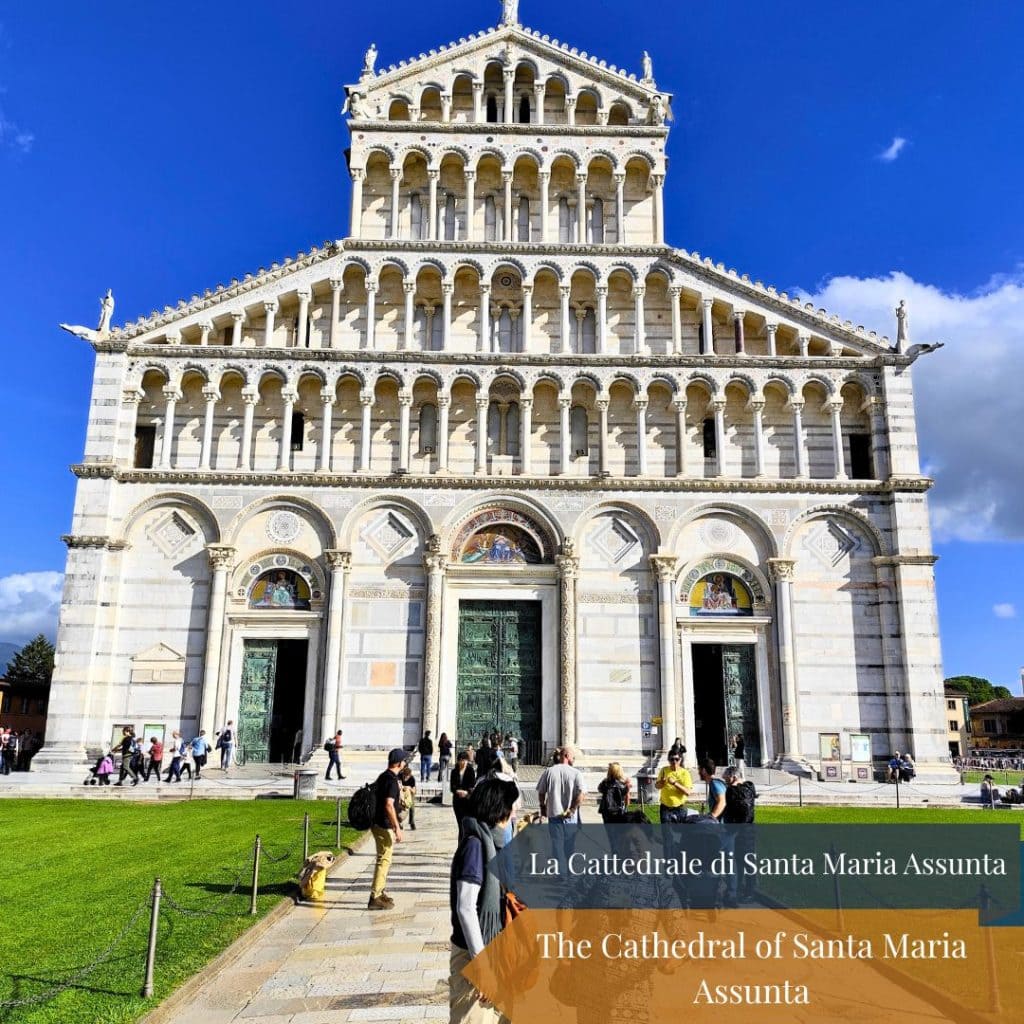
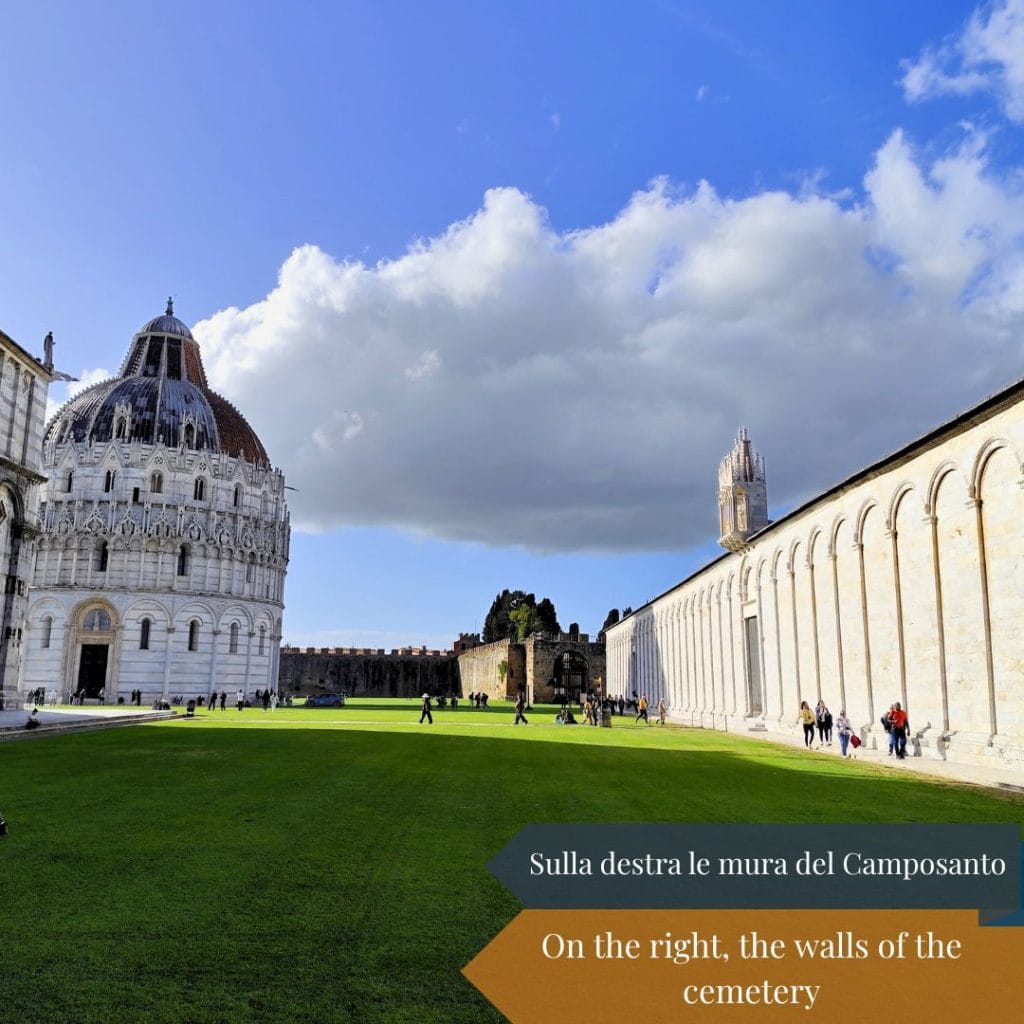
Declared a UNESCO World Heritage Site, this square is the heart of Pisan Romanesque architecture. The monumental complex (cathedral, baptistery, bell tower, and “camposanto” -cemetery) was built starting in the 11th century, reflecting the power and wealth achieved by the Maritime Republic of Pisa.
The layout of the monuments, as in many other Italian squares, is not random. The various buildings and their functions represented the different stages of human existence:
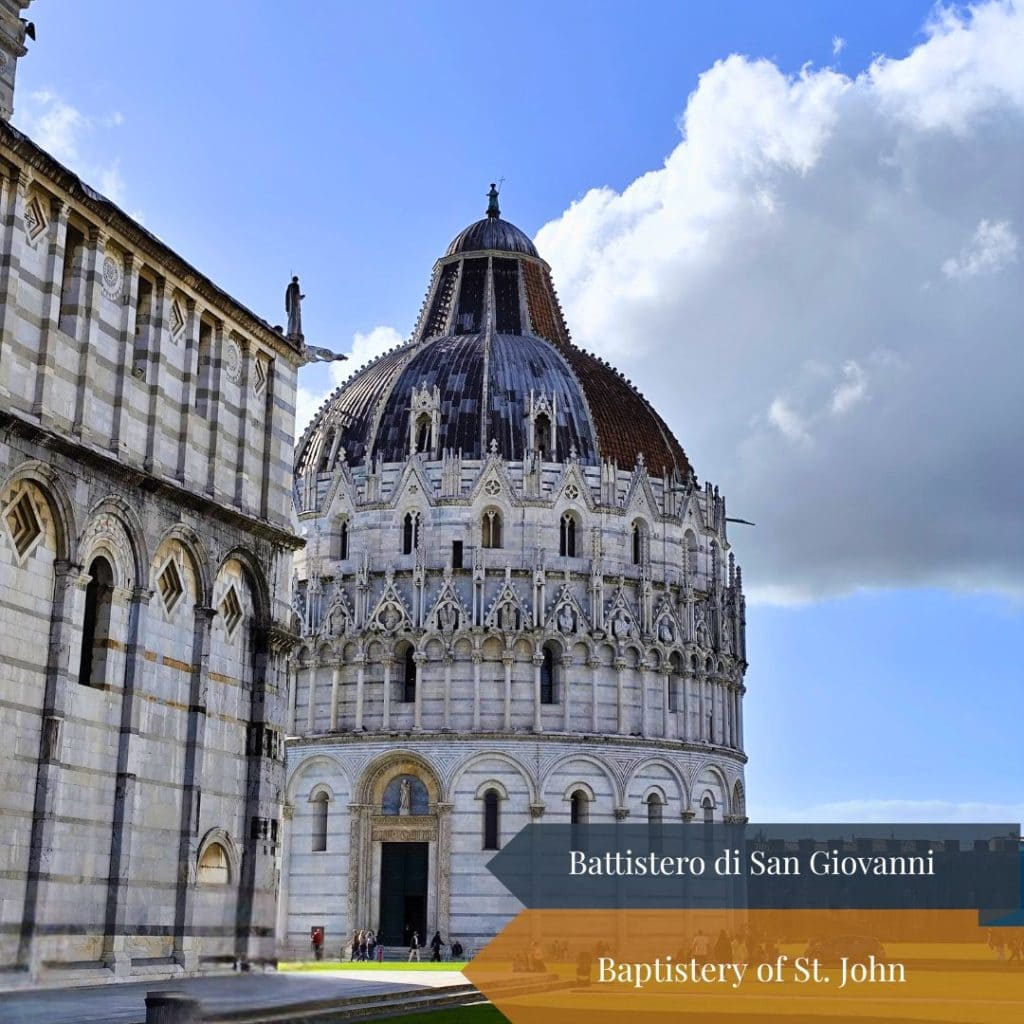
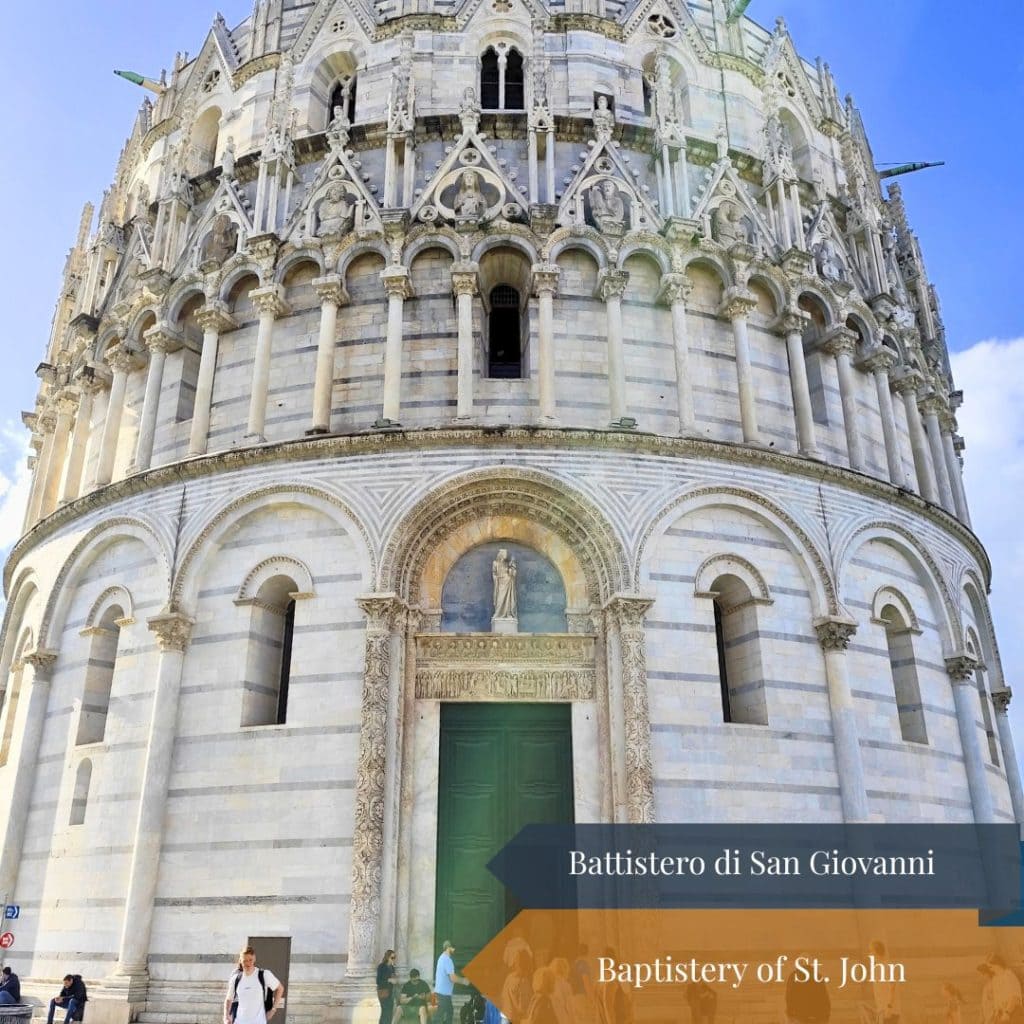
- The Baptistery of San Giovanni (birth): where the faithful enter the Christian community.
It is also the largest baptistery in Italy. Its construction took centuries, evolving from Romanesque (the lower part with round arches) to Gothic (the pointed upper part, created by Nicola and Giovanni Pisano). - The Cathedral of Santa Maria Assunta (life): a place of celebration and prayer.
Inside the cathedral there is a splendid bronze lamp. It is said that Galileo Galilei, observing its oscillation during a mass, got an hint on the theory of the iso-chronism of the pendulum. The truth is that the current lamp dates back to after Galileo’s time, but the legend remains fascinating.
On the north side (towards the Camposanto), on a piece of Roman marble, there are numerous small black holes. Legend says that these are the marks left by the devil’s nails as he tried to climb up to prevent the construction of the cathedral. It is said that no matter how many times you try to count them, the number changes each time. - The Bell Tower (knowledge): The link between earth and the divine.
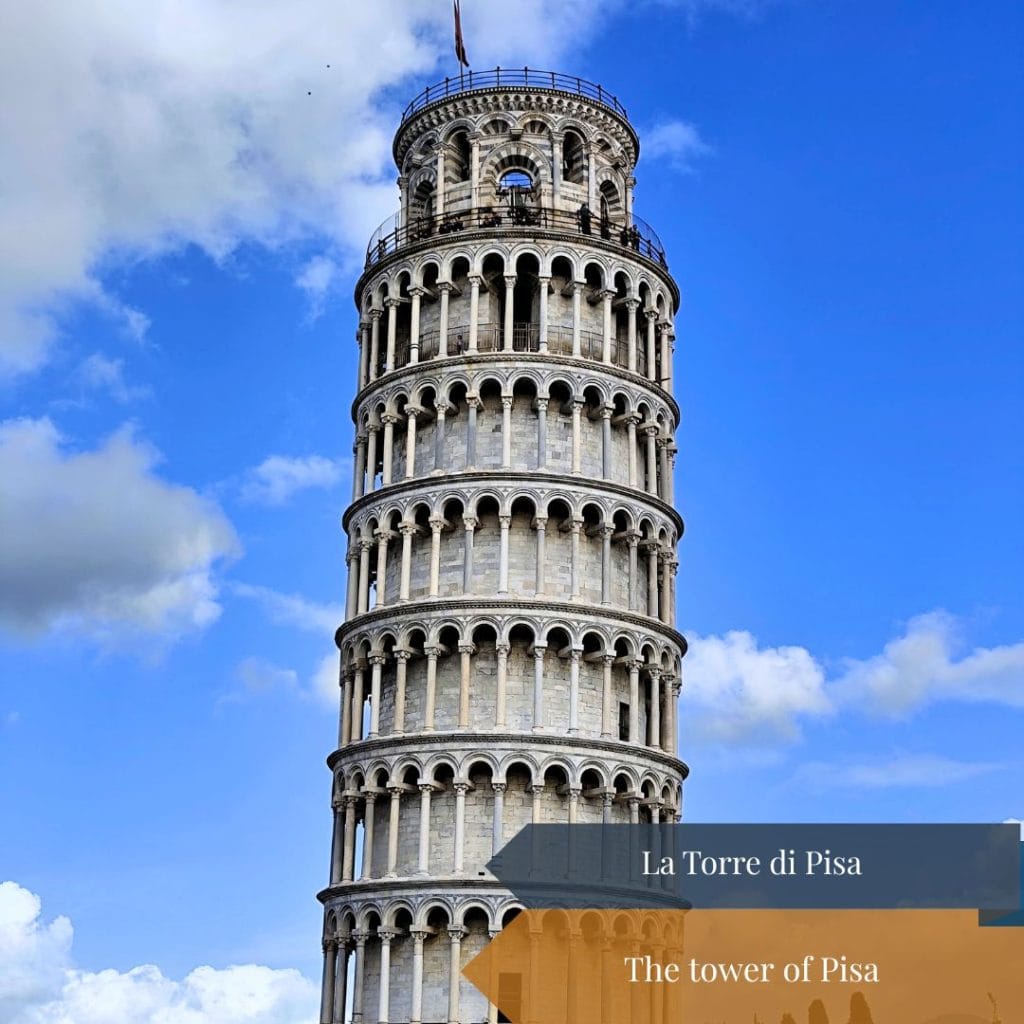
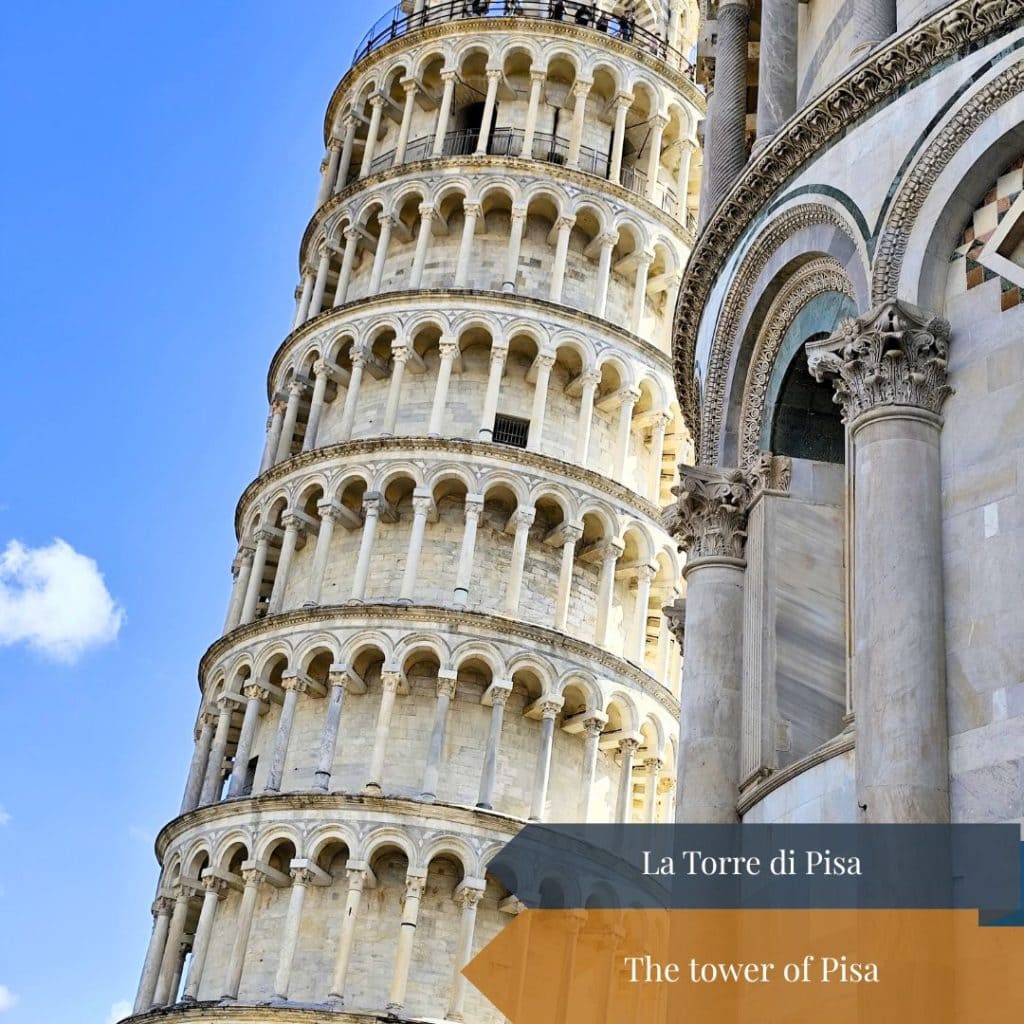
Approximately 56 meters high, the Tower is actually the bell tower of the Cathedral. The tower began to lean from the early years of its construction (1173) due to the sandy and clayey soil underneath. Galileo Galilei conducted experiments here on falling bodies. The Tower does not fall because its center of gravity still falls within the base. In the 1990s, it underwent complex consolidation work that reduced its tilt by about 40 centimeters, making it safe for the next three centuries.
Each of the seven bells has a different name and musical note. The most famous is “Justice,” which rang to announce the executions of traitors (such as the famous Count Ugolino). - The Camposanto (death): The place of eternal rest.
It is said to have been built around a load of sacred earth from Mount Calvary (Golgotha), brought to Pisa by ships from the Fourth Crusade in 1203, so that the bodies of illustrious citizens could decompose in holy ground.
Inside is one of the most impressive medieval frescoes in the world, the Triumph of Death (attributed to Buonamico Buffalmacco). It is a powerful work depicting scenes of courtly life abruptly interrupted by the arrival of death.
Other interesting facts and tips:
- The square has not always been called this. Credit goes to the writer and poet Gabriele D’Annunzio, who in his novel “Forse che sì forse che no” (1910) described the monuments in the square as “miracles” due to their beauty and the whiteness of the marble contrasting with the intense green of the lawn. Since then, it has become known throughout the world as Piazza dei Miracoli.
- For a more powerful visual impact, enter the square from Porta Nuova (near Piazza Manin). As you exit the arch, you will see the monuments lined up in a breathtaking perspective, with the green of the lawn seeming endless.
- Piazza dei Miracoli after sunset is magical. The number of tourists decreases dramatically and the illuminated monuments take on an almost ghostly and solemn appearance.
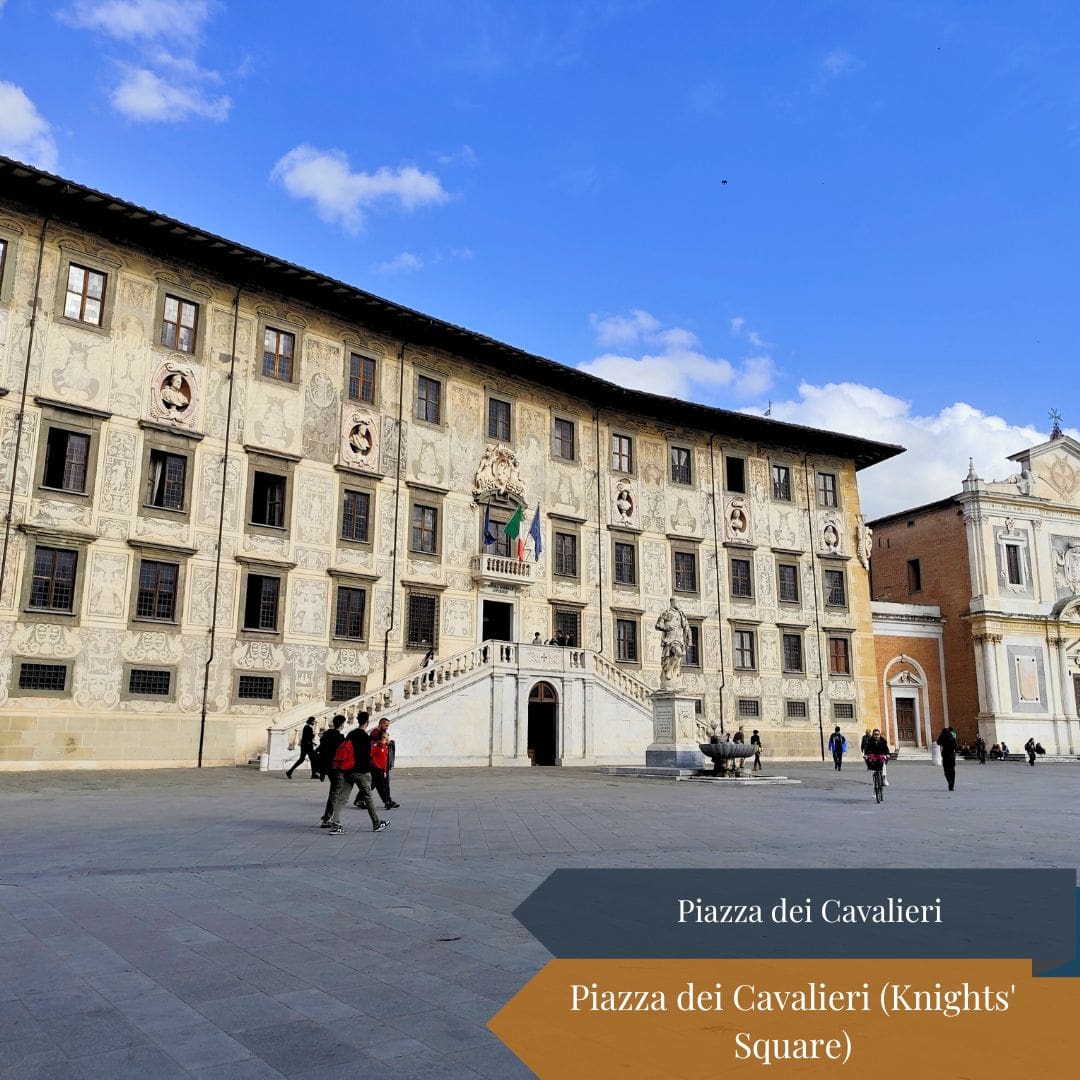
Palazzo della Carovana (Piazza dei Cavalieri)
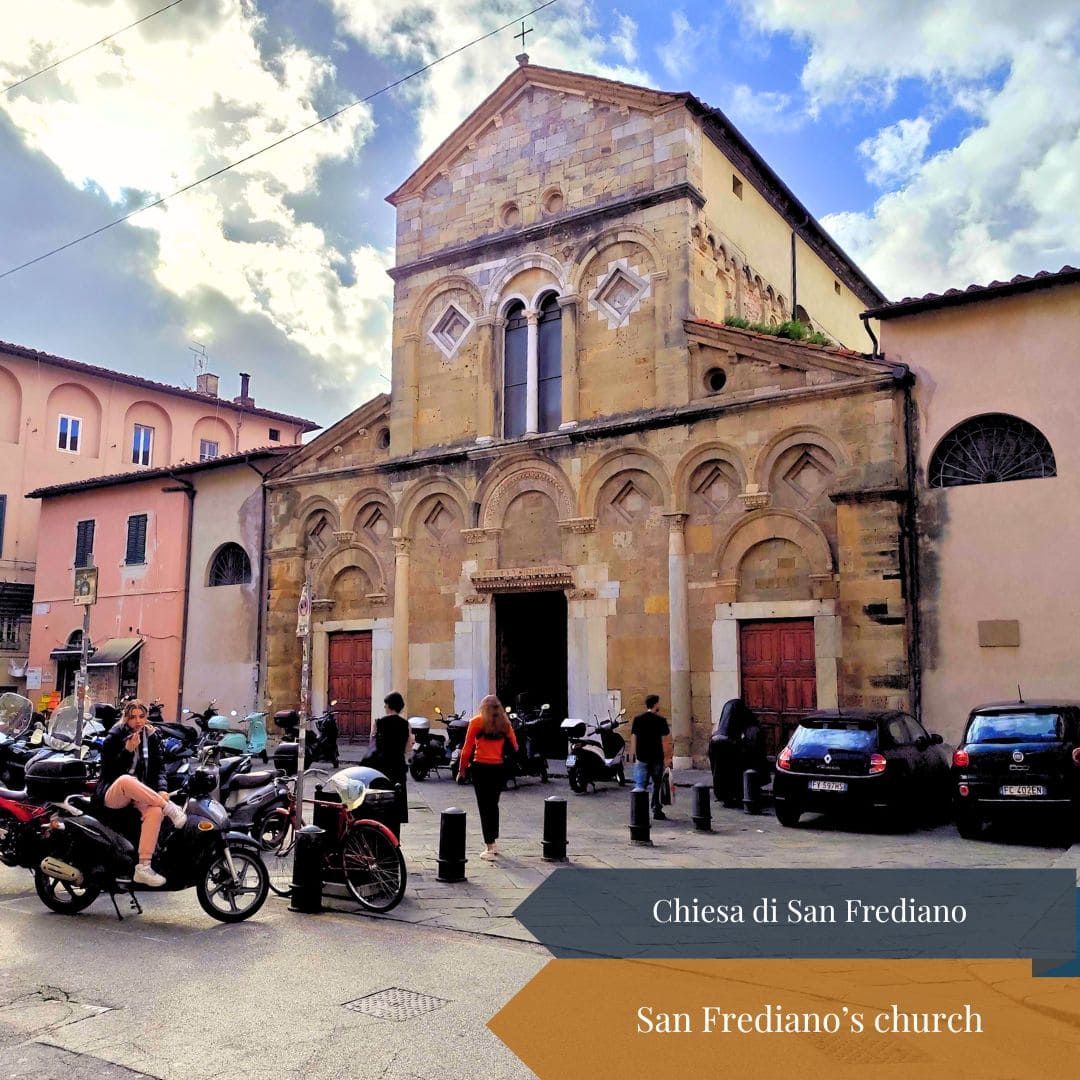
Church of San Frediano in Pisa
🎨 What to see inside the church:
The interior is a fascinating mix of medieval austerity and late Renaissance/Baroque opulence:
- The painted cross (12th century): this is the most important work of art in the church. It is a crucifix on wood entitled “Christus Triumphans” (Christ triumphant over death, with his eyes open). It is surrounded by small scenes from the Passion of extraordinary delicacy. It represents a crucial transition in Tuscan painting before the arrival of Cimabue and Giotto.
- The ancient columns: inside, the naves are divided by columns salvaged from ancient Roman buildings, all different in terms of material and capitals.
- The frescoes by Domenico Passignano: The dome and choir preserve late 16th-century decorations that tell stories related to San Frediano, a saint of Irish origin who was bishop of Lucca.
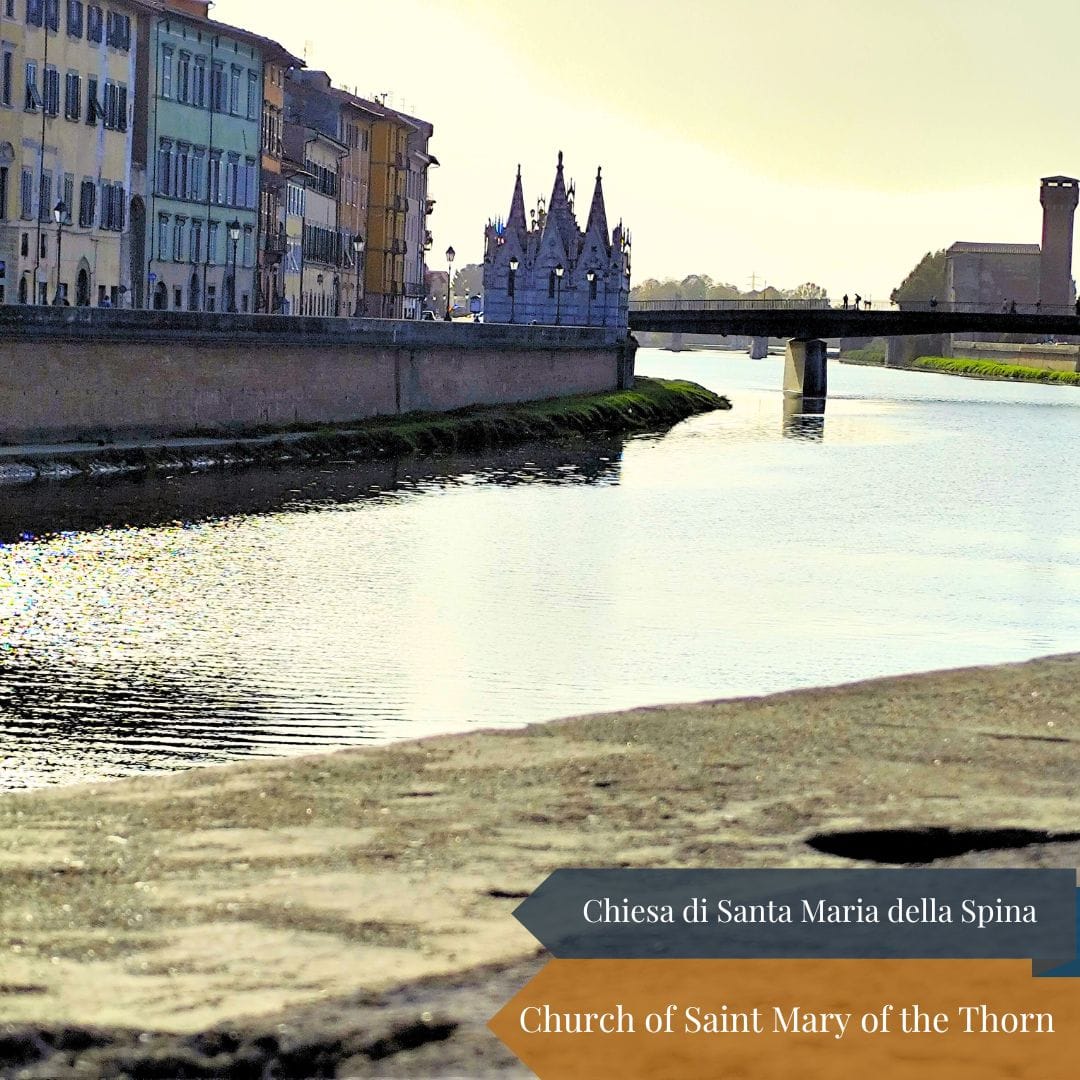
Church of Santa Maria della Spina (Saint Mary of the thorn)
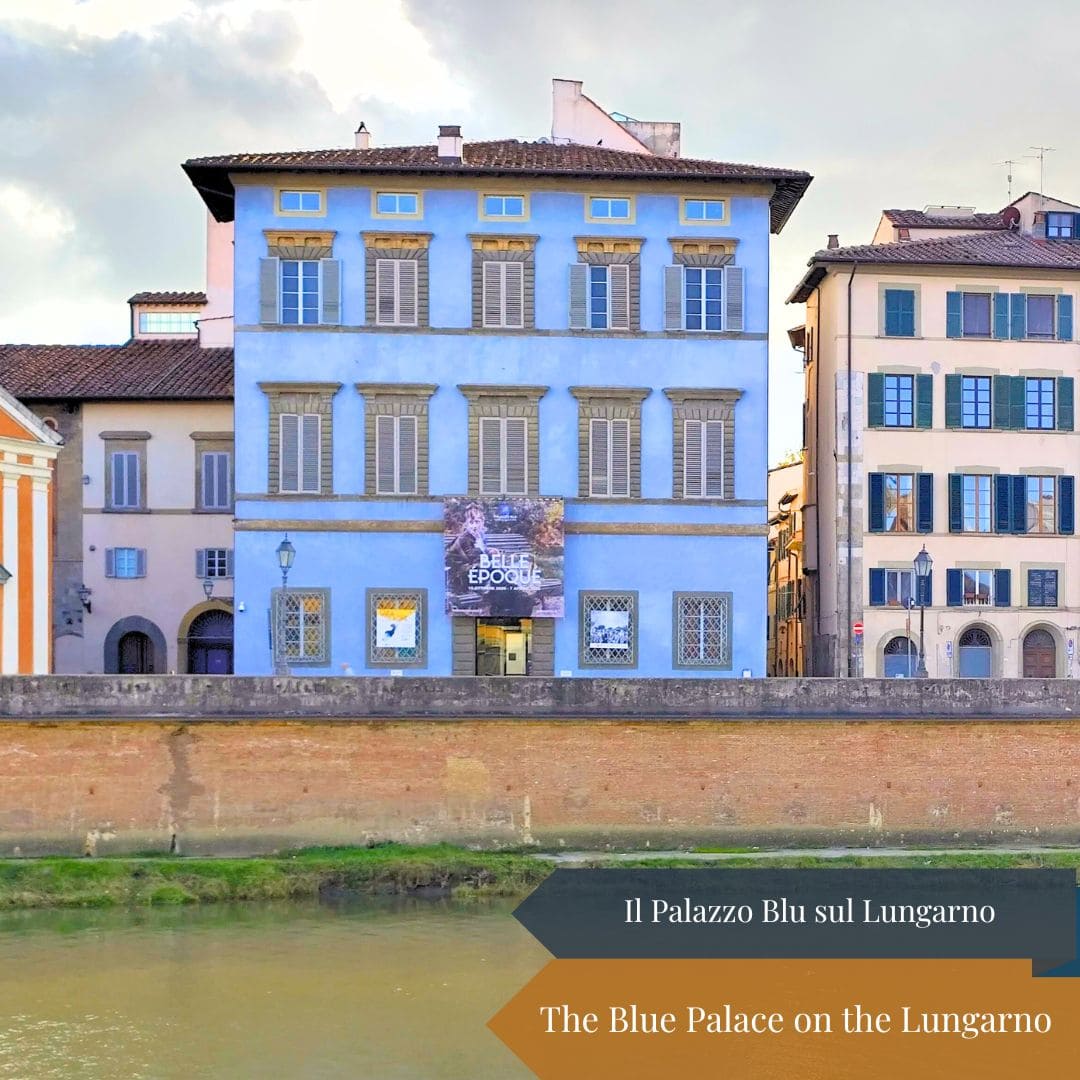
The Blue Palace on the Lungarno
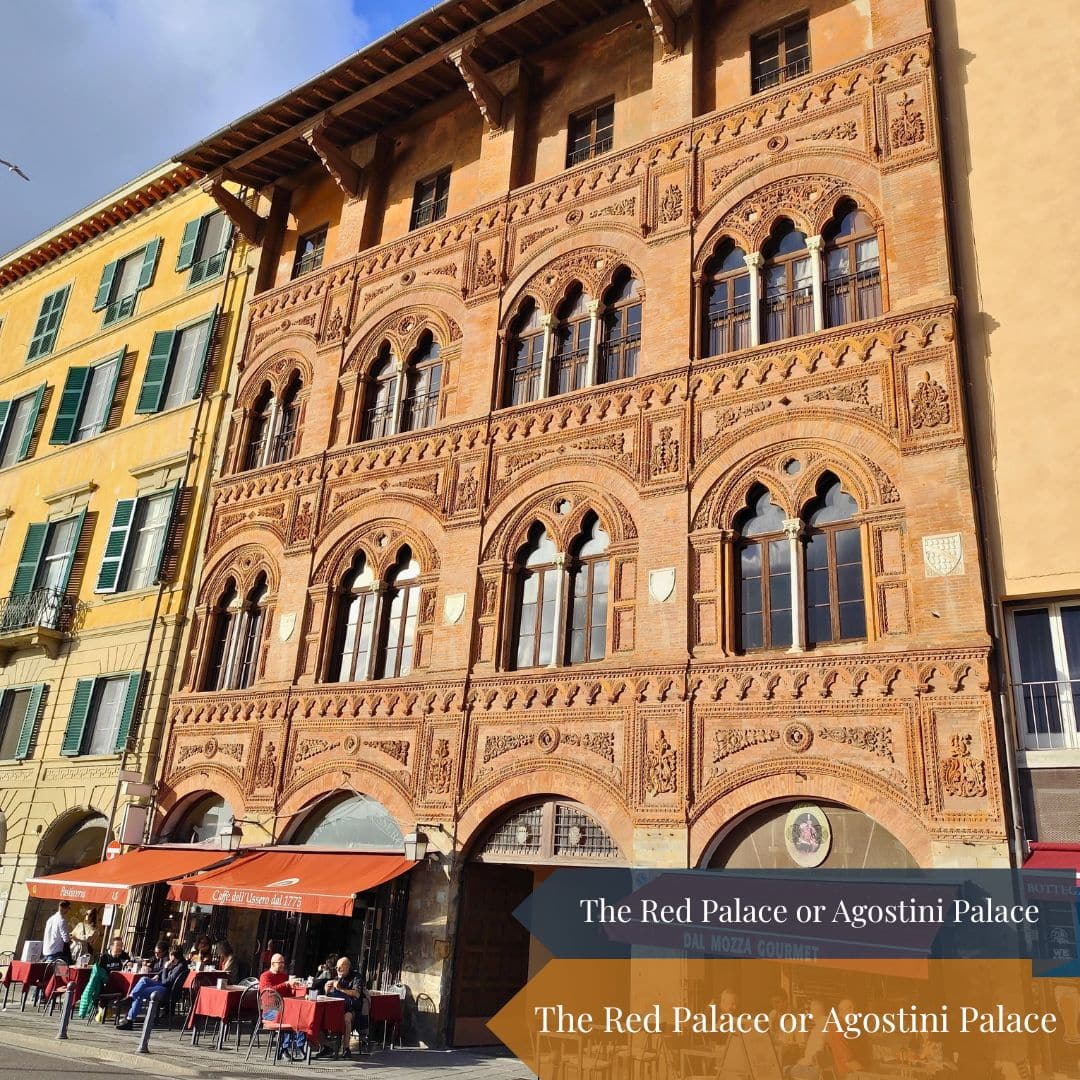
Palazzo Agostini (also known as Palazzo dell'Ussero or Red Palace)
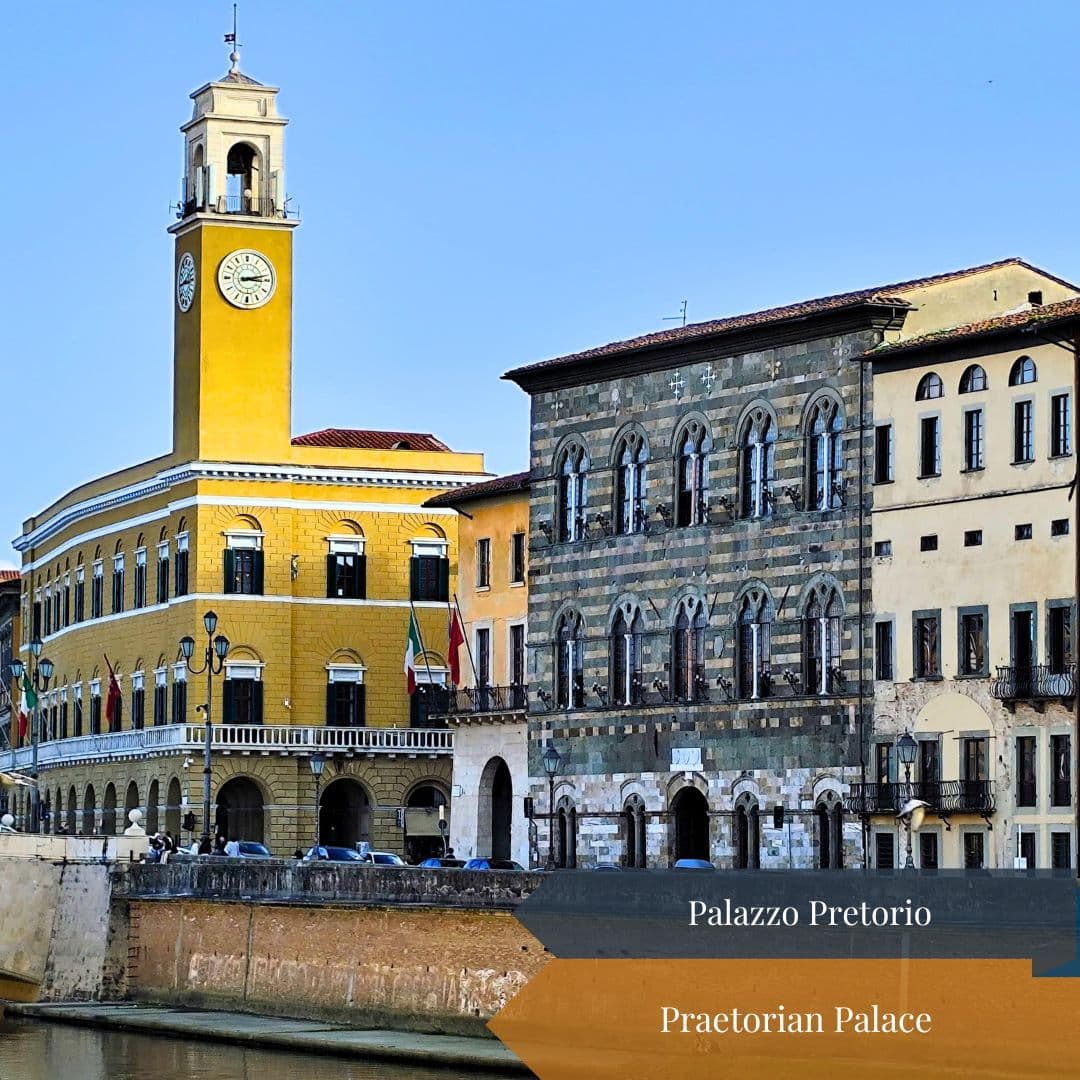
Praetorian Palace
What are you waiting for?
Come and visit Pisa and Florence!