
In the heart of Florence, just a few steps from Piazza della Signoria, stands an imposing stone building that encompasses centuries of history and a priceless art collection: the Bargello National Museum. Known primarily as one of the most important museums of Renaissance sculpture in the world, the Bargello is a place where art and history come together in an unforgettable experience.
From prisons to the Museum:
The history of the Bargello is as fascinating as the works it houses.
Originally, in 1255, the building was constructed as the Palazzo del Capitano del Popolo and, subsequently, became the seat of the Podestà and the Council of the Florentine Republic. Its name, “Bargello,” derives from the “bargello” or “bargellus,” the chief of police, who took up residence there starting in the 16th century.
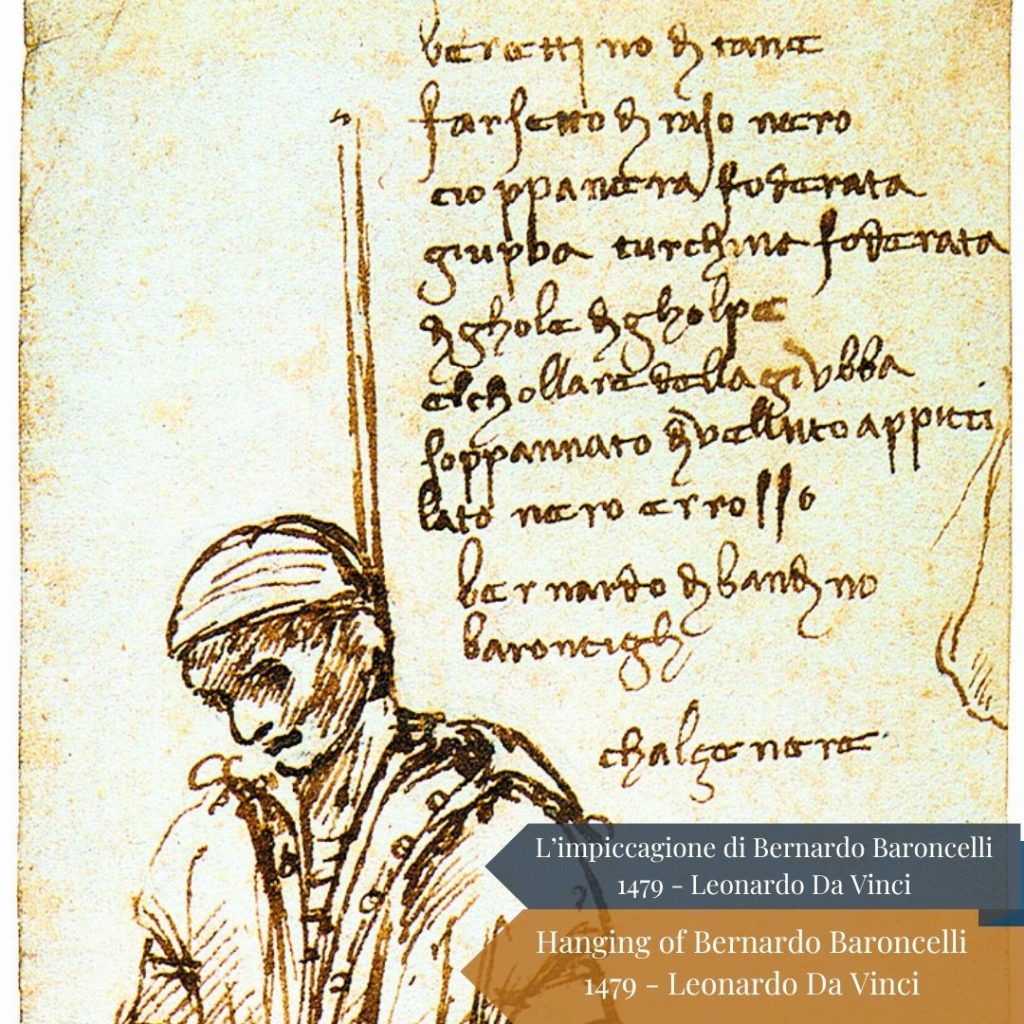
For centuries, the palace was used as a prison and a place of execution. Life inside the Bargello jail was extremely harsh. Inmates were subjected to torture, such as the infamous “tratti di corda” (strappado), which consisted of raising and dropping the prisoners’ bodies with a rope, causing tremendous physical damage. Capital executions, often by hanging, took place publicly in the palace courtyard. A historical event of great resonance was the hanging, on December 28, 1479, of Bernardo Bandini Baroncelli, one of the conspirators in the Pazzi Conspiracy. Baroncelli, who had killed Giuliano de’ Medici, had been captured in Constantinople and brought back to Florence. His execution became a widely followed event.
It is historically documented that Leonardo da Vinci was present at the execution of Bernardo Bandini Baroncelli. With his typical scientific and artistic curiosity, Leonardo did not merely watch, but drew the hanged corpse in his notebooks. In his notes, he meticulously described the clothes the condemned man wore, even noting the colors (a tansy-colored cap, a black velvet doublet, and a black cloth robe).
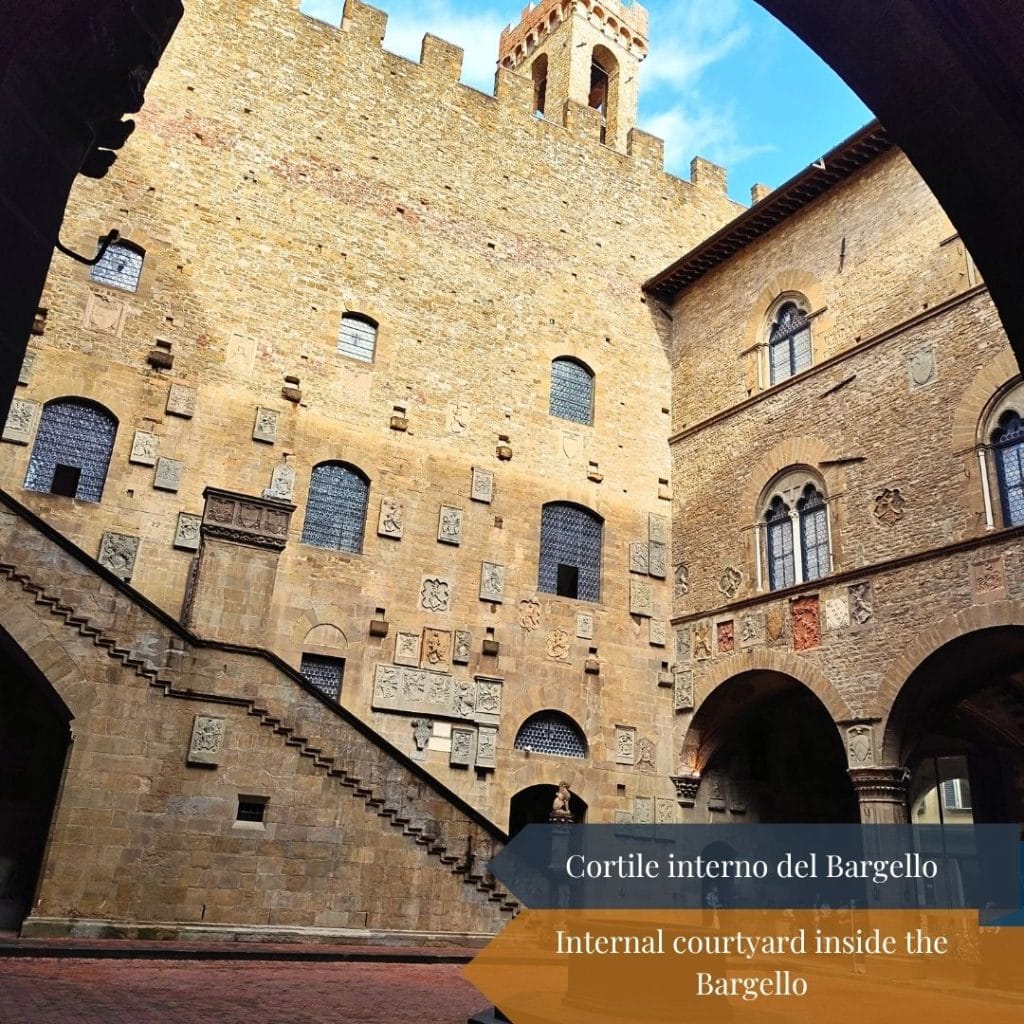
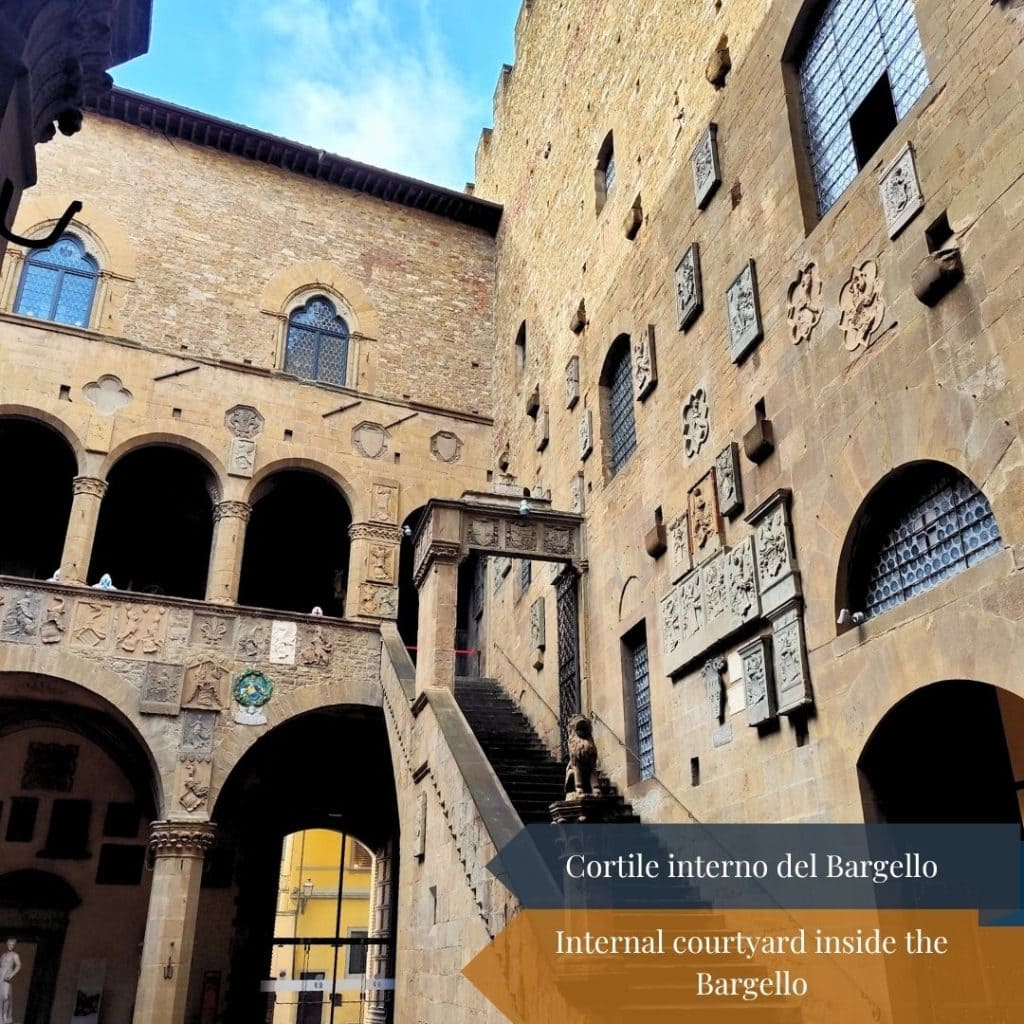
In the museum’s courtyard and loggia, there is an exceptional collection of coats of arms that were the legacy of the administrators of justice. Many coats of arms are in sandstone and terracotta and date from the mid-14th century up to the first half of the 16th century.
Only in 1865, with the Unification of Italy, was the building transformed into a national museum, the first in Italy dedicated to the art of the Middle Ages and the Renaissance. The intention was to bring together sculptures and applied arts from various Grand Ducal collections and other places, such as the Palazzo Vecchio and the Uffizi Galleries, creating a coherent and high-level exhibition itinerary.
Capolavori del Rinascimento: la “Danza dei Bronzi”
Entering the Bargello is like plunging into a golden age of art. The inner courtyard, with its arches and loggias, is a spectacle in itself, and serves as a prelude to the treasures found inside. The museum’s true attraction is its extraordinary collection of Renaissance sculpture, which includes works by some of the greatest masters of all time.
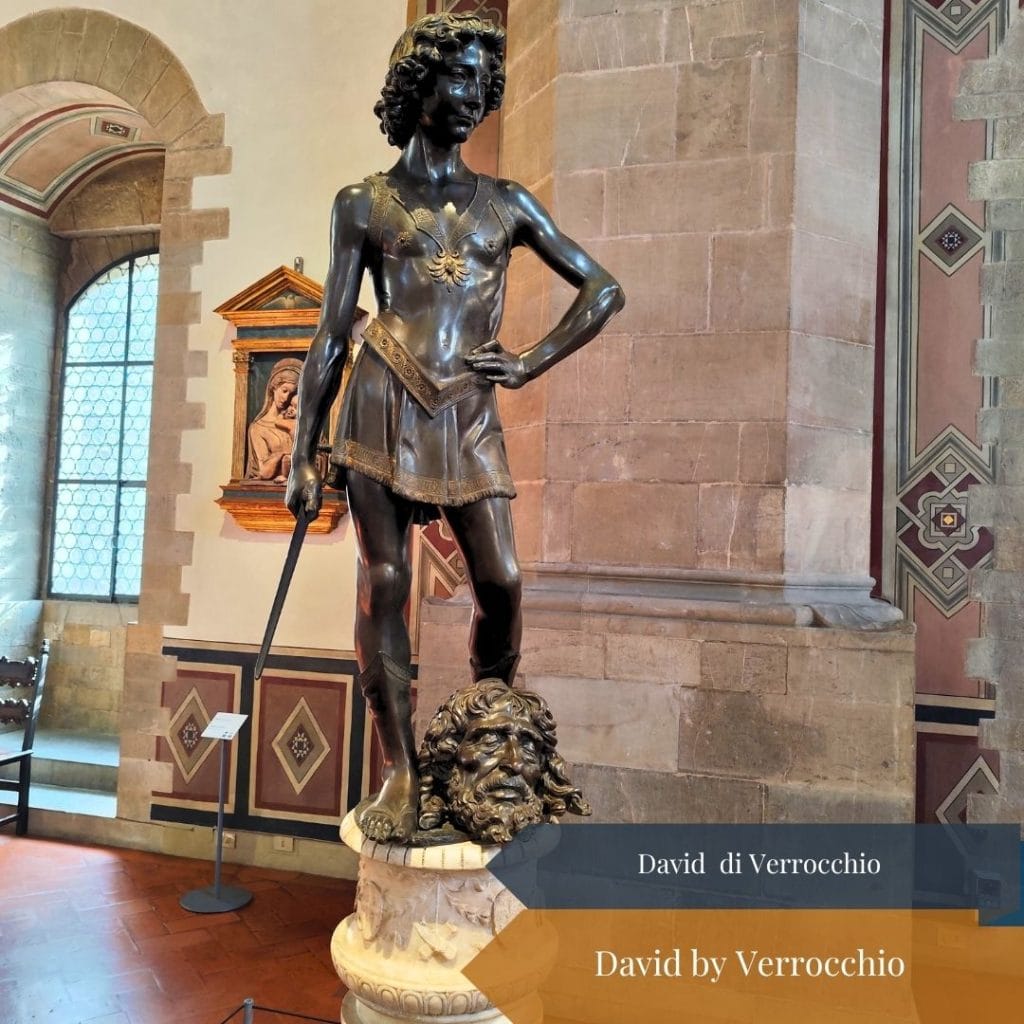
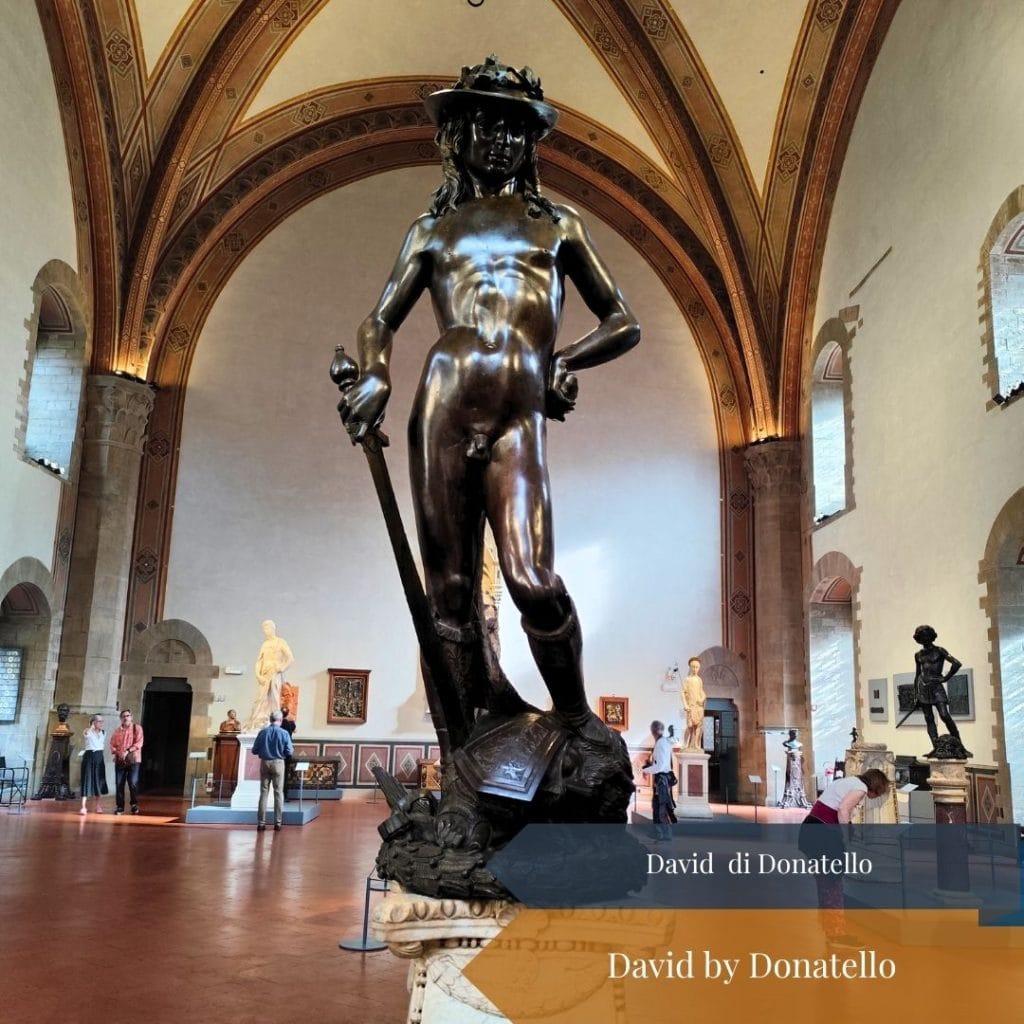
Among the most famous pieces are two bronze sculptures of “David.”
Donatello‘s “David” (circa 1440), the first life-size nude statue of the Renaissance, is a masterpiece of grace and sensuality, with an enigmatic expression and incredible lightness. The other is Verrocchio‘s “David” (circa 1475), which stands out for its realism and lively facial expression.
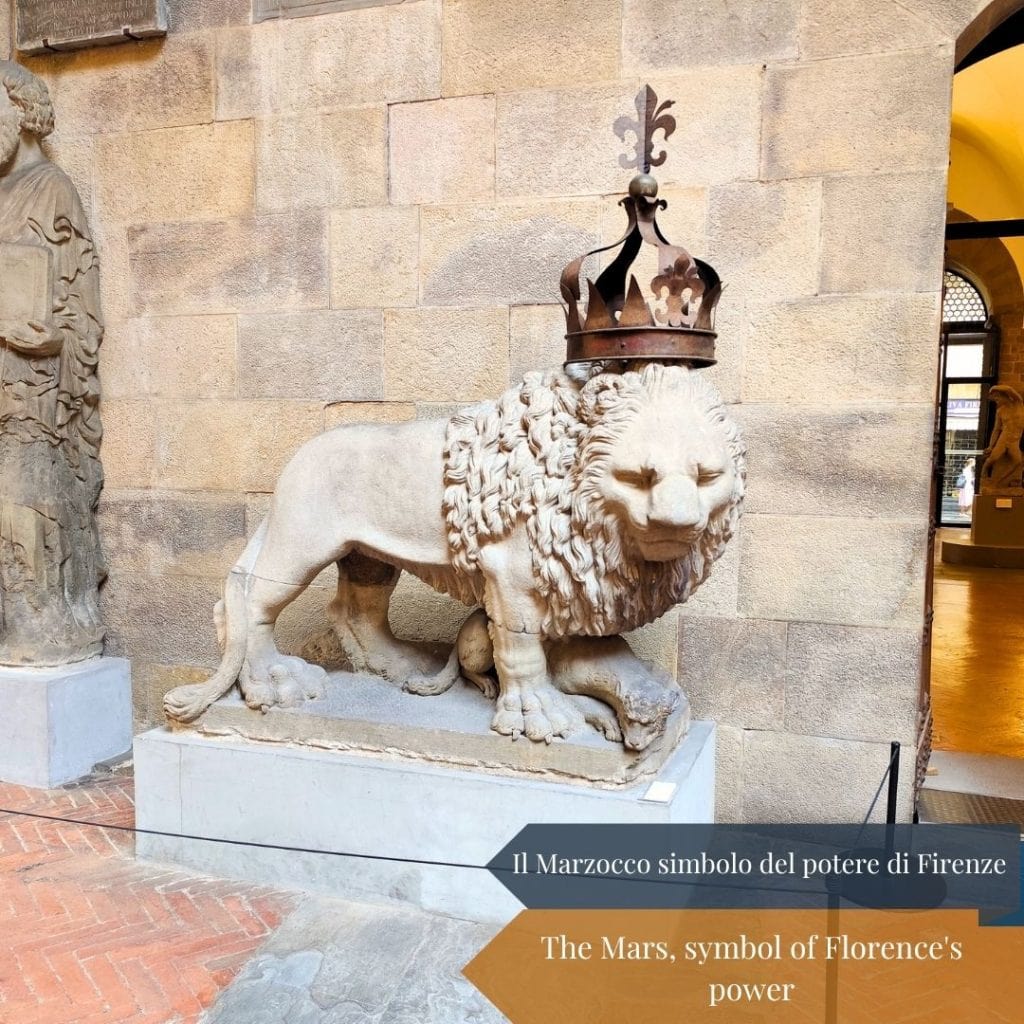
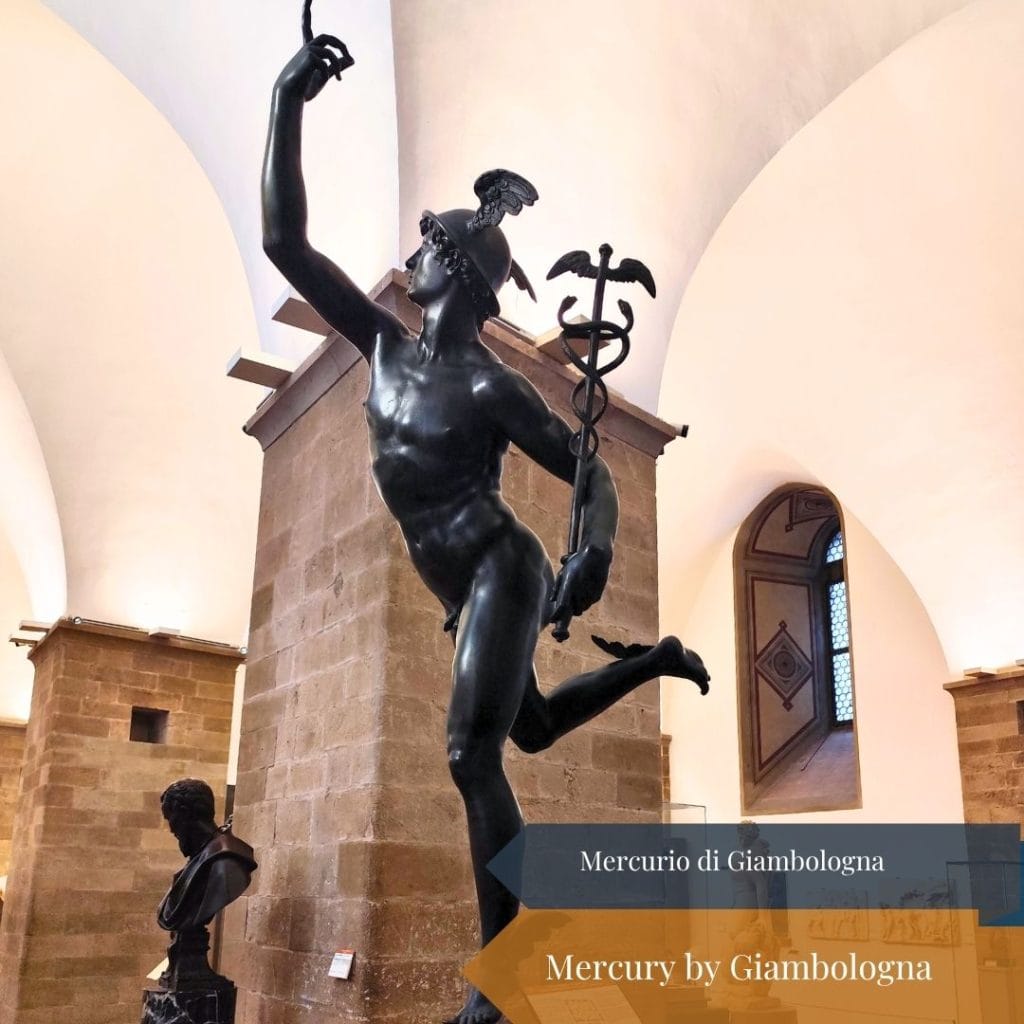
The Bargello also houses other fundamental works by Donatello, including “Saint George,” a symbol of civic strength and virtue, and the “Marzocco,” the heraldic lion symbol of Florence. There are also works by Luca della Robbia, with his delicate glazed terracotta sculptures that seem to come to life, and by Giambologna, such as the famous flying “Mercury.”
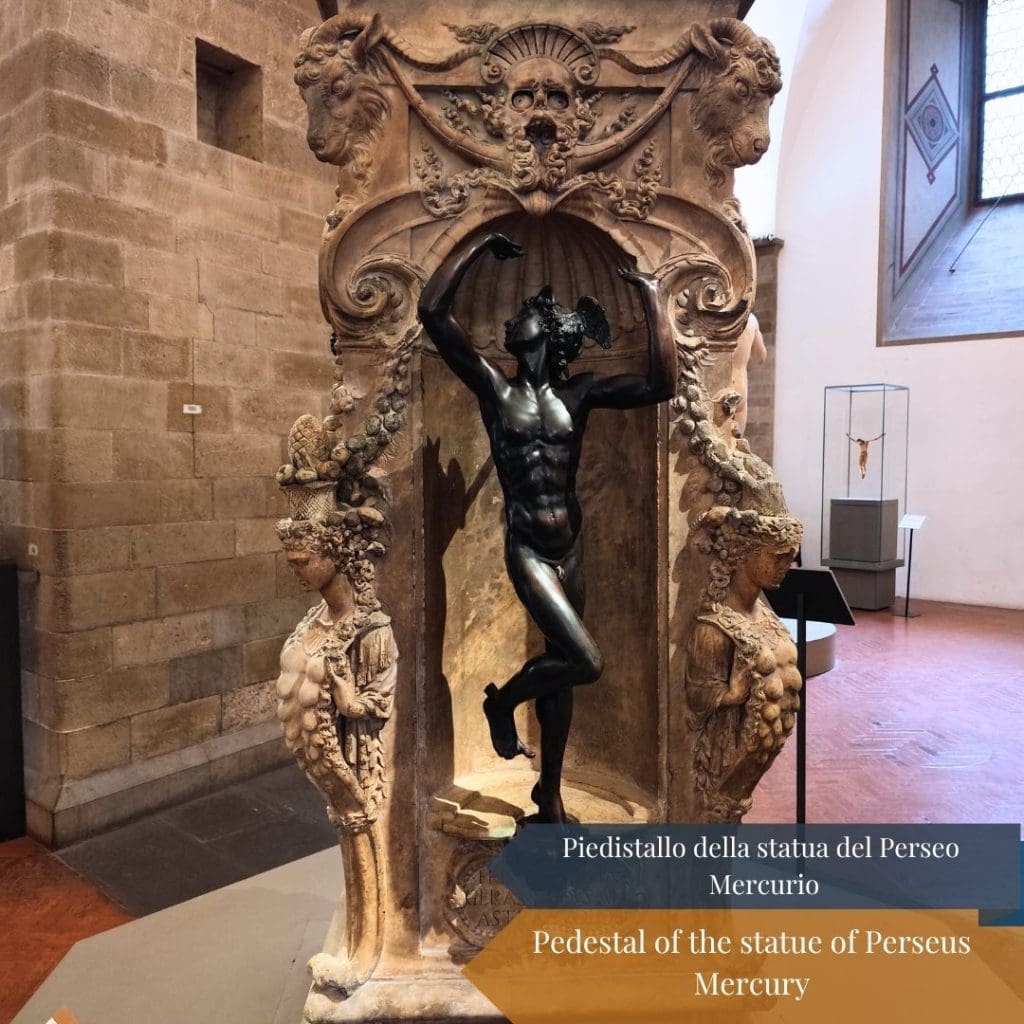
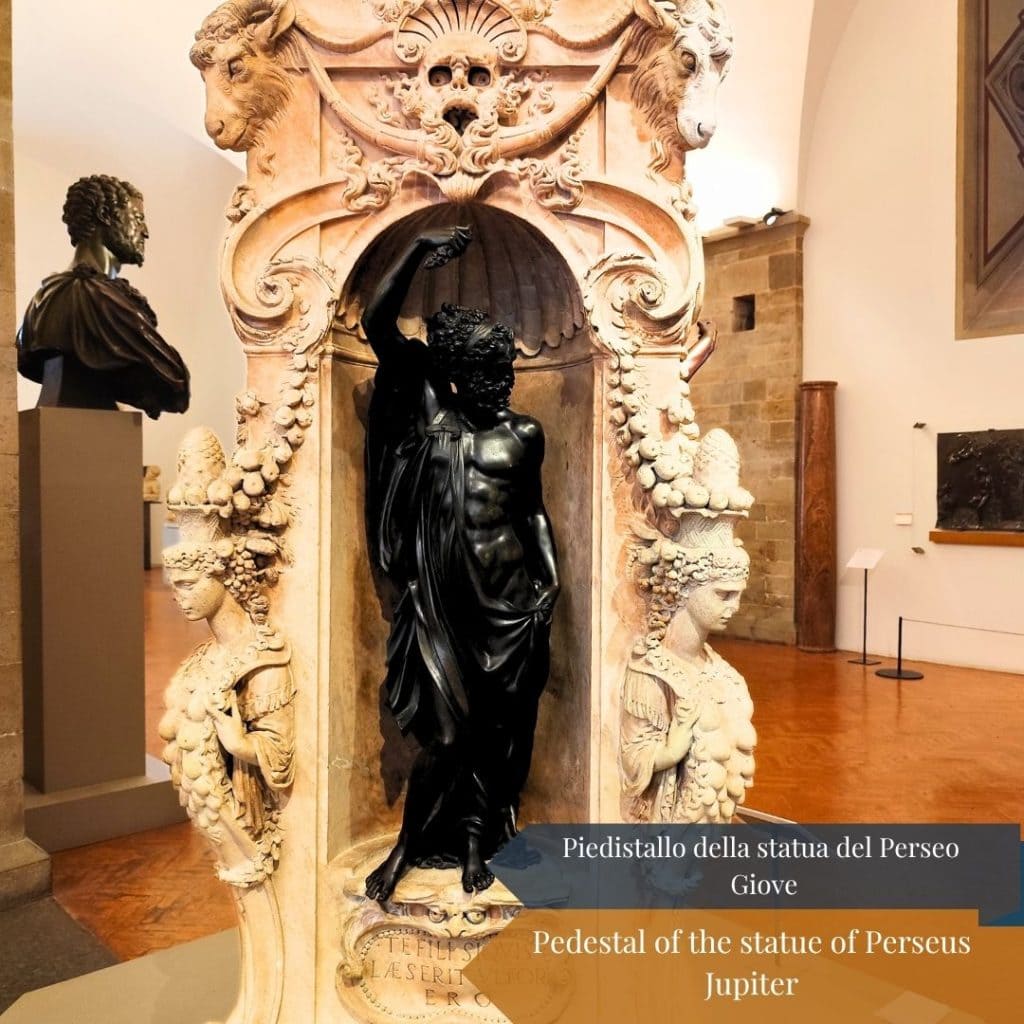
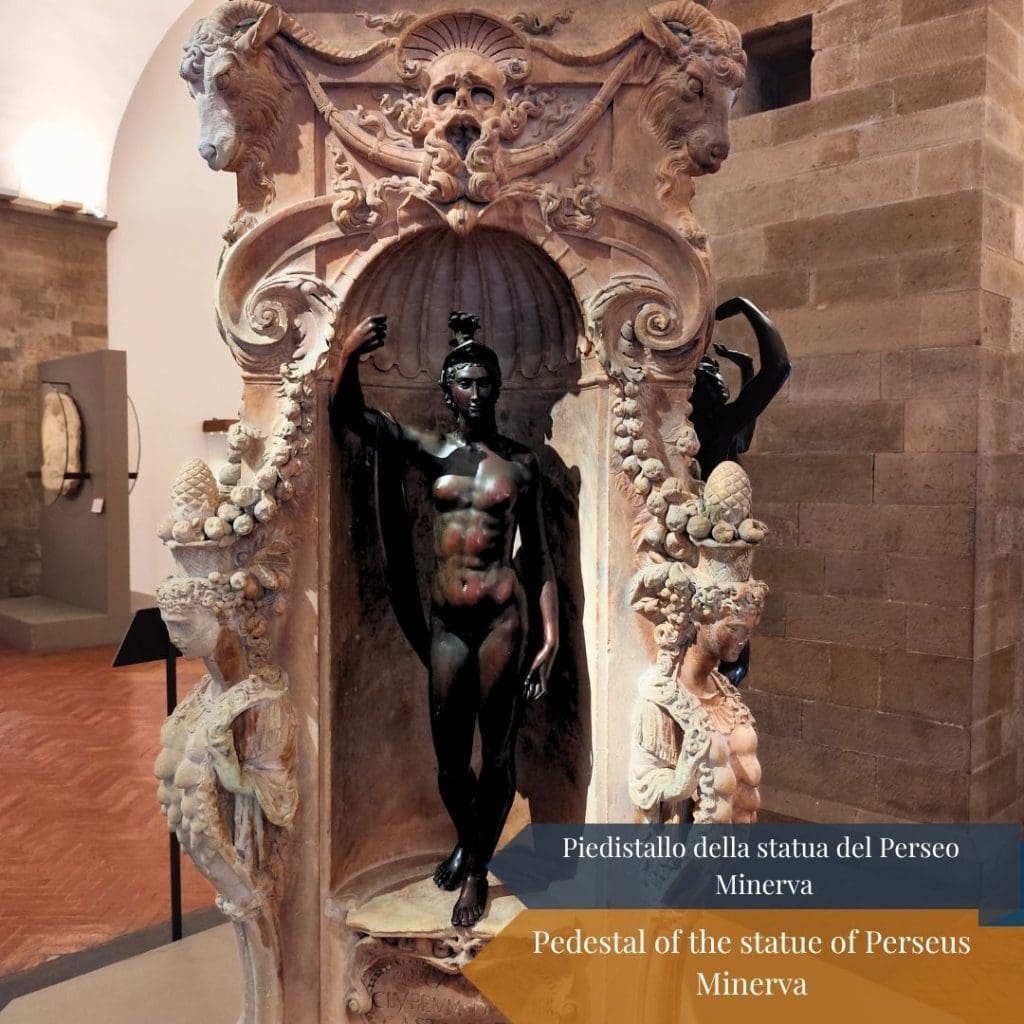
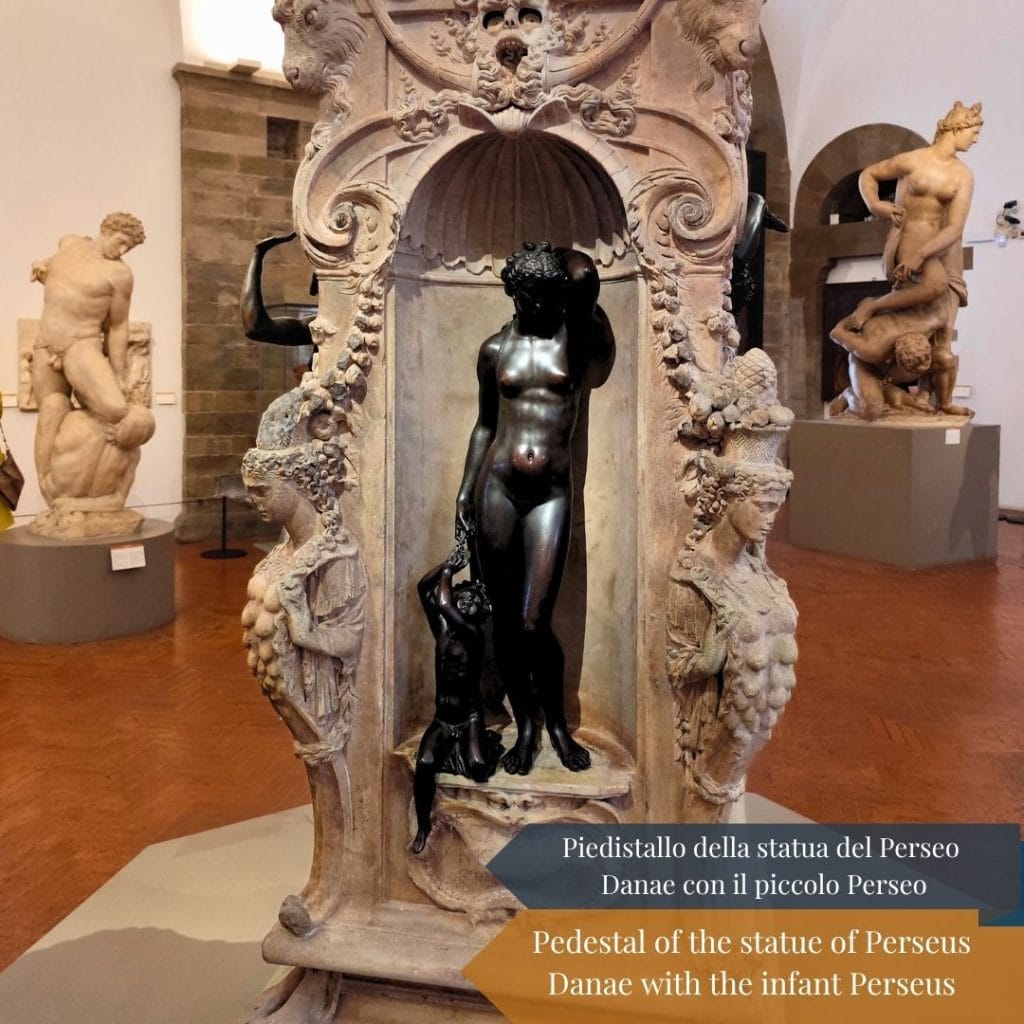
Particular mention must be made of the original base of the famous “Perseus” by Benvenuto Cellini which is displayed here. It is a block of marble carved with heraldic (such as the heads of the Capricorn, symbol of Cosimo I de’ Medici who commissioned the statue) and mythological motifs. The bronze statuettes are placed in the four niches and depict the myth of Perseus from Ovid‘s Metamorphoses. Here one finds Jupiter, Mercury, Minerva, and Danaë with the infant Perseus.
La bellezza degli oggetti quotidiani:
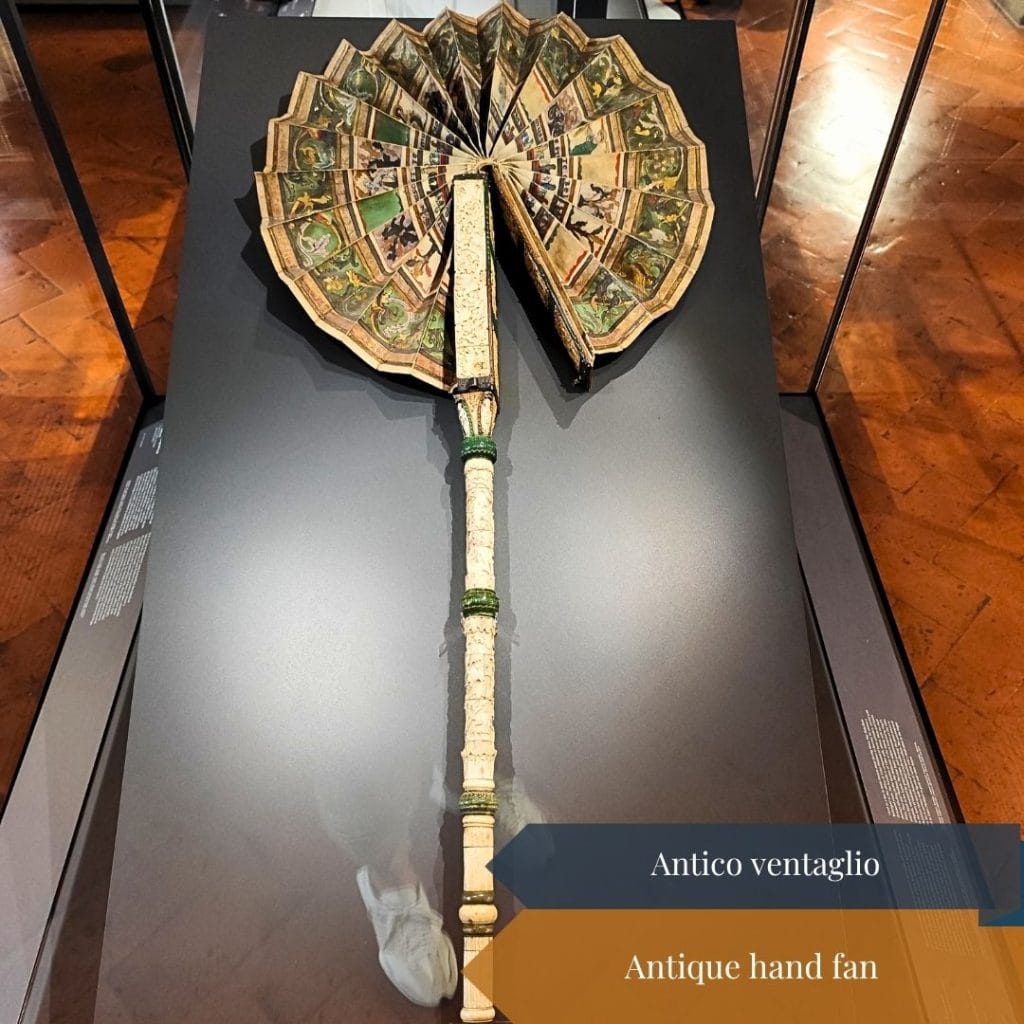
In the heart of its exceptional sculpture collection, the Bargello Museum also reveals a more intimate and fascinating side of Renaissance daily life through a rich collection of decorative arts and objects of common use. Among these, the decorated objects stand out, combining functionality with narrative art, offering a precious window into the customs and beliefs of the era.
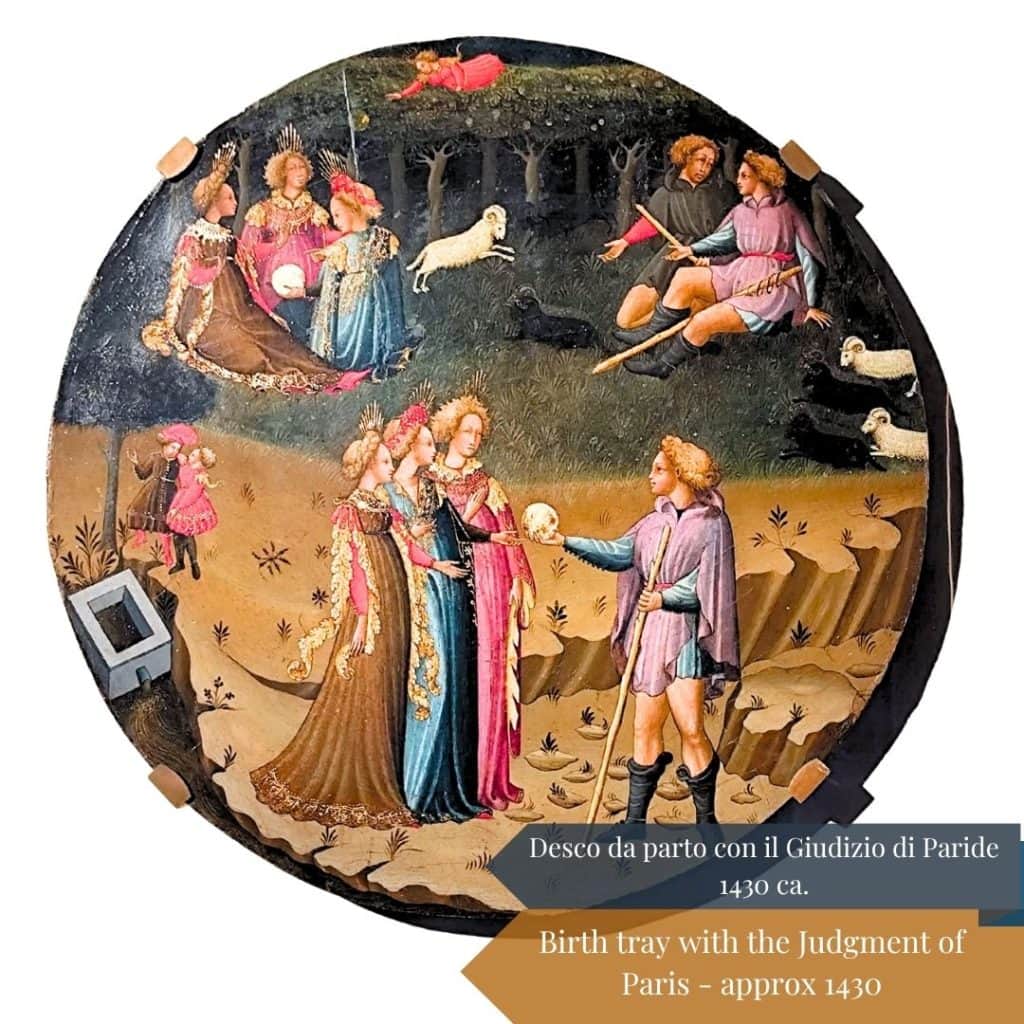
Among the most representative pieces are the birth trays (deschi da parto), painted wooden rounds that were used to offer sweets and food to high-society Florentine women after childbirth. They often depict mythological, historical, or allegorical scenes tied to the hope of prosperity and happiness for the newborn. These objects, painted by artists of great renown, were an important ritual gift that celebrated family continuity.
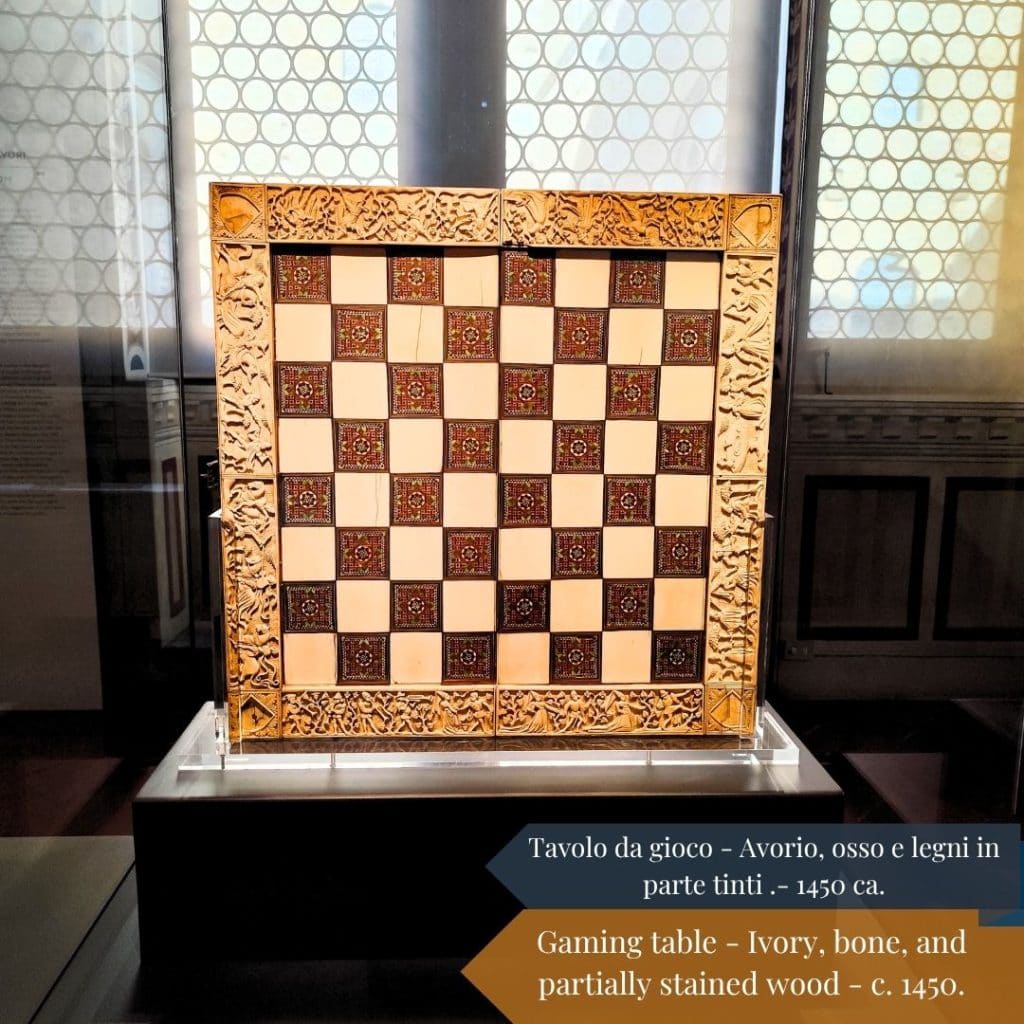
In addition to these, the Bargello also houses a variety of other artifacts, such as a prized ivory game board from the fifteenth century that testifies to the pastimes of the aristocracy of the time, and finely carved chess pieces and checkers.
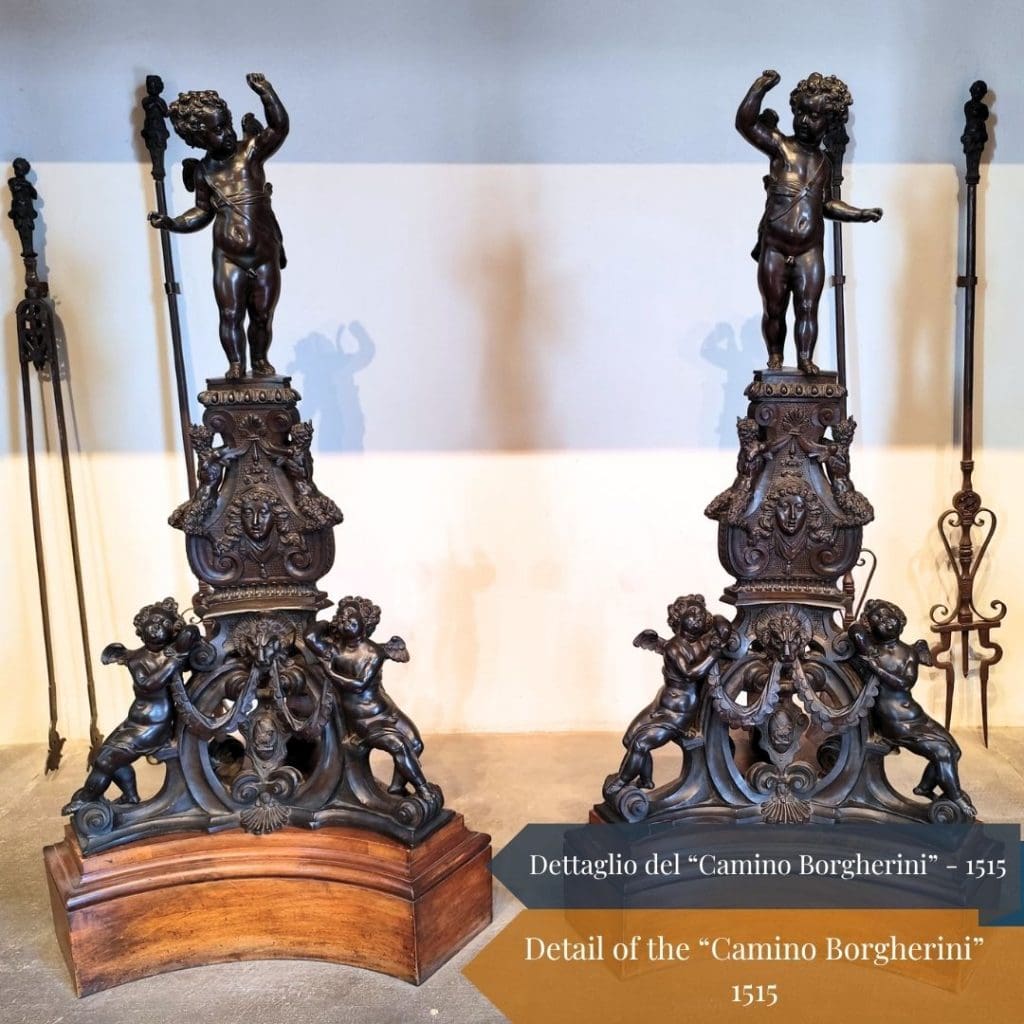
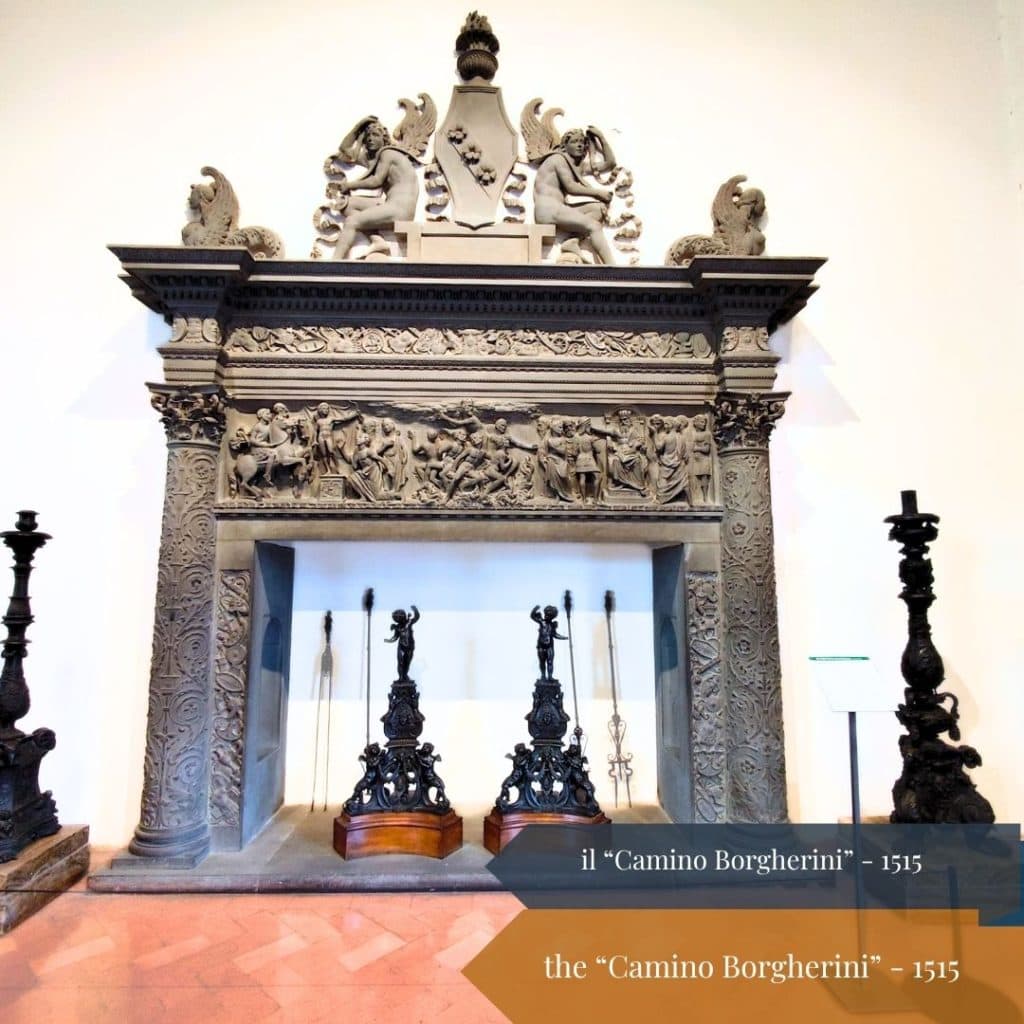
Finally, we must present the “Borgherini Fireplace” from 1515, a work of art that combines sculpture, history, and literature. It was created for the wedding of Pierfrancesco Borgherini and Margherita Acciaioli and was so appreciated that even Vasari described and admired it in his works. Executed in pietra serena (a grey sandstone), the fireplace shows the Borgherini family coat of arms. Its particularly elaborate frieze depicts a story taken from ancient literature: that of Croesus, the immensely wealthy King of Lydia who lost his kingdom to Cyrus, the powerful Persian emperor. To the left, Croesus, captured, is imploring the god Apollo to save his father, who has been condemned to the stake. To the right, Cyrus orders the fire invoked by Croesus to be extinguished, saving the father’s life after Apollo has sent a sudden rain. The story, rich in symbolism, transmits an important moral lesson: one cannot be called happy who possesses only enormous wealth, since fortune and human affairs are subject to unpredictable changes.
These objects, beyond their function, tell stories of life, art, and luxury, completing the portrait of an era in which beauty merged with every aspect of existence.
Cambiano le epoche, ma non la necessità di vedere bellezza:
Although sculpture is the undisputed protagonist, the Bargello is not only this. Its halls also host a rich collection of decorative and applied arts, which offer a complete cross-section of Florentine and Italian creativity, demonstrating how humanity evolves but never loses interest in art and beauty even in its daily life. In many rooms, one can admire splendid ivories, enamels, jewelry, tapestries, maiolica (tin-glazed pottery), and ancient weapons. The hall of arms and armor, in particular, is a fascinating place where one can directly perceive the elegance that accompanied the ferocity of past eras.
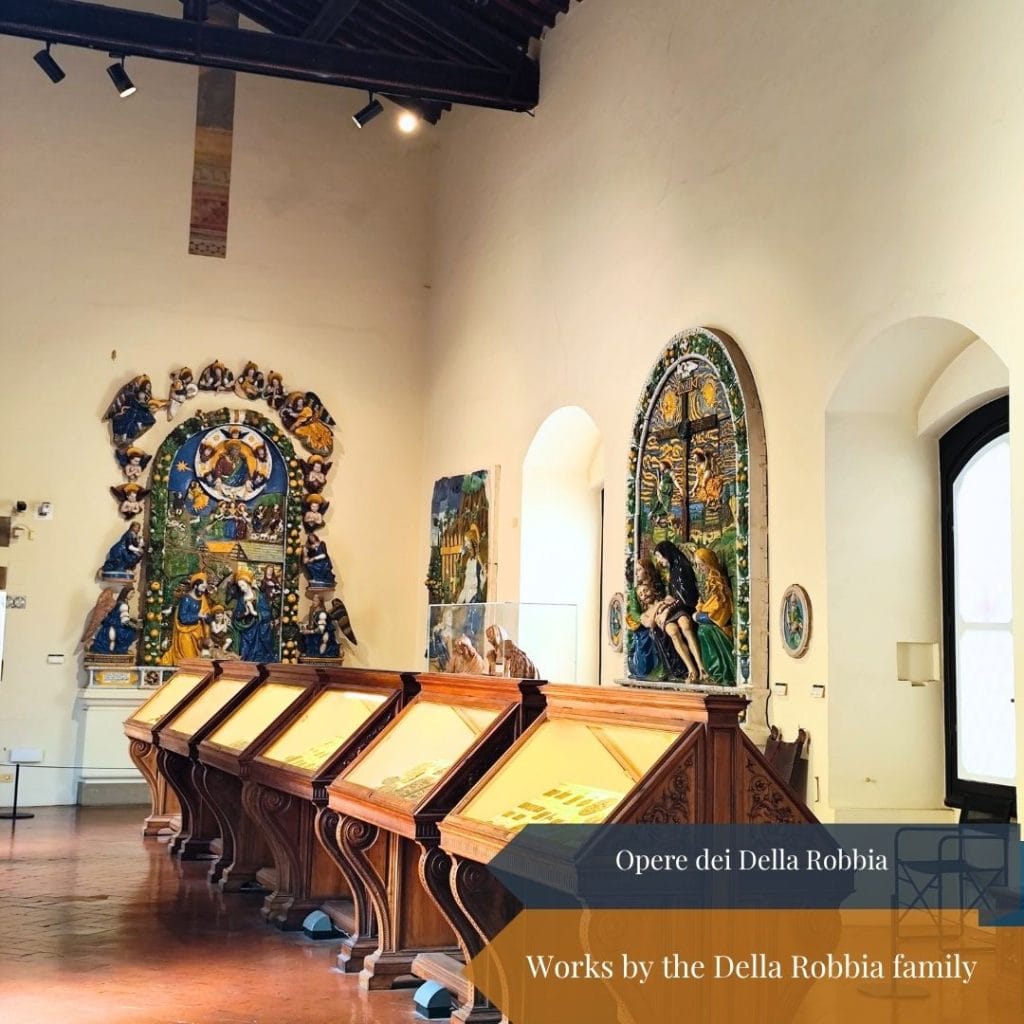
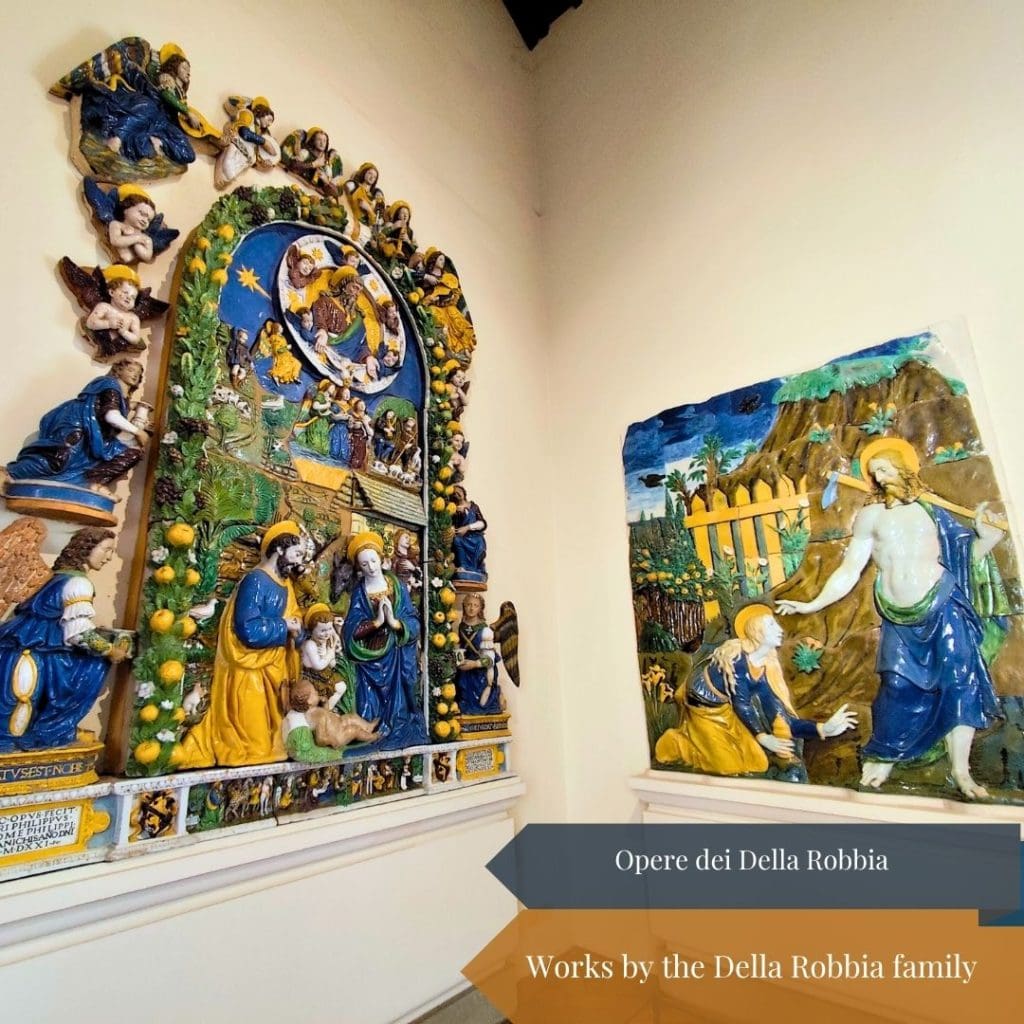
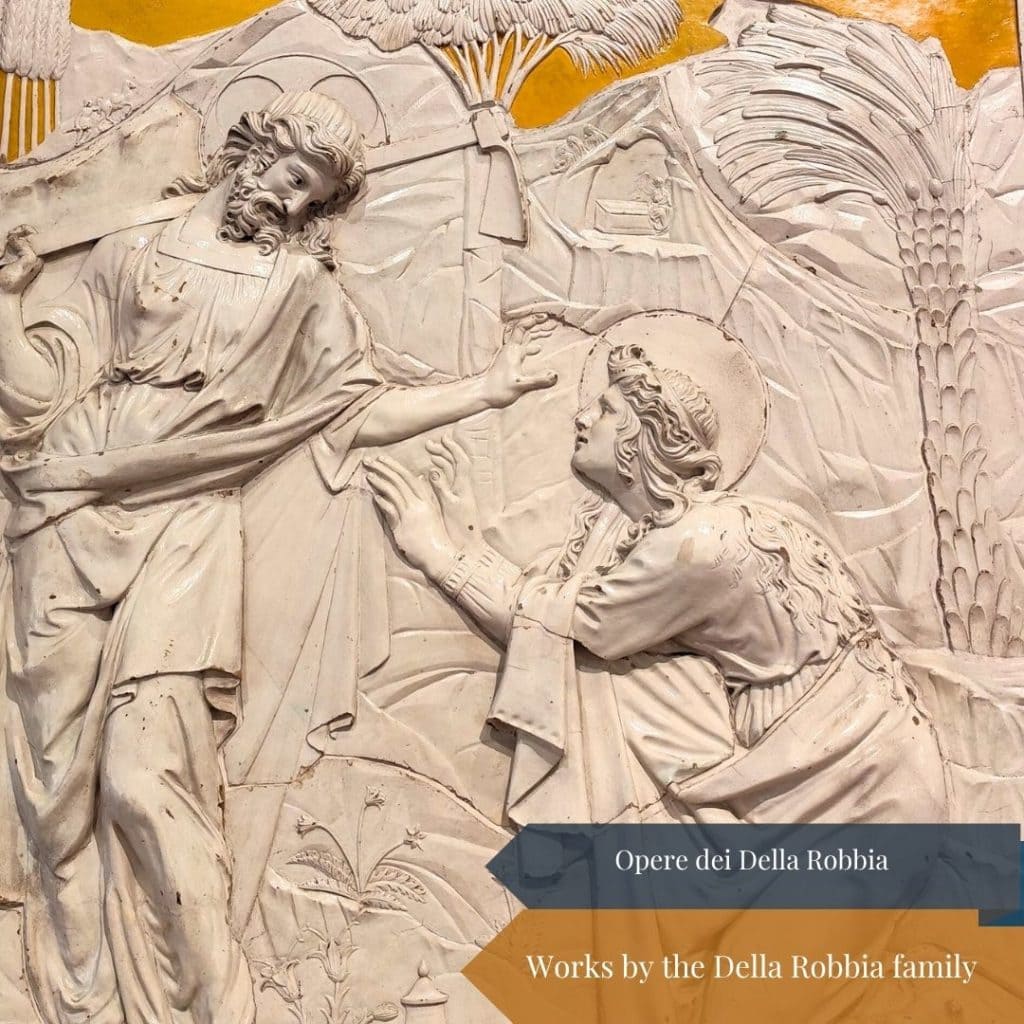
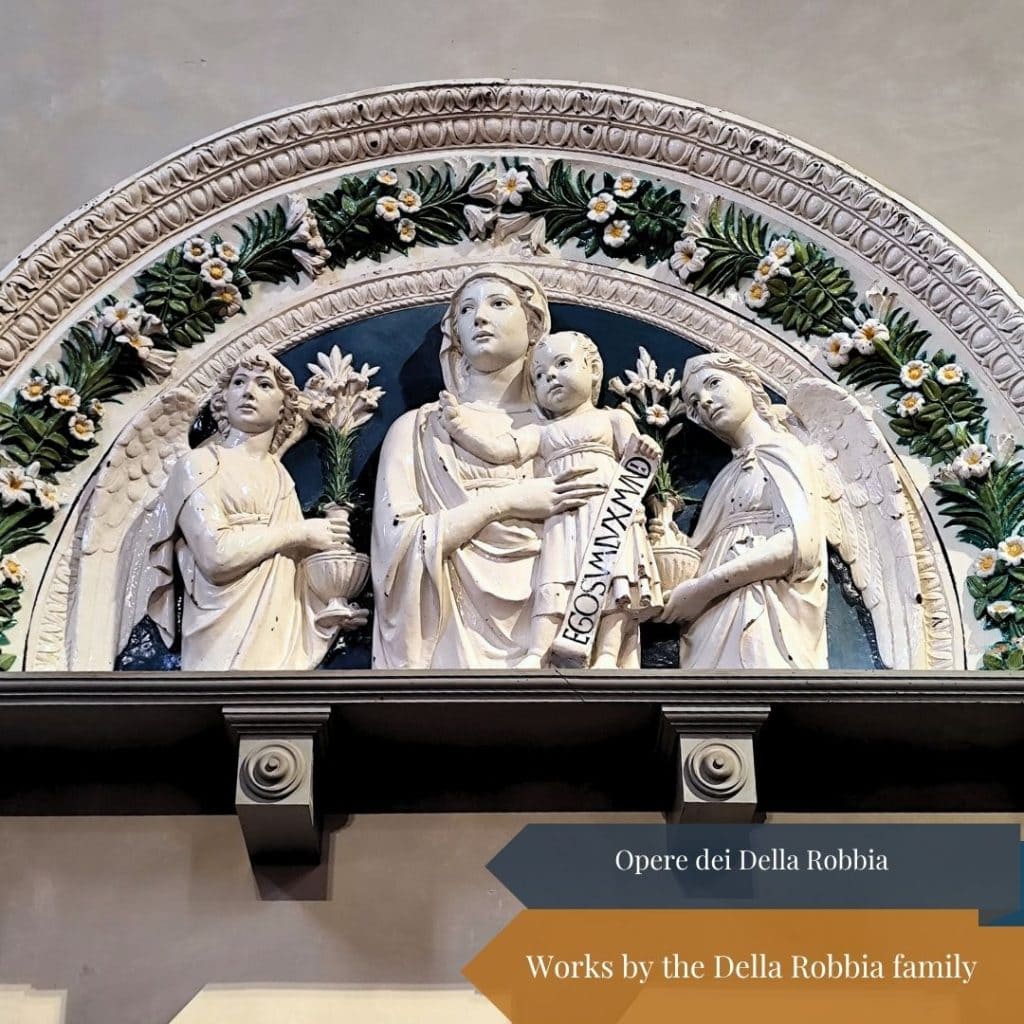
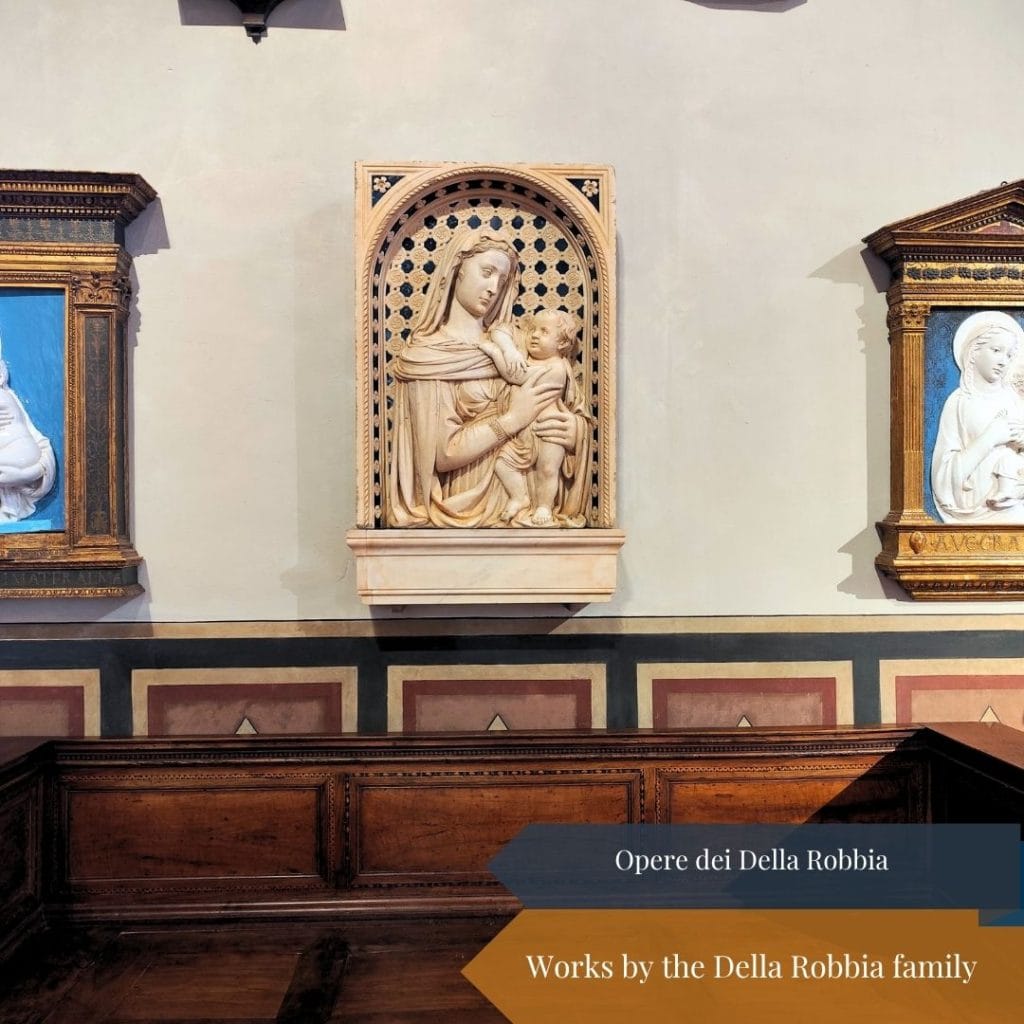
A special mention is deserved by the hall dedicated to the terracottas of Andrea and Giovanni della Robbia.
Glazed terracotta is a process that Luca perfected and kept secret. This technique consisted of coating terracotta sculptures with a tin-based glaze which, once fired, created a shiny, resistant, and waterproof surface. This glaze, typically white, allowed for the creation of pure and luminous figures, often enhanced by details in cobalt blue, but also by touches of green, yellow, and manganese.
The works of the Della Robbia are displayed in various halls of the museum, but the Maiolica Hall stands out in particular, a true treasure chest of glazed terracotta sculptures. This collection allows one to follow the evolution of the workshop’s style over the course of three generations.
La sala islamica:
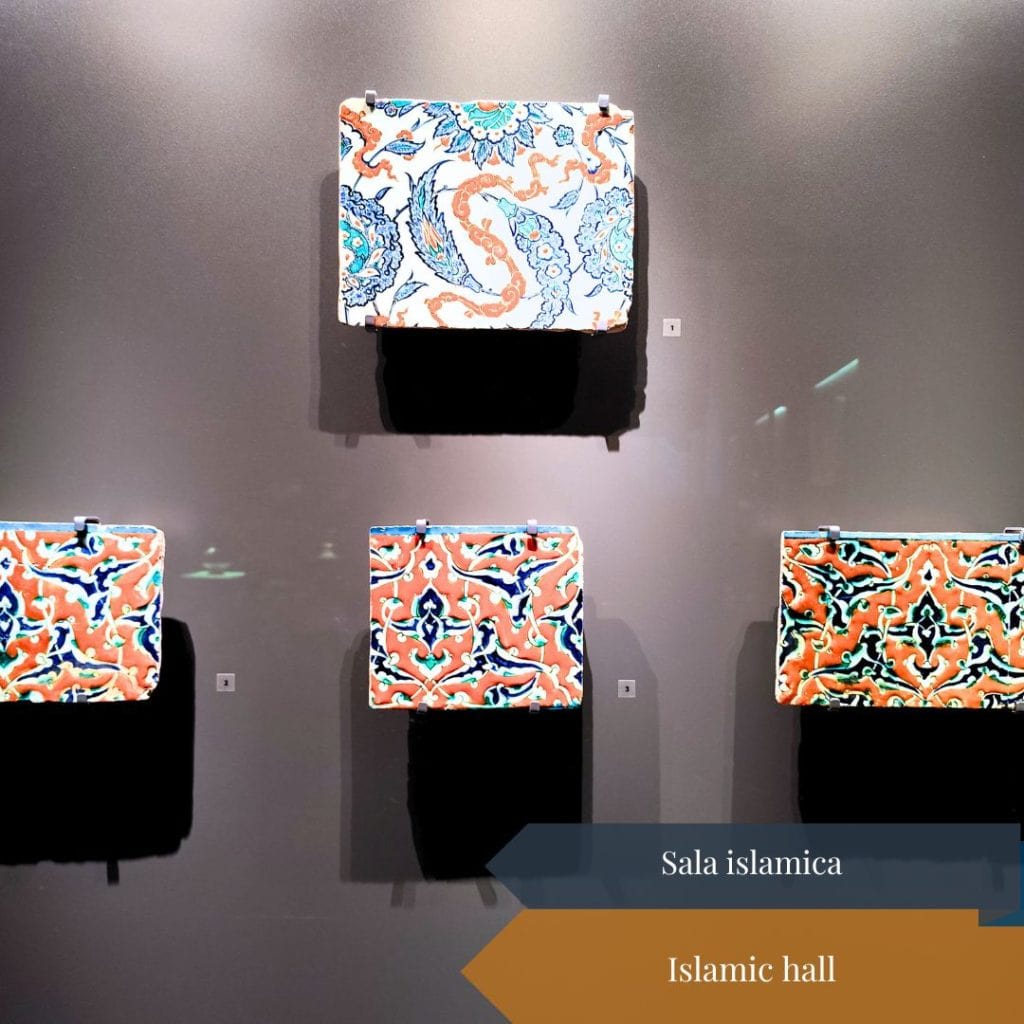
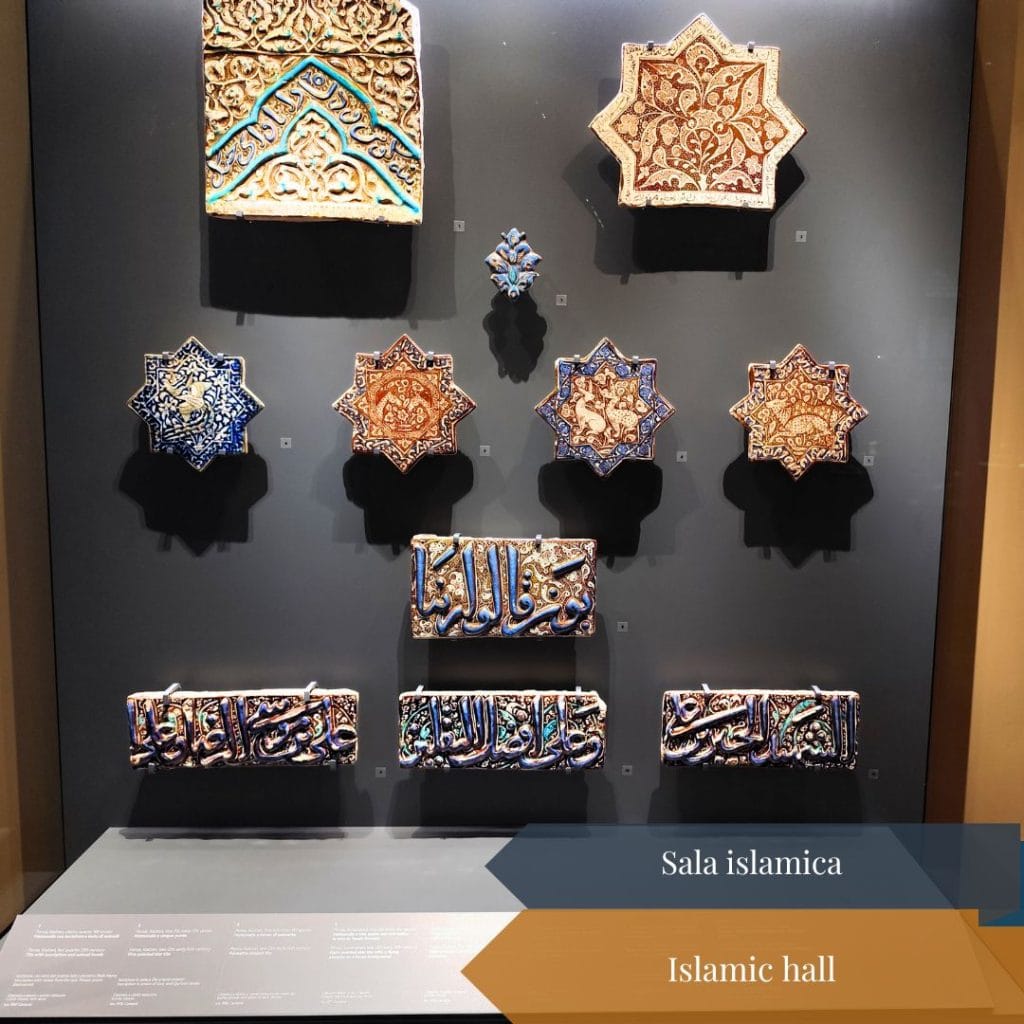
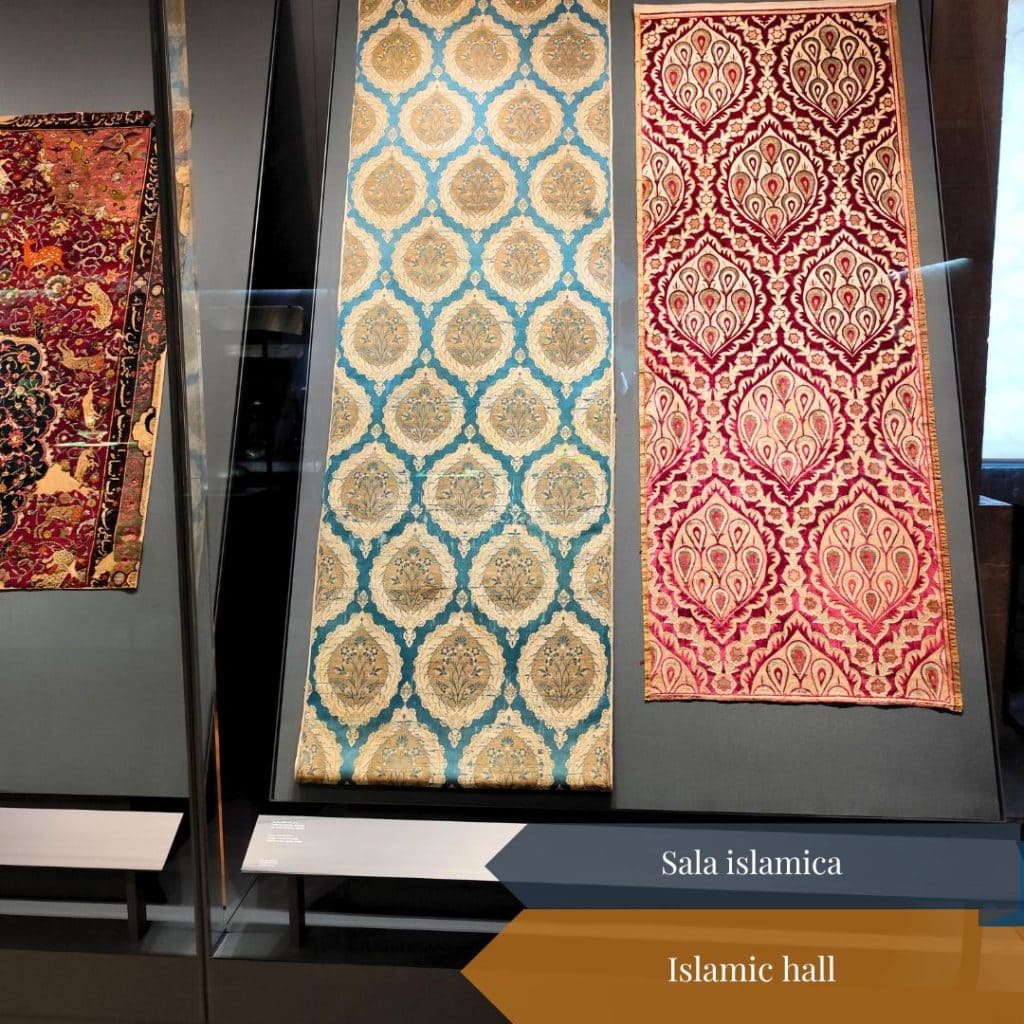
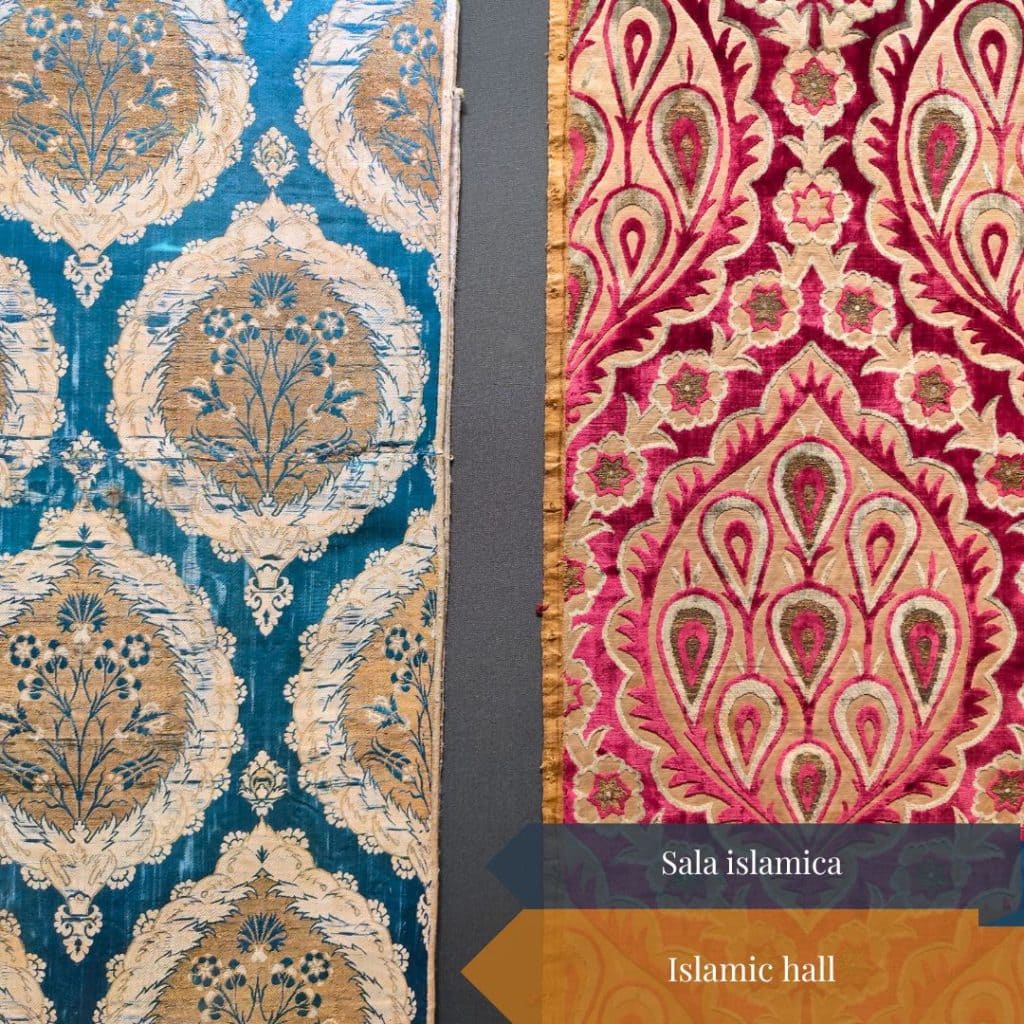
Few people know that the Bargello houses one of the most important collections of Islamic art in Italy, a treasure that reflects the historical ties between Florence and the East. The collection, already begun by the Medici, testifies to the flourishing Renaissance trade with the Middle Eastern powers, particularly with the Mamluks of Egypt and the Ottoman Empire.
This fascinating collection includes a wide range of objects, such as incense burners, vials, boxes, and bowls made of finely worked metal, also used as ritual cups. The textile section is also of extraordinary value, comprising as many as 642 pieces of great prestige, which are displayed in rotation to ensure their conservation. There are also rare examples of decorative tiles, such as those dating back to ancient Persia of the 13th century or the polychrome ones from the Ottoman Empire, which showcase the artisanal mastery of these cultures.
A visit to the Bargello is a sensory and intellectual experience that goes beyond the simple admiration of works of art. It is a journey into the heart of Florence, an immersion into its history and its deepest soul. It is a place where the past becomes present, and beauty manifests itself in every corner, in every sculpture, in every detail. Getting lost among its halls is a way to rediscover the genius of the masters of the Renaissance and to be enchanted by the timeless magic of art.
What are you waiting for to visit the Bargello museum!
Come to Florence and discover its beauty.