Back
Back
15 August 2026

Stone sentinels: the top 15 “Tower Houses” of Florence

Florence was not always the elegant Renaissance city we see today. In the Middle Ages, the city’s skyline resembled a “Stone Manhattan,” with hundreds of tower houses soaring toward the sky. They were symbols of power and instruments of defense for great families locked in constant rivalry. Here is an itinerary through the 15 most fascinating towers that still define the historic center today.
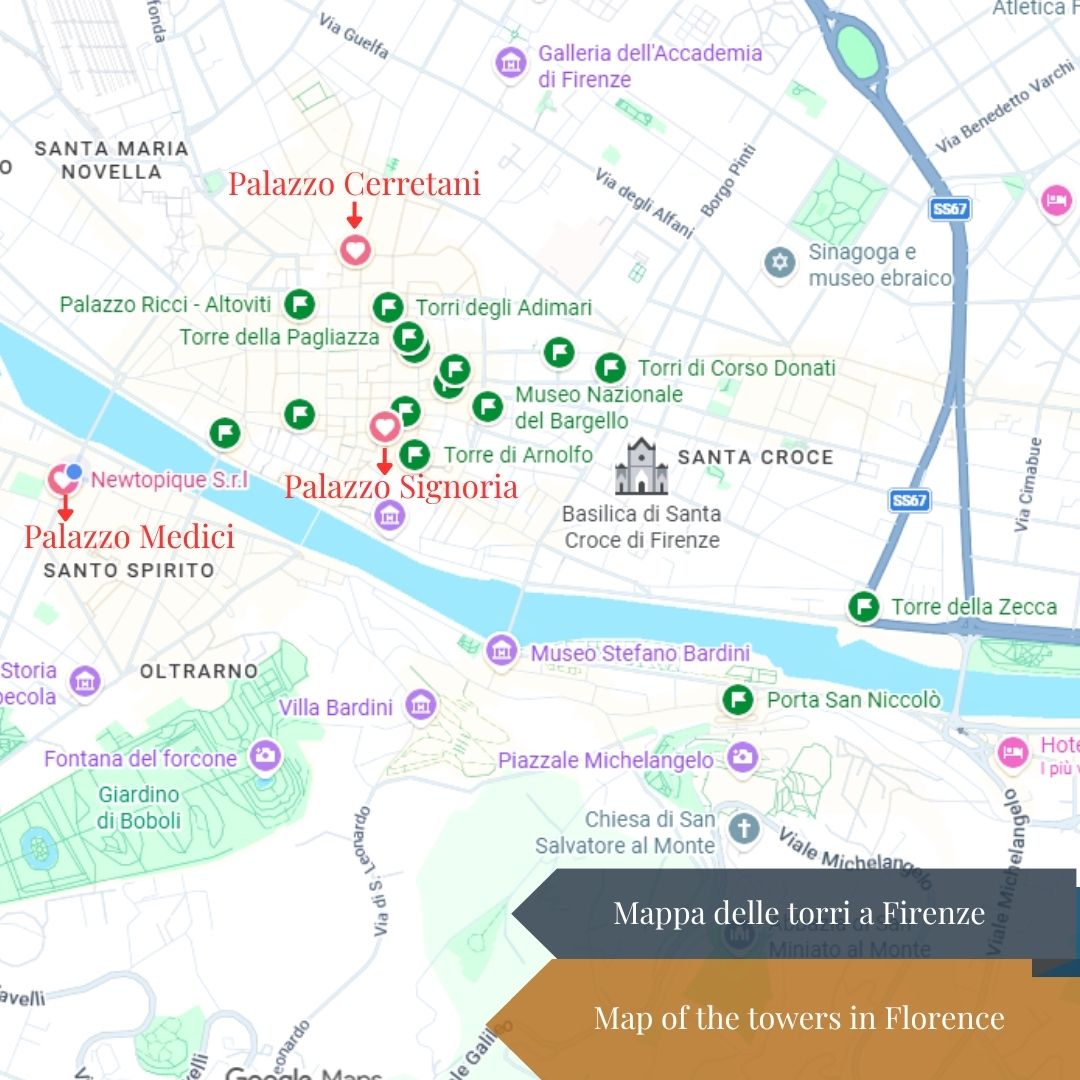
Map of the towers in Florence

Tower houses were the vertical fortresses that shaped the face of medieval Florence between the 11th and 13th centuries. They were born as symbols of prestige, but above all as instruments of extreme defense during the fierce clashes between Guelphs (supporters of the Pope) and Ghibellines (supporters of the Emperor). In a city transformed into a perpetual battlefield, these structures allowed families to withstand sieges and communicate via aerial walkways inserted into “buchi pontiari” (putlog holes), avoiding the dangers of the streets below.

The figure of Dante Alighieri emerged from this climate of fratricidal hatred. A White Guelph who experienced firsthand the internal split within his own faction, he was condemned to perpetual exile in 1302 following the victory of the Black Guelphs. The towers we admire today are the remnants of that tumultuous era. They survived “scapitozzatura” which means the forced “cutting off” of tower tops imposed by the Comune to eradicate the power of the nobility. Some of these towers were immortalized in the verses of the Divine Comedy, where the Great Poet poured out his grief over the conflicts that had bloodied his city.

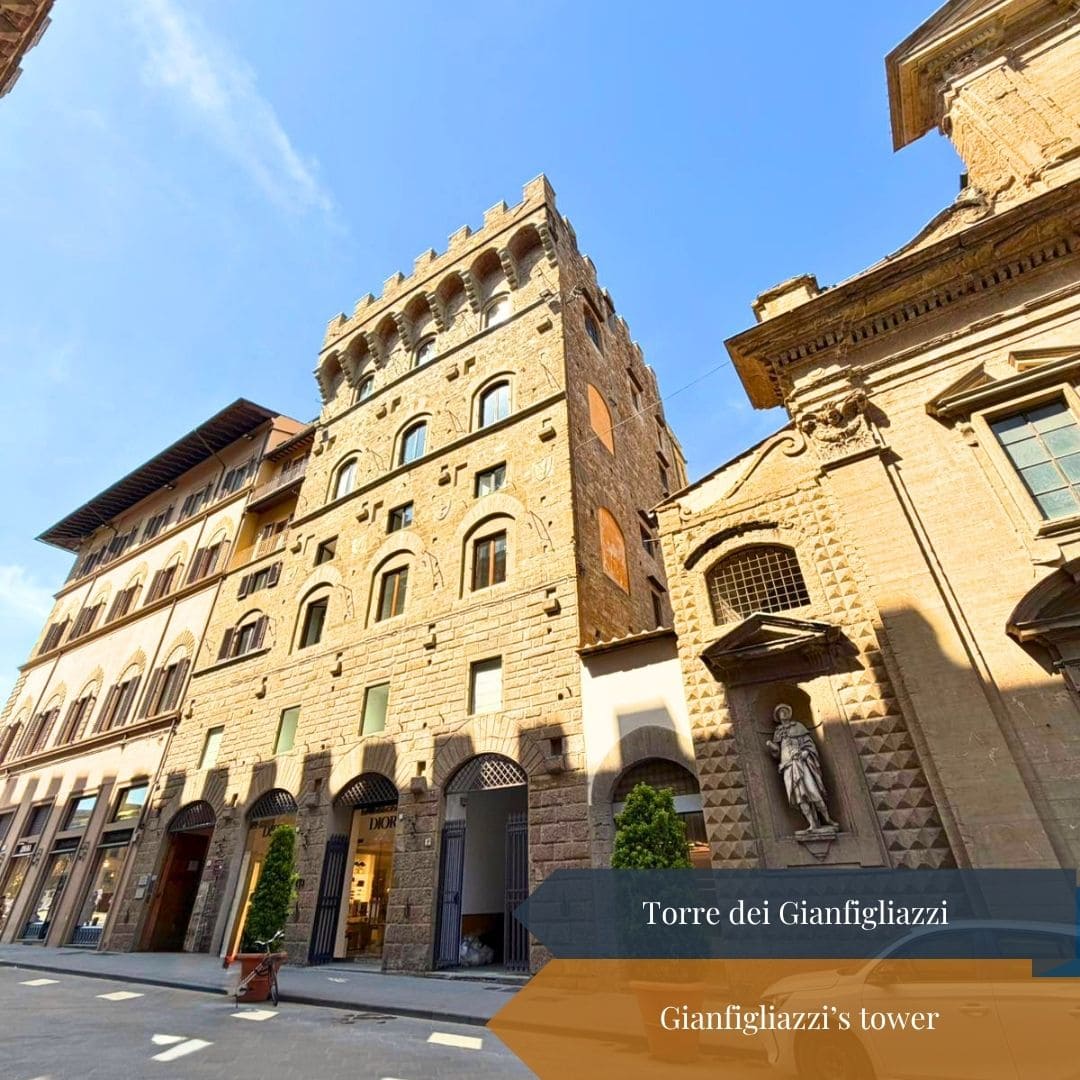
1. Gianfigliazzi Tower

Gianfigliazzi’s tower

Address: Via de’ Tornabuoni, 1

Distance: Palazzo Medici (7 min) | Palazzo Cerretani (4 min) | Palazzo Signoria (6 min)

Next to the church of Santa Trinita, this imposing structure stands with a floor plan so spacious that it is considered more of a keep or a small palace than a simple tower. Originally built for the Guelph Ruggerini family, it was almost entirely demolished. Following its reconstruction, it passed to the Fastelli family and, at the end of the 14th century, to the Gianfigliazzi, the family mentioned by Dante in the Inferno, who maintained ownership until the family line ended in 1764.

After serving as the seat of the Academy of Nobles in the early 19th century, the tower underwent extensive restoration in 1841. During this period, the current floors were added, along with the crowning corbels and “Guelph” (square) battlements, created in imitation of the facing Palazzo Spini Feroni to restore its ancient aggressive appearance. Today, this piece of Florentine history has taken on a new role and houses a hotel.

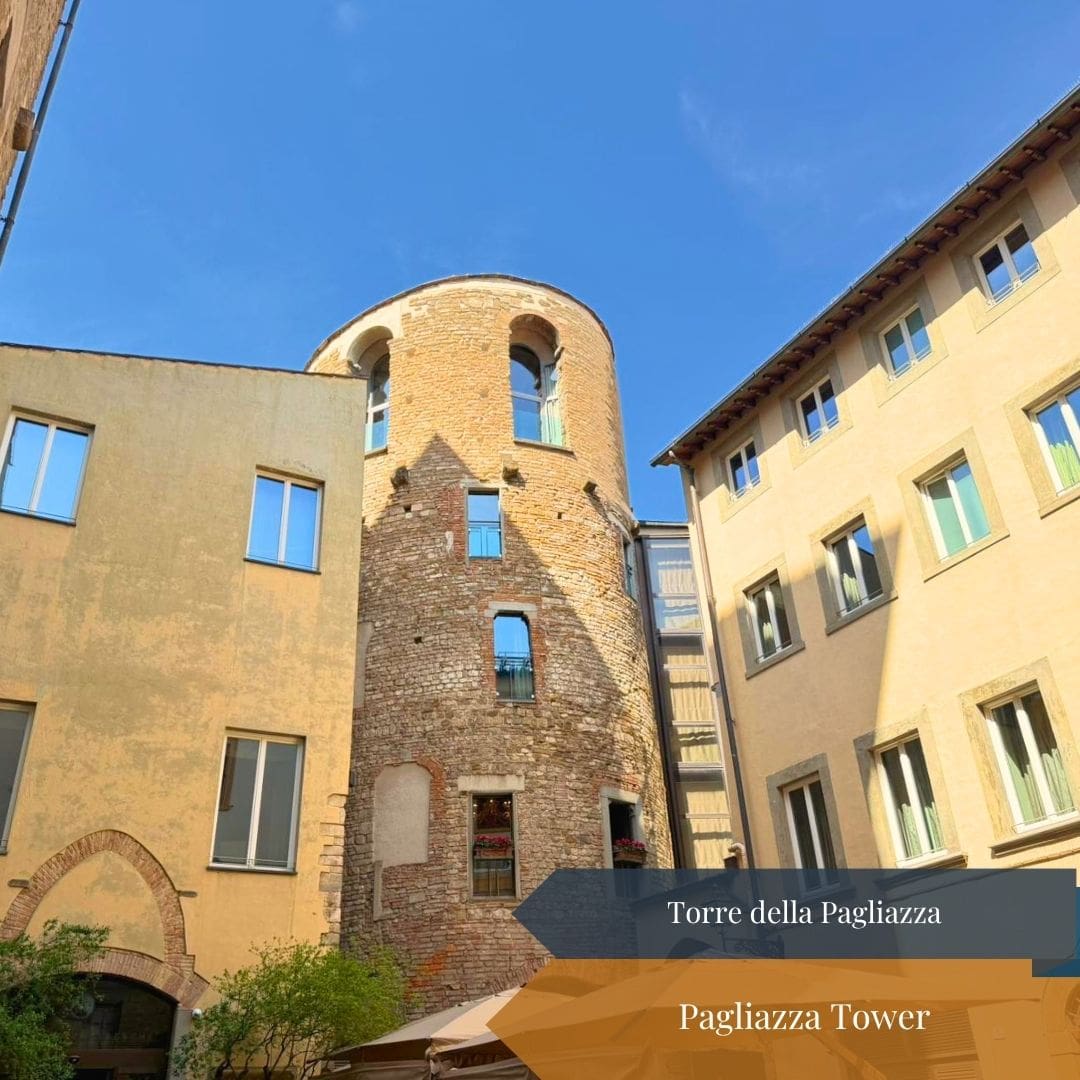
2. Pagliazza Tower

Pagliazza Tower

Indirizzo: Piazza Sant’Elisabetta, 3

Distance: Palazzo Medici (5 min) | Palazzo Cerretani (3 min) | Palazzo Signoria (4 min)

Famous for its unique circular shape, it stands on the foundations of an ancient Roman calidarium (thermal bath), an element that dictated its unusual geometry. Its origins are shrouded in mystery: some hypothesize it was erected by the Byzantines in the 6th century as a defensive tower for the walls, while others suggest the Lombards built it in the following century as a bell tower. In the 12th century, the structure was transformed into a women’s prison; it is from this period that the name “Pagliazza” originates, derived from the simple straw pallets (paglia) on which the inmates slept.

Inside, a fascinating archaeological museum has been created, displaying artifacts and ceramics uncovered during the meticulous restorations of the 1980s, including precious Byzantine fragments and remains of original Roman flooring. Today, the tower is an integral part of a prestigious hotel, representing one of the most layered and ancient examples of Florentine architecture still in existence.

3. The tower of the Old Palacew (Arnolfo)
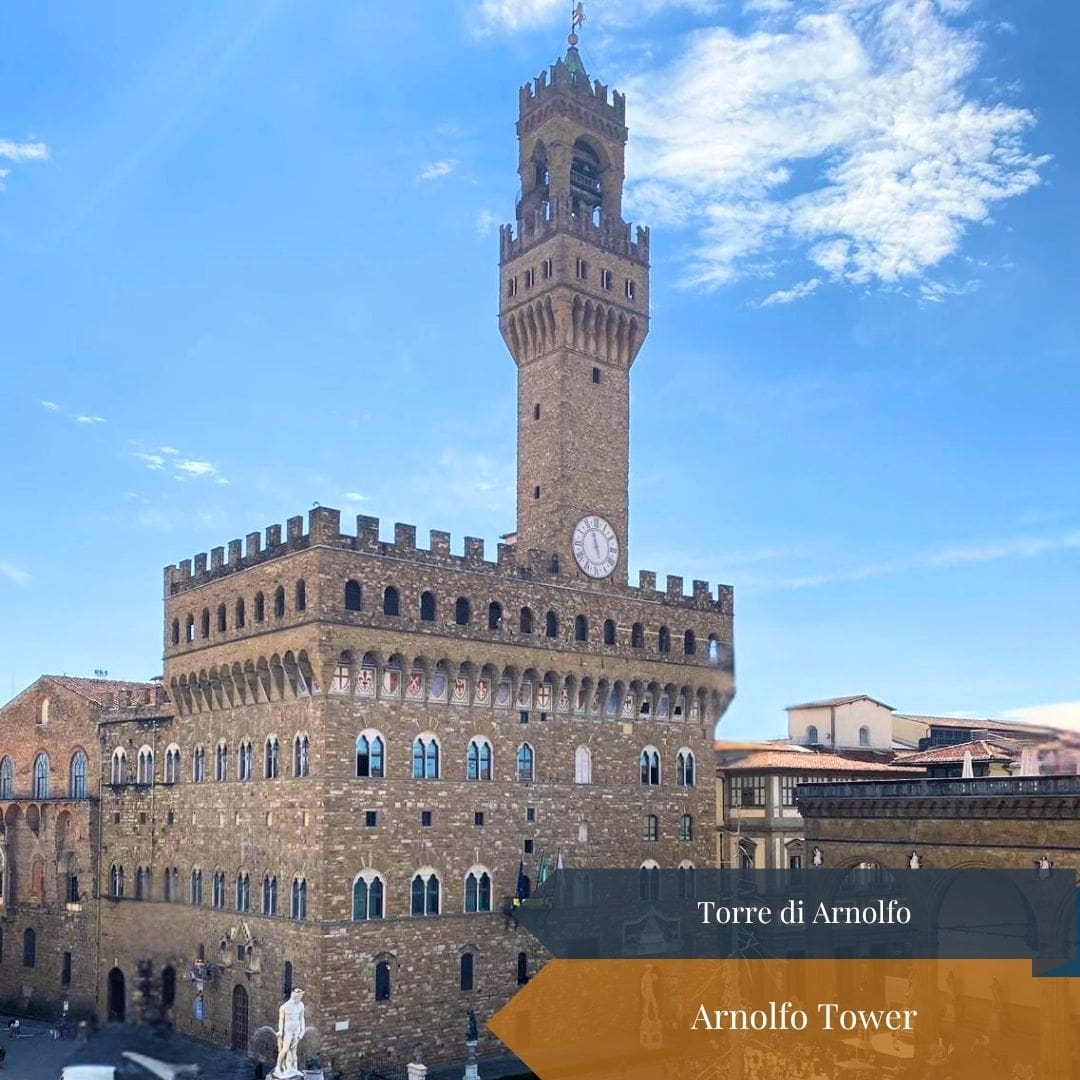
Arnolfo Tower

Address: Piazza della Signoria, 1

Distance: Palazzo Medici (8 min) | Palazzo Cerretani (7 min) | Palazzo Signoria (0 min)

Standing approximately 94 meters tall, this tower is not only the symbol of Florentine civil power but also a masterpiece of 14th-century engineering. It is located directly in front of the apartments of Palazzo Signoria.

It was built around 1310, when the main body of the palace was nearly finished, and features an incredibly bold characteristic: its facade is “built in the false,” meaning it projects outward relative to the structures below, resting only partially on the palace’s walls. To achieve this, Arnolfo di Cambio, its architect, utilized the foundations of a pre-existing tower house belonging to the Ghibelline Foraboschi family, known as the “Tower of the Cow” (della Vacca) because of the nickname Florentines had given to the large bell at its top.

Hidden within the shaft of the tower, alongside a complex stone staircase, is a small prison cell called “l’Alberghetto” (the Little Hotel). In this cramped space, illustrious prisoners who shaped the city’s history were held: from Cosimo the Elder, before his exile in 1433, to Girolamo Savonarola, who spent his final days there in 1498 before his execution in Piazza della Signoria. The tower also houses a large clock, the first mechanical version of which was created in 1353 by the Florentine Nicolò Bernardo.

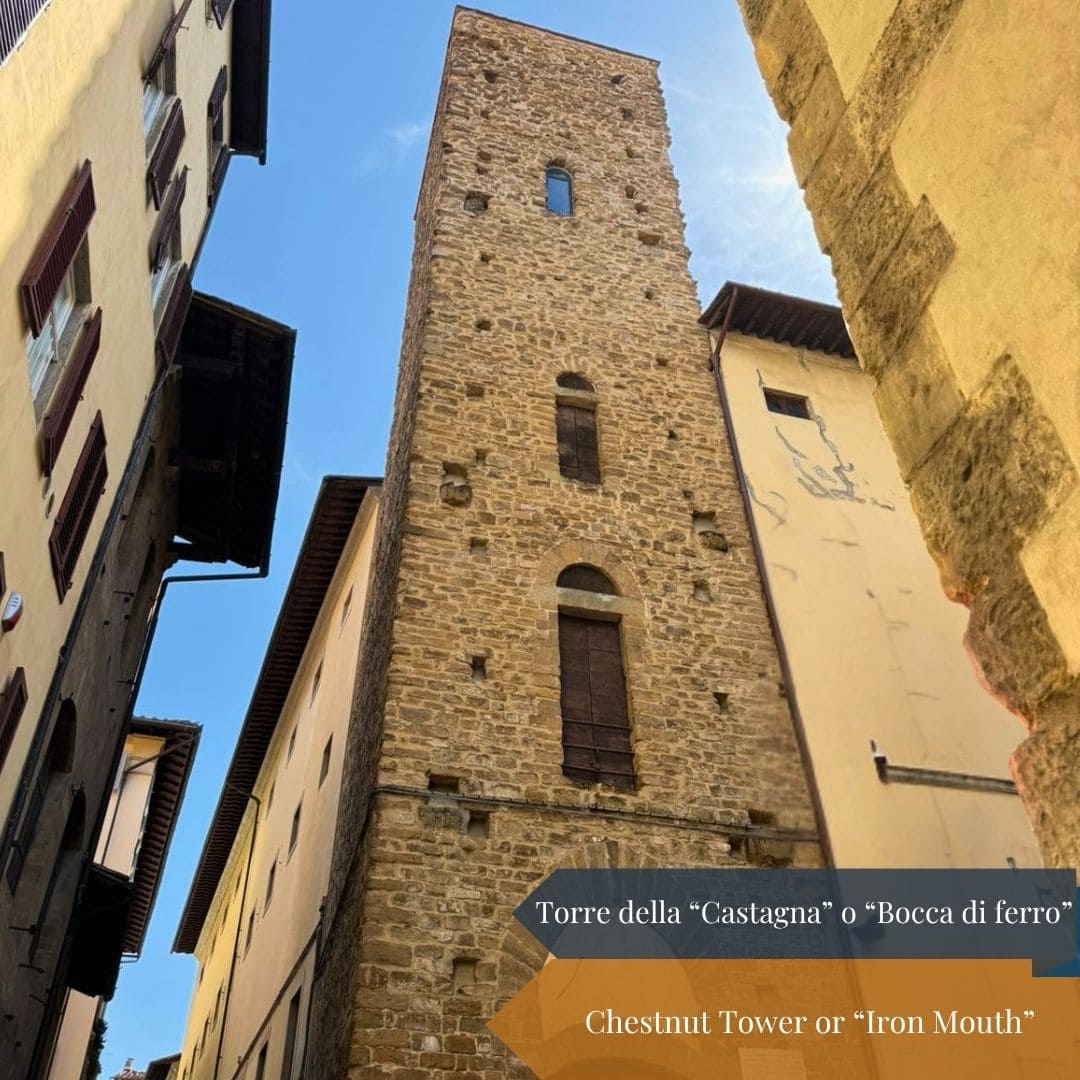
4. Chestnut Tower (or "Iron Mouth")

Chestnut Tower or “Iron Mouth”

Address: Piazza San Martino (Via Dante Alighieri corner)

Distance: Palazzo Medici (6 min) | Palazzo Cerretani (5 min) | Palazzo Signoria (3 min)

Located on Piazza San Martino, this tower is one of the best-preserved in the city and owes its curious name to an ancient democratic custom: here, the Priors of the Arts (Masters of all corporations in town), before the construction of Palazzo Vecchio, met to vote using chestnuts (popularly called “ballotte”) which were placed in bags or jars. This ritual gave rise to the modern term “ballottaggio” (balloting). The tower was donated in 1038 by Emperor Conrad II to the monks of the nearby Badia Fiorentina to protect them from raids and clashes between noble factions.

Precisely because of its prestige and neutrality, in 1282 it became the first seat of the Priors of Florence, who would shut themselves inside for the duration of their two-month mandate to avoid any external influence or pressure during government decisions. Thanks to this high public role, the tower was the only one in the area spared from the “scapitozzatura” (cutting) of 1250, maintaining even today its original height and the appearance of an imposing stone sentinel guarding Dante’s ancient district. On the ground floor, the ancient entrance with a powerful pointed arch, typical of the purest medieval style, is still visible.

5. Giuochi Tower (Museum of Dante's house)
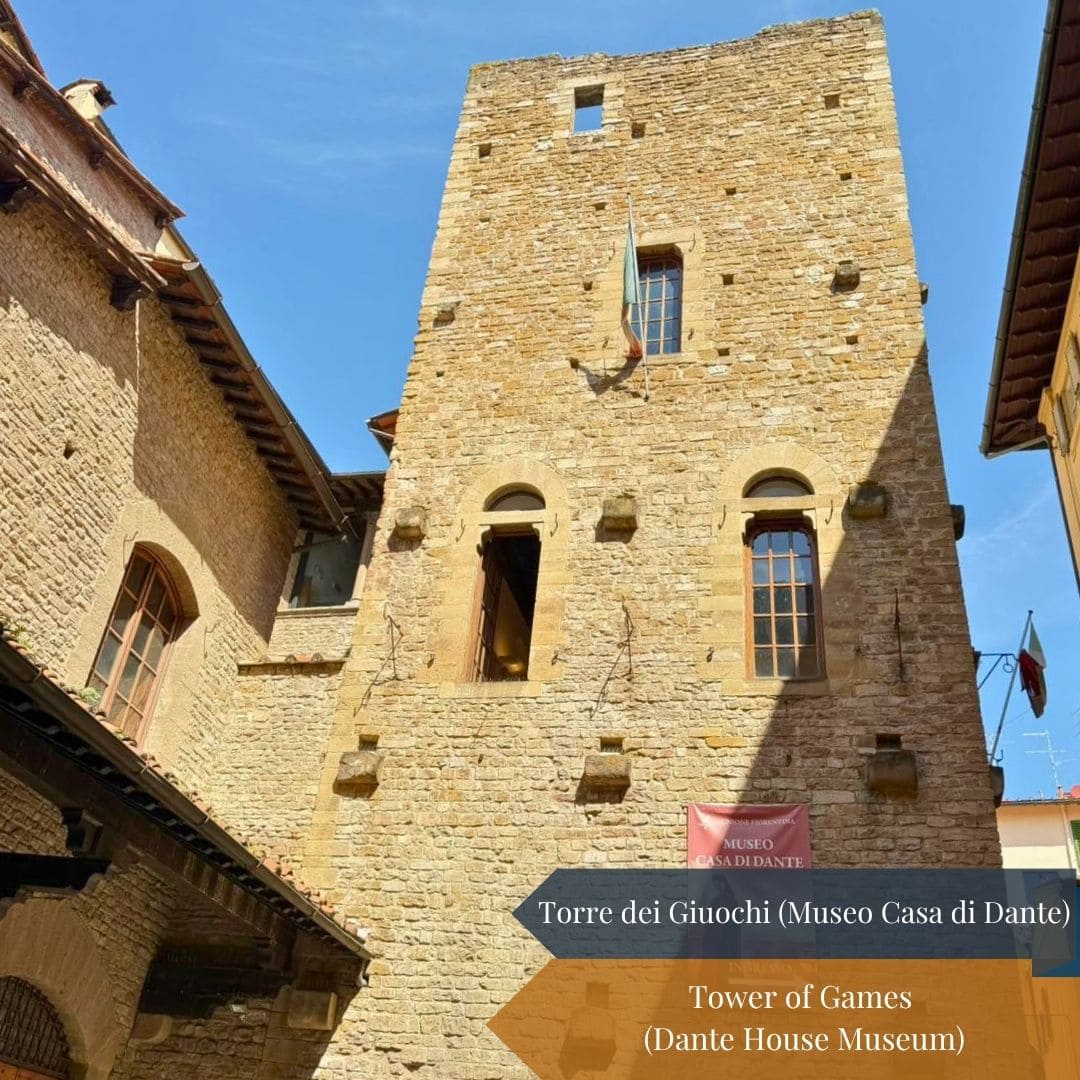
Tower of Games (Casa di Dante Museum)

Address: Via Santa Margherita, 1

Distance: Palazzo Medici (7 min) | Palazzo Cerretani (5 min) | Palazzo Signoria (4 min)

Located on Via Santa Margherita, this tower is one of the most precious pieces of Florence’s medieval heart. It belonged to the Giuochi family, a lineage of ancient nobility that became extinct around 1300 with Cesare di Gherardo. As neighbors of the Alighieri family, their history was inevitably intertwined with that of the Great Poet; however, the Giuochi family belonged to the Ghibelline faction (unlike Dante’s family), making this tower a physical symbol of the political divisions that tore through every single block of the city. The building has been incorporated into the itinerary of the Museo Casa di Dante (Museum of Dante’s house), established in the early 20th century exactly where the houses of the Alighieri and their allies once stood.

The tower’s architecture is a perfect example of 13th-century construction techniques: the facade features the typical “pietra forte” cladding with regular rows of stone blocks. Observing the exterior walls closely, one can notice numerous “buchi pontiari” (putlog holes) with sturdy stone brackets, which once served to support the wooden galleries and external staircases necessary to connect the various floors. Although it was restored to house the museum, the tower preserves its ancient door on the ground floor, surmounted by a pointed arch. This structure recreates the image of an austere and fortified Florence, exactly as it appeared to Dante before his exile.

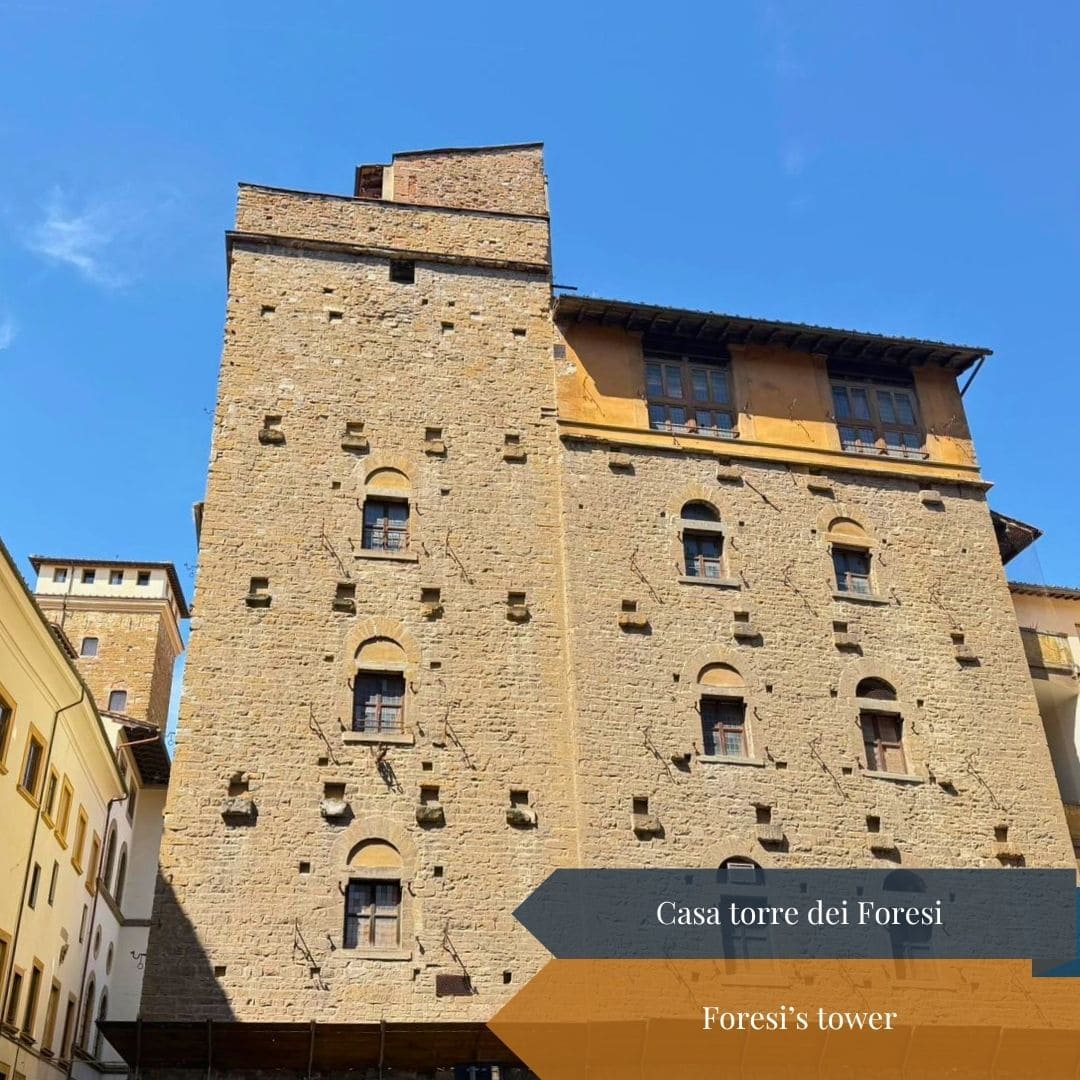
6. Foresi Tower

casa torre dei Foresi

Address: Via Porta Rossa, 10 (Piazza dei Davanzati)

Distance: Palazzo Medici (7 min) | Palazzo Cerretani (4 min) | Palazzo Signoria (4 min)

Located at the strategic corner of Via Porta Rossa and Piazza dei Davanzati, this tower represented the center of power for the Foresi family, one of the most influential lineages of the Guelph faction. Their importance was such that family members frequently held prominent public offices, actively participating in the political life of the Florentine Republic. Although the tower today appears downsized compared to its medieval splendor, it retains a massive and severe bulk that testifies to the wealth of its ancient owners, who held several properties in this part of the city.

Once again, the “buchi pontiari” (putlog holes) arranged across multiple levels are perfectly visible, accompanied by sturdy stone brackets. These holes were not merely used for scaffolding during construction; they supported actual wooden hanging galleries that increased the living space and allowed for rapid movement between buildings during city riots. On the ground floor, the tower features wide arches that once housed shops and warehouses, highlighting the dual nature of the Florentine tower house: a military fortress on the upper floors and a business hub at street level.

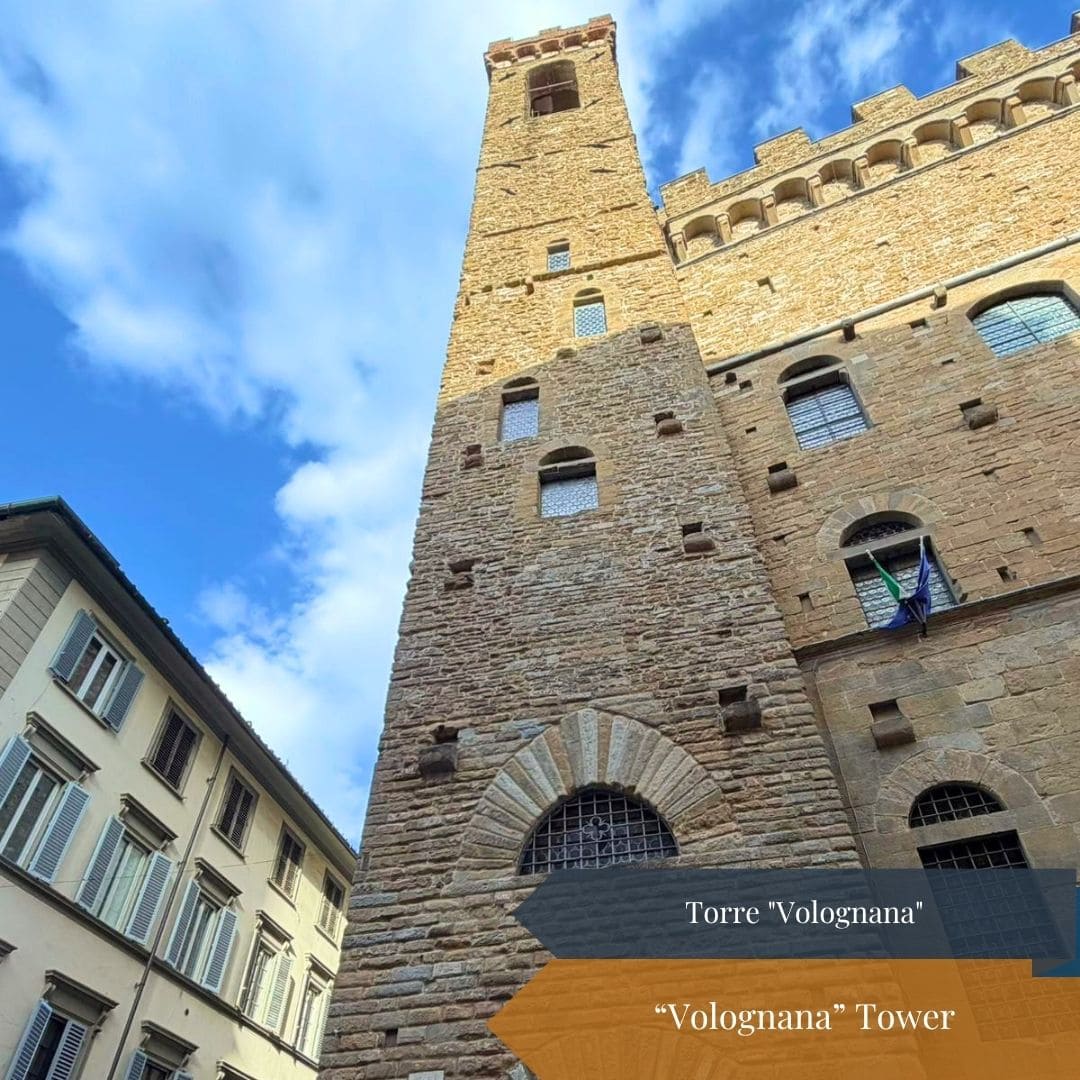
7. Volognana Tower (Bargello Palace)

“Volognana” Tower

Address: Via del Proconsolo, 4 (angolo Via Ghibellina)

Distance: Palazzo Medici (8 min) | Palazzo Cerretani (7 min) | Palazzo Signoria (3 min)

Incorporated into the side of the imposing Palazzo del Bargello, the Volognana Tower is a one-of-a-kind monument in Florence: it is the only tower of private origin that, once it became part of a public palace, preserved its original height of 57 meters. Sold to the Comune (Municipality of Florence) in 1254 along with the surrounding properties of the Boscoli and Riccomanni families, it became the centerpiece of the new Palazzo del Capitano del Popolo (Head of the police back at that time). Its name is said to come from mr. Geri da Volognano, one of the first prisoners held in its cells, marking the beginning of the tower’s long and sad history as a place of detention.

Its thick “pietra forte” walls tell centuries of judicial history: the structure was transformed from a residential tower house into a bell tower and maximum-security prison. In the aerial cell at the top hangs the bell known as “La Montanina,” captured in 1302 from the castle of Montale, broken, and later recast in 1381. Its chime was feared throughout the city, as it announced horrible events such as executions or calls to arms during riots. This dark omen gave rise to a famous popular saying aimed at those who speak ill of everyone: “He has a tongue as long as the Bargello bell; when it rings, it always rings of disgrace.”

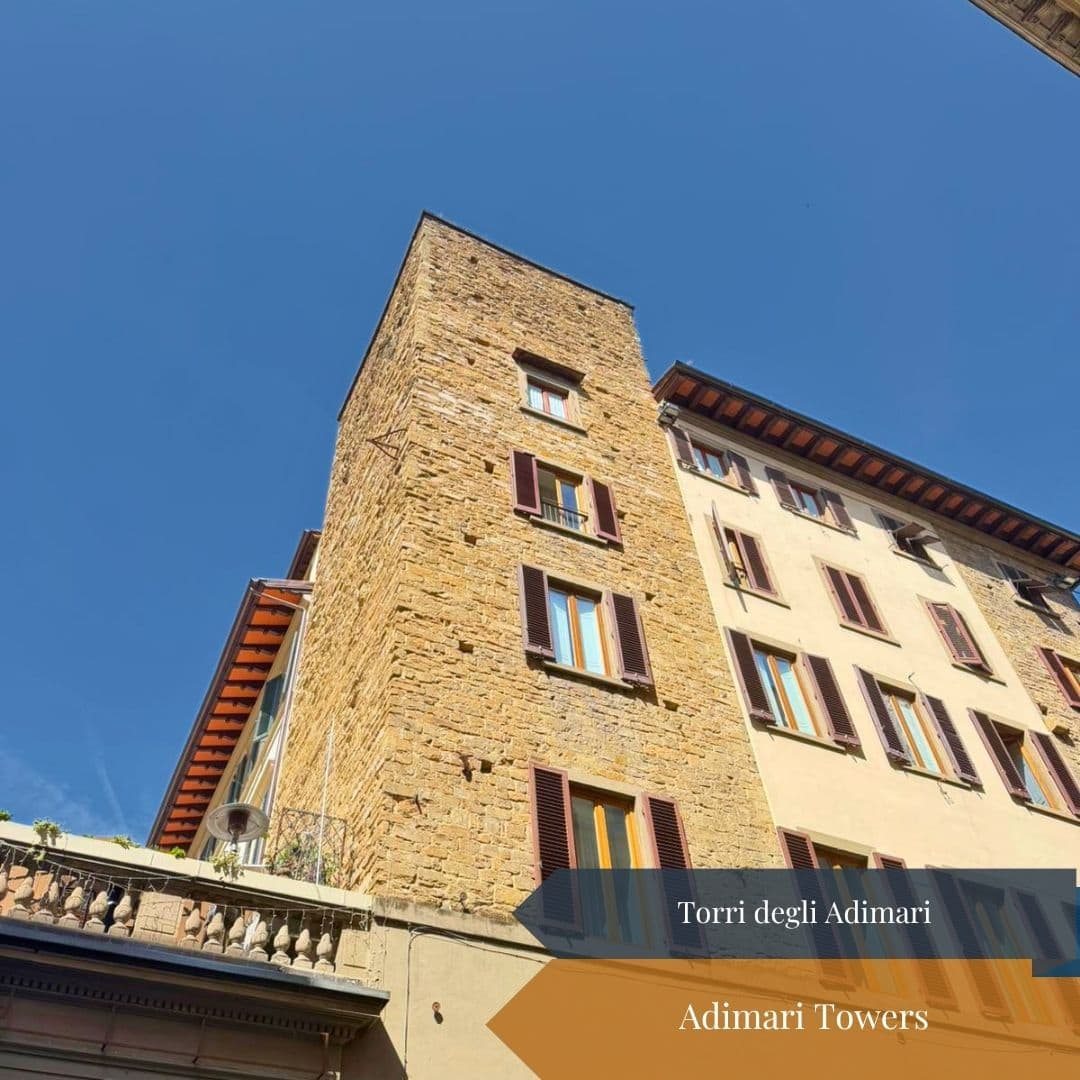
8. Adimari Tower

Adimari Towers

Address: Via dei Calzaiuoli (angoli Via Tosinghi e Vicolo degli Adimari)

Distance: Palazzo Medici (4 min) | Palazzo Cerretani (2 min) | Palazzo Signoria (4 min)

These are actually two towers located along present-day Via dei Calzaiuoli. They represent what remains of the vast territorial domain of the Adimari family, one of the oldest and most powerful lineages of Guelph Florence. Their influence was so great that the entire block was known as the “Canto degli Adimari,” and the family owned so many properties in the area that Dante Alighieri labeled them “arrogant” (oltracotante) in the 16th Canto of Paradiso. The Great Poet held no sympathy for them, describing them as people who “grow bold behind those who flee” (meaning they are fierce toward those in trouble), likely due to the role they played in his exile.

From an architectural standpoint, the towers served as true sentinels on the main road connecting the political center (Piazza della Signoria) to the religious center (the Duomo). One of the two towers is situated at the corner of Via Tosinghi, while the other stands at the corner of Vicolo degli Adimari; both display the typical “pietra forte” cladding and the marks of “buchi pontiari” that once housed wooden structures. Despite the numerous renovations the street underwent during the 19th century, these towers have survived as witnesses to medieval building density, when every street corner was garrisoned by a family ready to defend its honor and its borders.

9. Agli Tower (Ricci-Altoviti Palace)
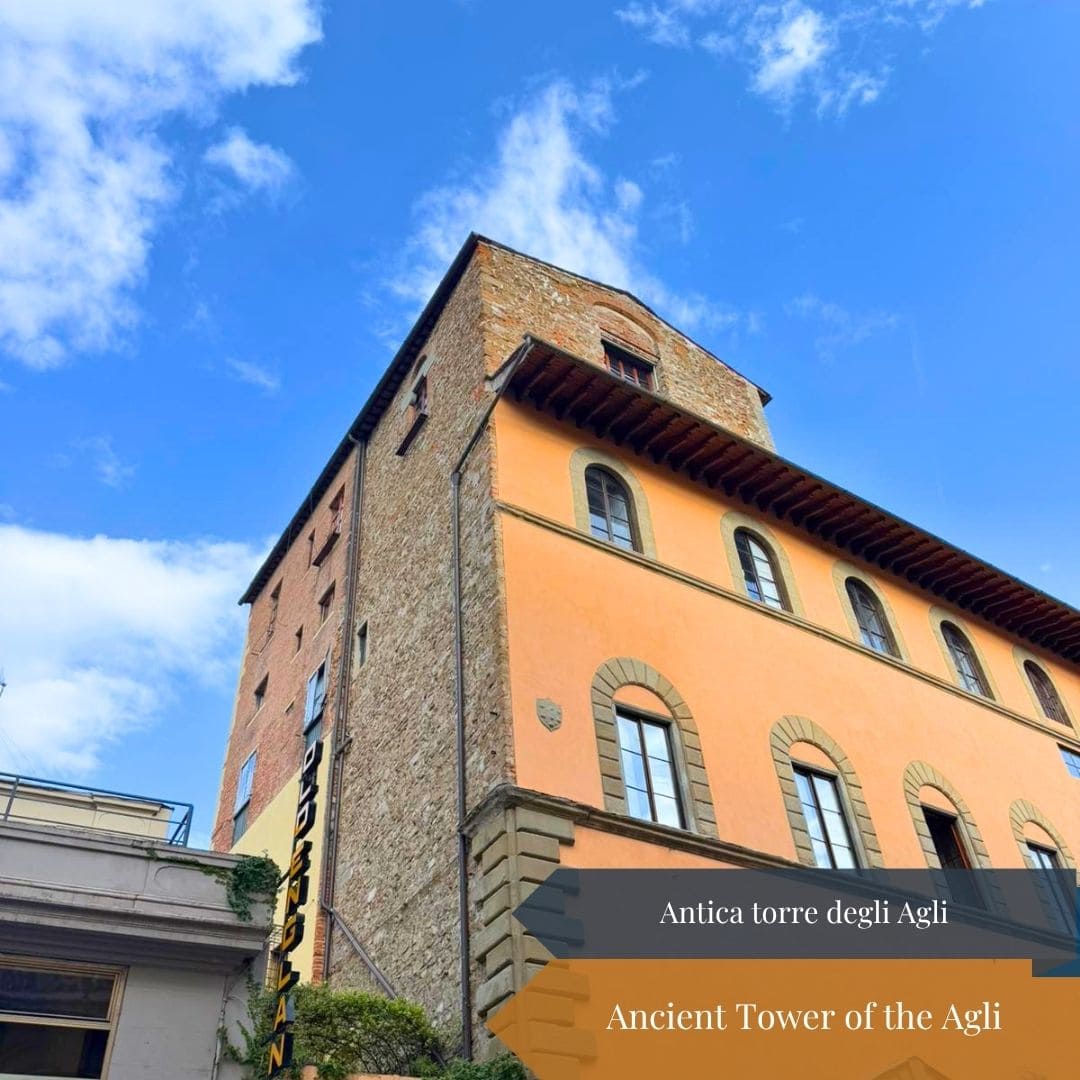
Ancient Tower of the Agli

Address: Via de’ Vecchietti, 6

Distanze: Palazzo Medici (5 min) | Palazzo Cerretani (1 min) | Palazzo Signoria (6 min)

Now incorporated into the Palazzo Ricci-Altoviti on Via de’ Vecchietti, the Torre degli Agli is one of the oldest testaments to the history of this area. The Agli family was among the most illustrious and ancient in Florence, so much so that tradition claimed they were present in the city long before the destruction of Fiesole. Their power was not limited to the historic center; the family owned vast lands and a villa in the northwest area of Florence, which still bears their name today (the Agli district, where the current Peretola Airport is located). Belonging to the Guelph faction, the family suffered exile and the partial destruction of their properties after the Battle of Montaperti, only to return to the city later and consolidate their position.

Architecturally, the tower is visible today on the left side of the palace, where the “pietra forte” stonework emerges from the subsequent Renaissance structures. Despite the transformations that turned this area into the “elegant area” of Florence after the 19th-century Risanamento (urban renewal), the tower preserves the signs of its aggressive past. The stone blocks and putlog holes are still distinguishable, telling of an era when the height of a building was the only measurement of a family’s power. Following the extinction of the family in the 17th century, the tower and the palace passed to the Ricci and then the Altoviti families, but the structure has continued to keep its original name in honor of its first, historic owners.

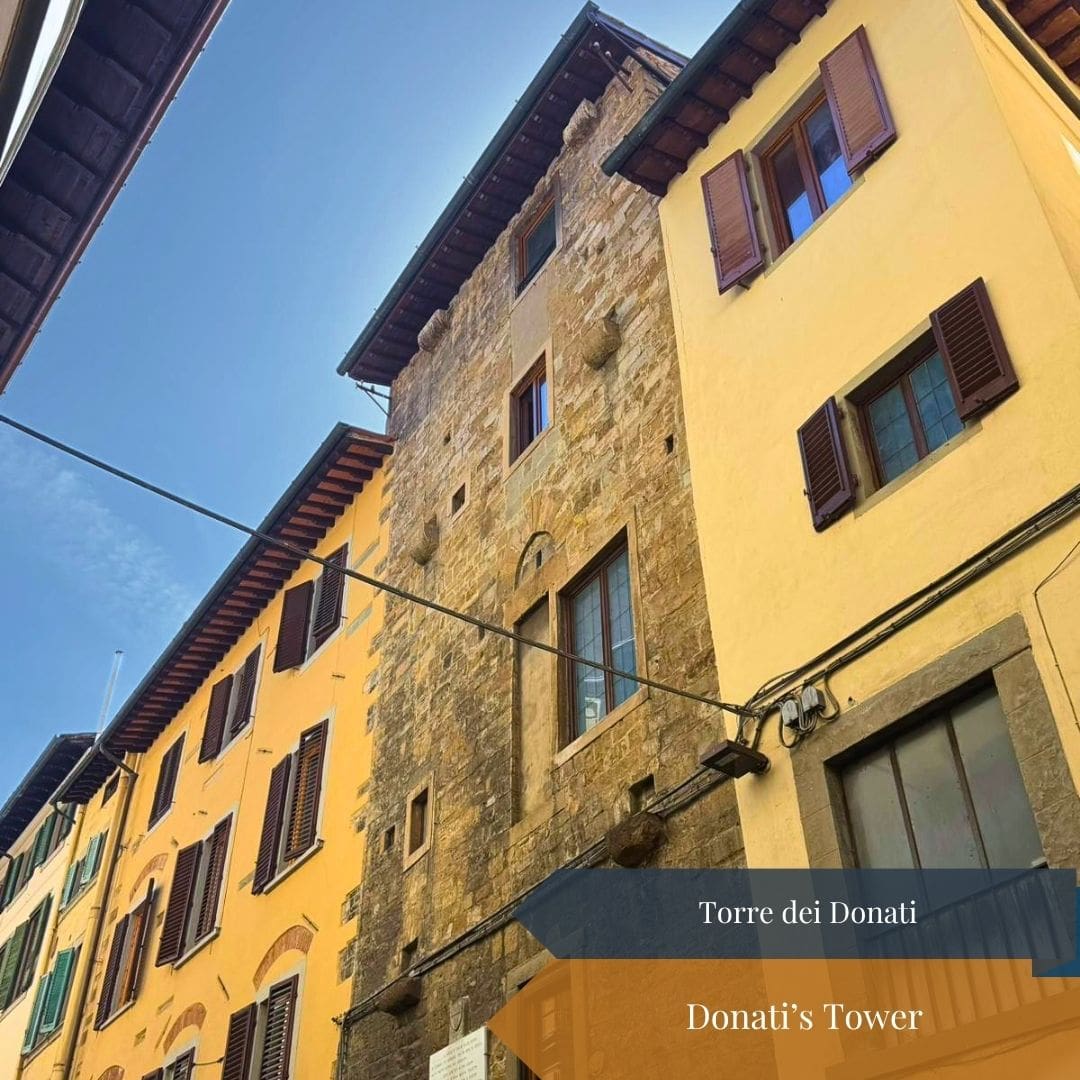
10. Donati Tower

Donati Tower

Address: Via del Corso, 31-33r

Distance: Palazzo Medici (6 min) | Palazzo Cerretani (5 min) | Palazzo Signoria (4 min)

Located on Via del Corso, in the beating heart of medieval Florence, this tower was the stronghold of the Donati, one of the city’s most powerful and aggressive families. Led by the charismatic and violent Corso Donati, nicknamed “The Baron,” they were the undisputed leaders of the Black Guelph faction. The rivalry between the Donati and their neighbors, the Cerchi (leaders of the White Guelphs), was the spark that ignited the urban civil war leading to the exile of Dante Alighieri in 1302. The Great Poet was deeply connected to this clan not only through politics but also by blood: his wife, Gemma Donati, belonged to this very family, making the conflict between Dante and Corso a tragically domestic affair.

Architecturally, the tower still displays the typical “pietra forte”, although it appears significantly shorter than its original height. It was, in fact, one of the many structures affected by the “scapitozzatura” (cutting) imposed by the Municipality of Florence. On the facade, the “buchi pontiari” (putlog holes) and remains of stone brackets are still visible; these once supported the wooden galleries used to connect the various houses of the Donati clan, which formed a literal fortified citadel in the center of the city. Today, the ground floor features a Dantean plaque commemorating the family’s history, remaining one of the most evocative symbols of Florence during Dante’s time.

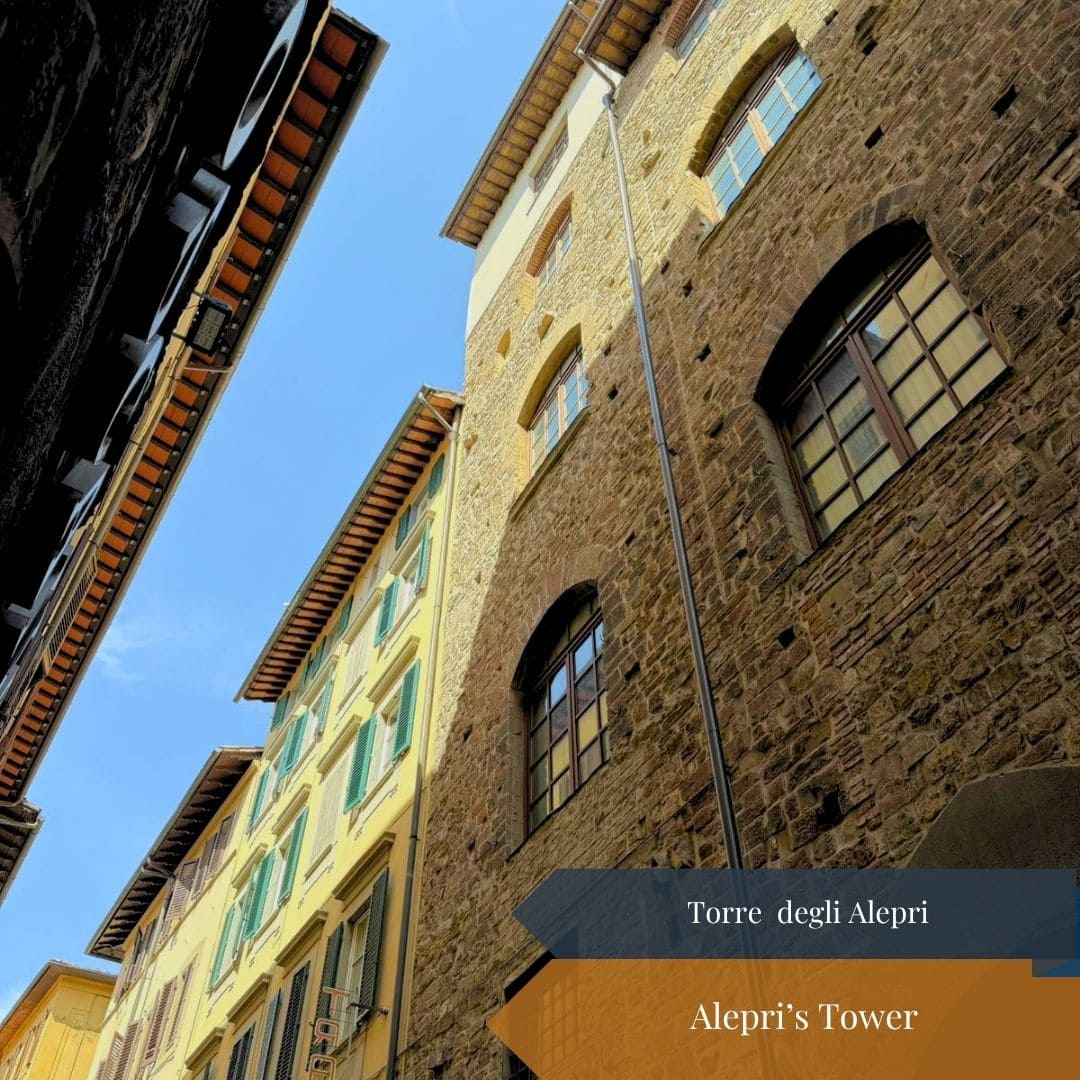
11. Alepri Tower

The Alepri Tower

Address: Via della Condotta, 52r

Distance: Palazzo Medici (7 min) | Palazzo Cerretani (5 min) | Palazzo Signoria (2 min)

Located on Via della Condotta, almost at the corner with Via dei Cerchi, the Torre degli Alepri is a perfect example of the building density of medieval Florence. The Alepri family, with solid Guelph roots, was deeply embedded in the city’s political and commercial life. Due to their political stance, the family suffered severe losses during the period of Ghibelline supremacy following the Battle of Montaperti (1260), witnessing their homes being put to fire and sword. Once they returned from exile, the Alepri managed to rebuild their prestige, remaining key figures on the city scene until the 14th century.

Architecturally, the tower appears today as a slender structure that retains much of its original character. The external “pietra forte” facing is punctuated by numerous “buchi pontiari” (putlog holes).

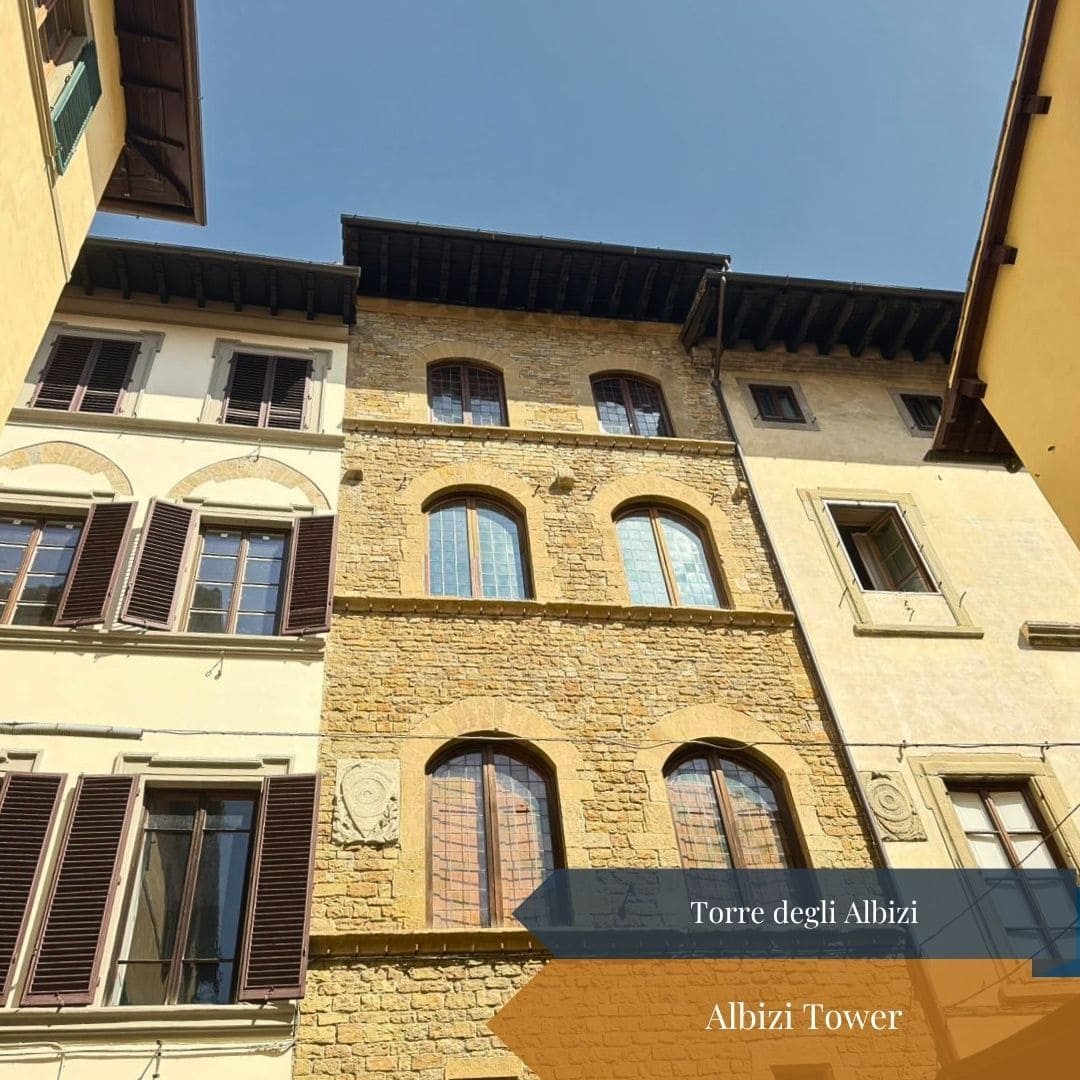
12. Albizi Tower

Albizi Tower

Address: Borgo degli Albizi, 14

Distance: Palazzo Medici (9 min) | Palazzo Cerretani (8 min) | Palazzo Signoria (6 min)

Located in Borgo degli Albizi, this tower was the hub of power for one of the city’s oldest and most influential families. For decades, the Albizi were the de facto masters of Florentine politics, leading the oligarchic faction that strenuously opposed the rise of Cosimo the Elder. Their hegemony ended only in 1434, when the Medici managed to overturn the political tides, condemning Rinaldo degli Albizi to exile. Although the tower was partially “cutted off” (scapitozzata), it maintained an imposing appearance to underline the superiority of the family, which at its peak of splendor owned nearly the entire block along the route leading toward the eastern walls.

From an architectural perspective, the structure stands out for its masterly use of “pietra forte”, with a rusticated finish on the lower section that emphasizes its defensive solidity. On the facade, the “buchi pontiari” (putlog holes) are still clearly visible. A testament to the ancient network of wooden galleries that once connected the tower to the surrounding palaces of the clan.

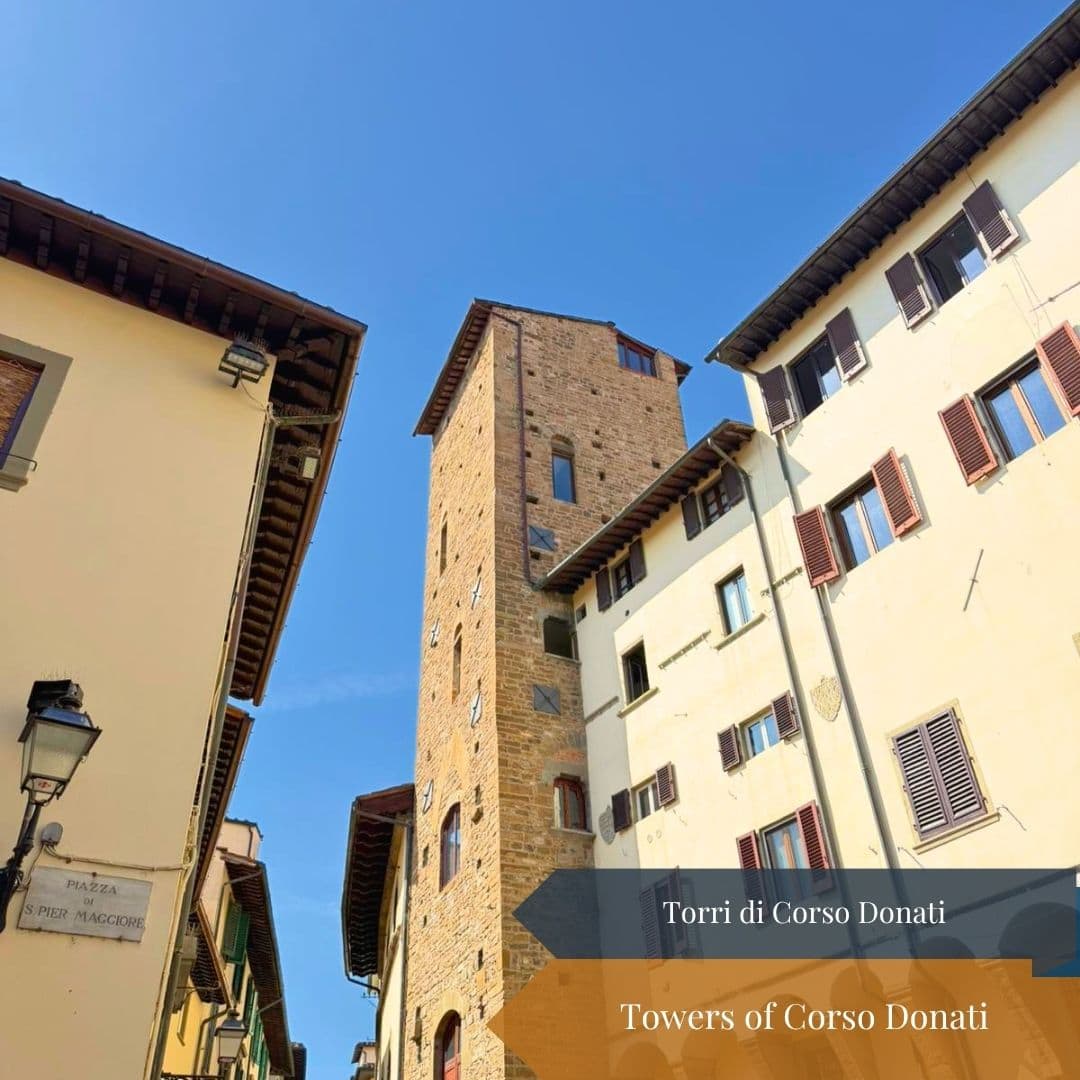
13. Corso Donati Tower

Towers of Corso Donati

Address: Borgo degli Albizi, 11 e Via Matteo Palmieri, 35r

Distance: Palazzo Medici (10 min) | Palazzo Cerretani (9 min) | Palazzo Signoria (7 min)

These structures, located between Borgo degli Albizi and Via Matteo Palmieri, constituted the beating heart of the Donati “land”: the complex of houses, towers, and courtyards that formed a true private citadel. The family was led by Corso Donati, the most charismatic and feared leader of the Black Guelphs. Known for his arrogance and courage, Corso made these towers his operational base for launching attacks against his rivals, the Cerchi. It was right here, in 1308, that Corso attempted a final, desperate resistance against the Comune’s troops (the ones that belonged to the city itself), who accused him of conspiring to become the absolute lord of Florence. The entire area was besieged and set ablaze, and Corso met his death nearby while attempting to flee.

From an architectural standpoint, the towers are visible from Piazza San Pier Maggiore and display the clear markings of medieval fortifications. One of them is today curiously joined to the Palazzetto of Francesco Maria de’ Medici, creating a peculiar contrast between medieval severity and Renaissance elegance. The facades still feature robust stone facing and the “buchi pontiari” (putlog holes) that once supported aerial walkways: imagine the entire block transformed into a defensive labyrinth.

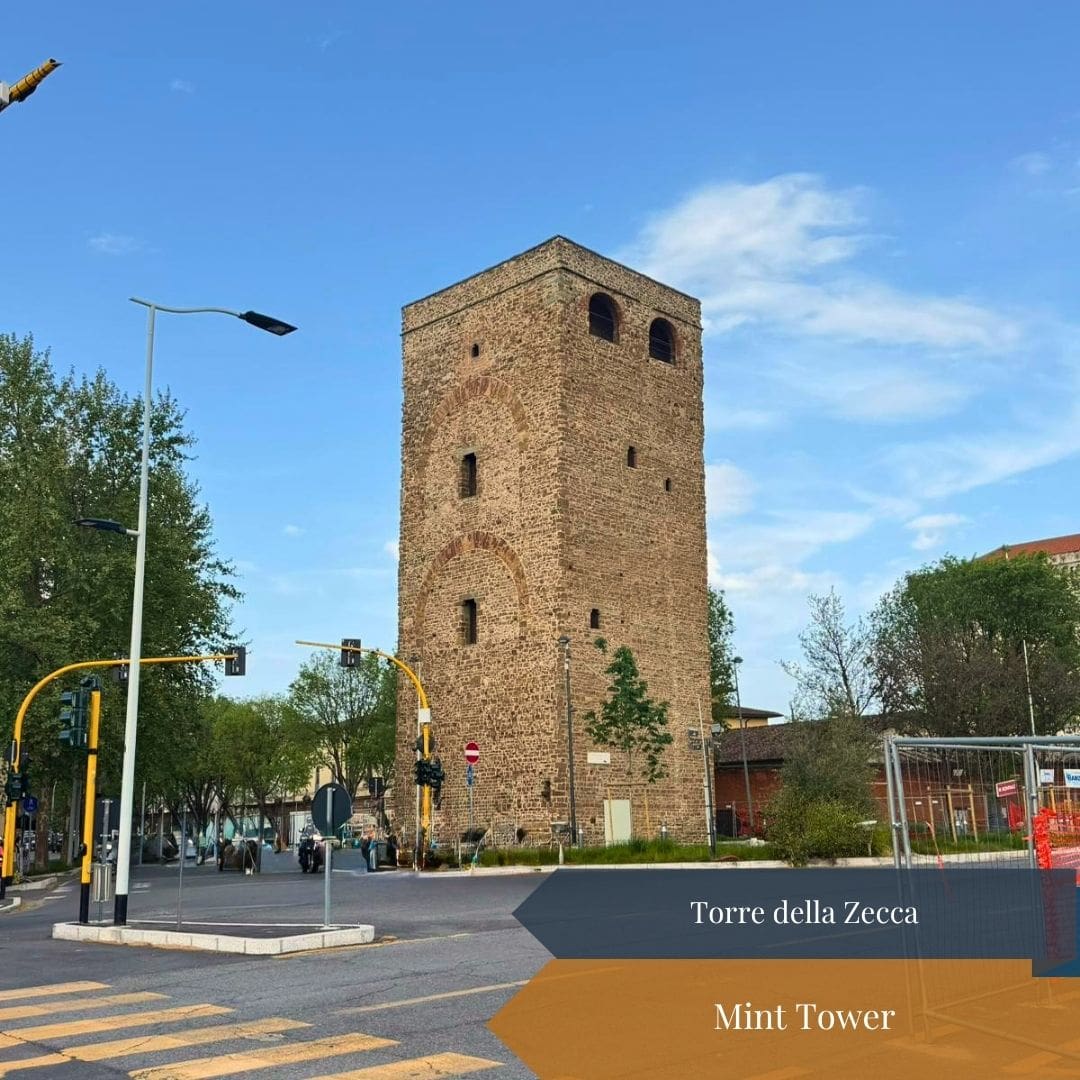
14. Mint tower

Mint Tower

Address: Piazza Piave

Distance: Palazzo Medici (18 min) | Palazzo Cerretani (19 min) | Palazzo Signoria (14 min)

Located on Piazza Piave, this tower represented the terminal bulwark of Florence’s eastern walls and is one of the few to have survived the demolition of the city walls during the 19th-century Risanamento. Its current name dates back to 1532, when the premises at its base were used by the Florentine Mint (Zecca) to mint the legendary gold florin. The location was no coincidence: the driving force of the Arno’s waters was harnessed through a system of canals and mills to power the heavy machinery needed to produce the currency that dominated European markets at the time.

Originally called the “Torre Reale,” the structure was erected at the beginning of the 14th century as part of the city’s defense project. It hides an extraordinary architectural secret within: a subterranean passage (no longer accessible today) that ran beneath the bed of the Arno, allowing soldiers to cross the river while sheltered from enemies, connecting the north bank to the south bank near the Tower of San Niccolò.

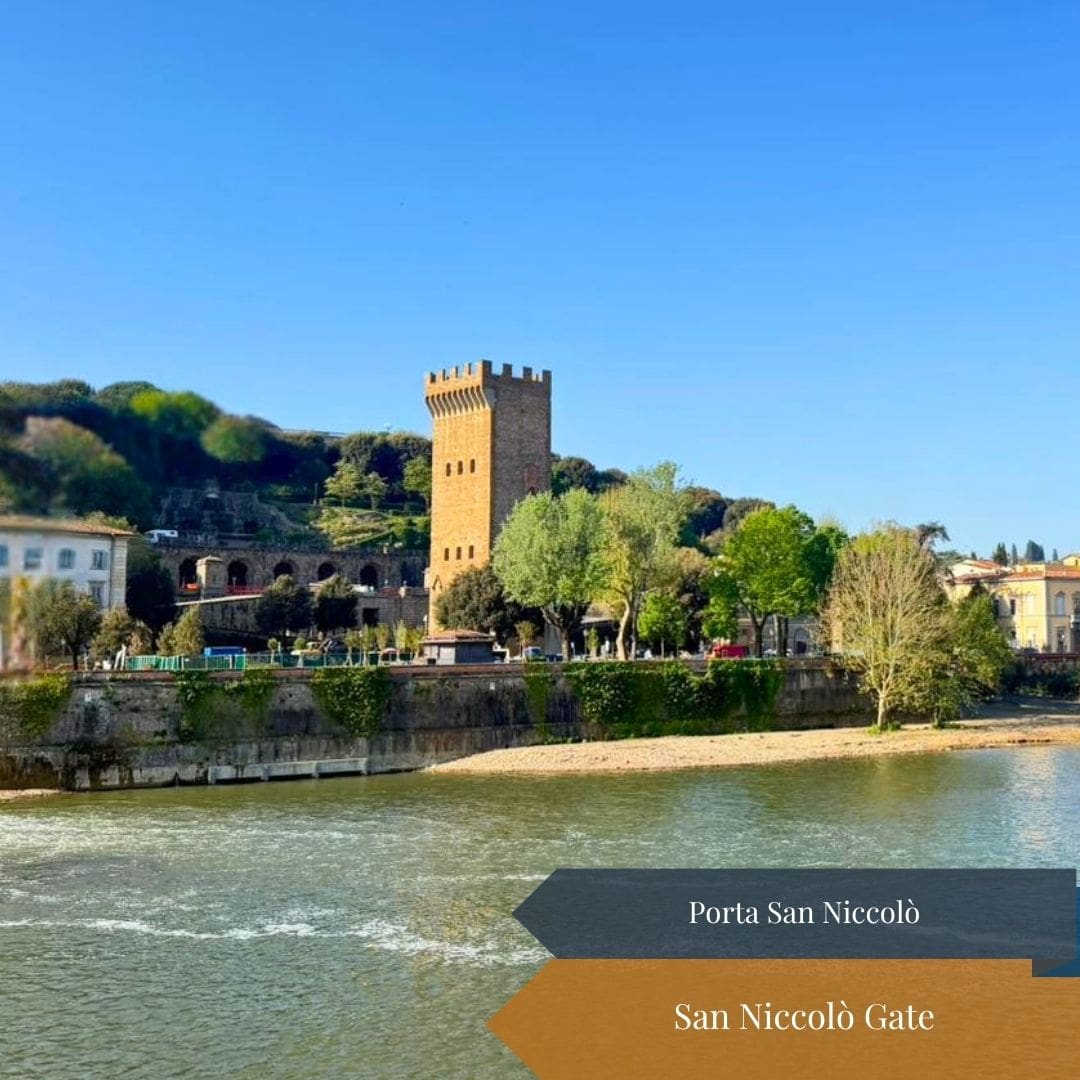
15. Torre San Niccolò

San Niccolò Gate

Address: Piazza Giuseppe Poggi

Distance: Palazzo Medici (19 min) | Palazzo Cerretani (19 min) | Palazzo Signoria (13 min)

Located on Piazza Giuseppe Poggi in the Oltrarno, this imposing structure is the only gate of the ancient Florentine walls that did not undergo “scapitozzatura” (cutting) during the 16th century. While other defensive towers were lowered so as not to be easy targets for the new artillery, the Torre San Niccolò maintained its original height because the hill of San Miniato behind it served as a natural protection against cannon fire. Built in 1324 based on a design attributed to Arnolfo di Cambio, it served as a strategic checkpoint for river access to the city, ideally paired with the Torre della Zecca on the opposite bank.

Architecturally, the tower stands out for its three tiers of overlapping arches on the side facing the city, which once housed the rooms for the guards tasked with monitoring the passage and collecting tolls. On the summit, the crenelated “camminamento di ronda” (patrol walkway) is still accessible, offering one of the most iconic views of Florence. During the works for Florence as the capital in 1865, architect Giuseppe Poggi isolated it from the surrounding walls, transforming it into the scenographic centerpiece of the Ramps that lead up to Piazzale Michelangelo.

What are you waiting for? Go discover all the tower houses of Florence!