
Located in the heart of Tuscany, the enchanting city of Lucca offers a captivating blend of history, art, and a unique, relaxed atmosphere. Often overshadowed by its more famous neighbors like Florence and Pisa, Lucca is a true hidden gem, inviting visitors to discover its well-preserved medieval charm and a pace of life that feels wonderfully unhurried.
How to get to Lucca from Florence
Here is the breakdown of how to get from Florence to Lucca:
| Means of Transport | Average Travel Time | Details |
| Train | 1h 20 min – 1h 45 min | The most popular choice. Frequent Direct Regional trains run from Florence S.M. Novella. Some routes might require a change at Pisa Centrale or Pistoia, so check the schedule to ensure a direct connection. The Lucca station is just a few steps from the city walls. |
| Car | Approx. 1 hour | Take the A11 motorway (Firenze-Mare). Lucca is about 75km away. Important: The entire area inside the walls is a strict ZTL (Limited Traffic Zone). You should park in one of the large lots just outside the walls (like Parcheggio Carducci or Parcheggio Palatucci) and enter through one of the historic gates. |
| Bus | 1h 15 min – 1h 30 min | Autolinee Toscane operates the “VAI” (Viareggio-Lucca-Firenze) express line. It’s a comfortable option if you prefer bus travel over trains, usually departing from the hub near the SMN train station. It’s often cheaper, though subject to highway traffic. |
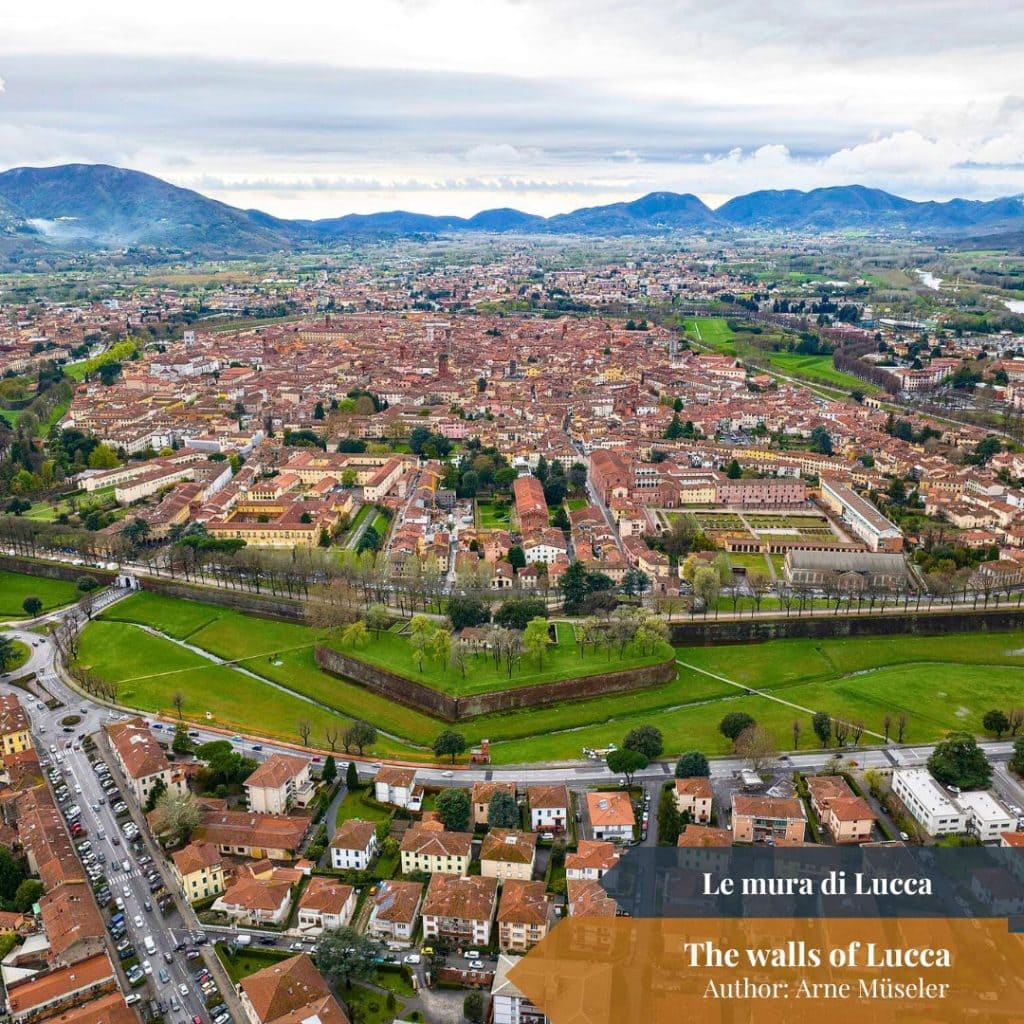
A rich history behind ancient walls
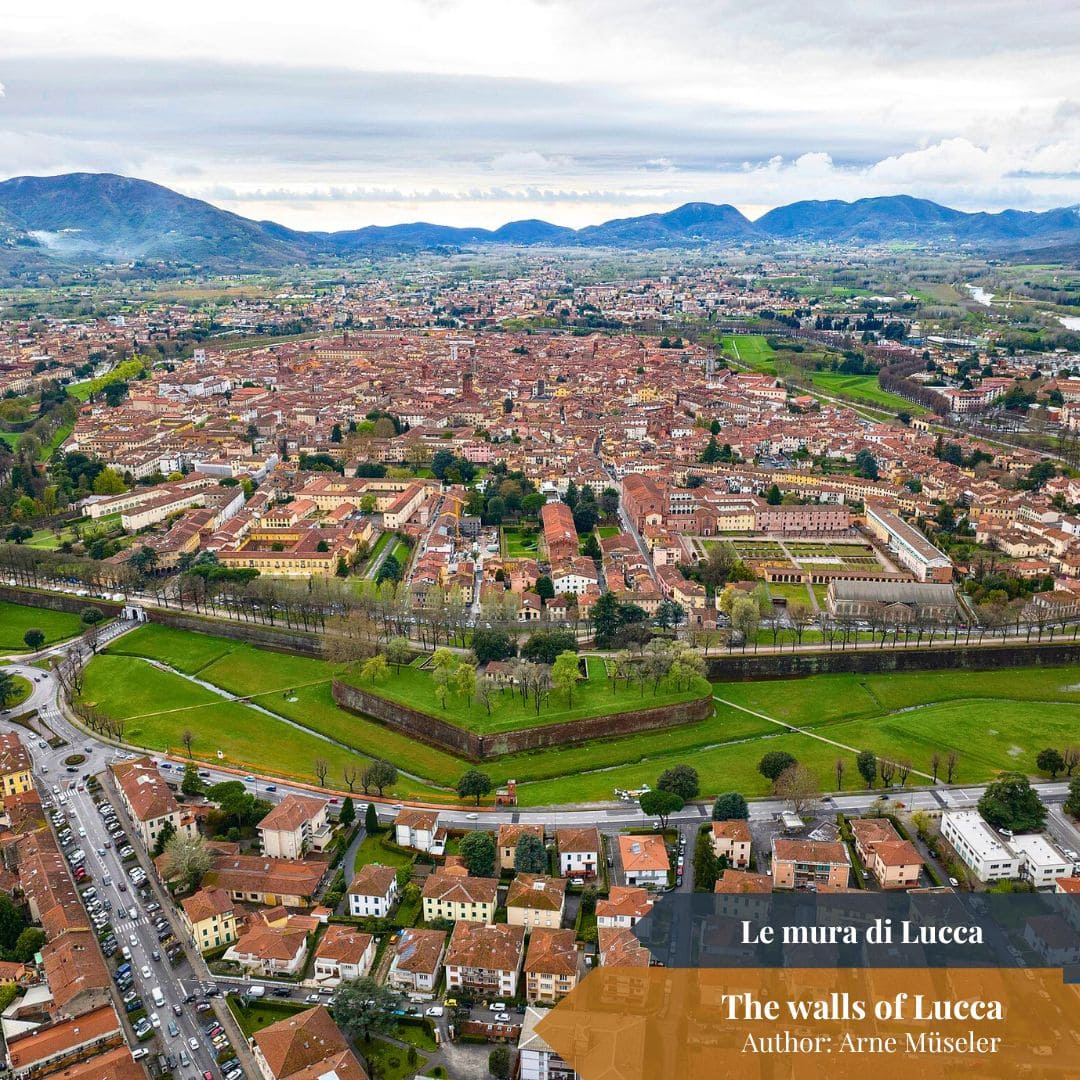
Exploring Lucca's Treasures
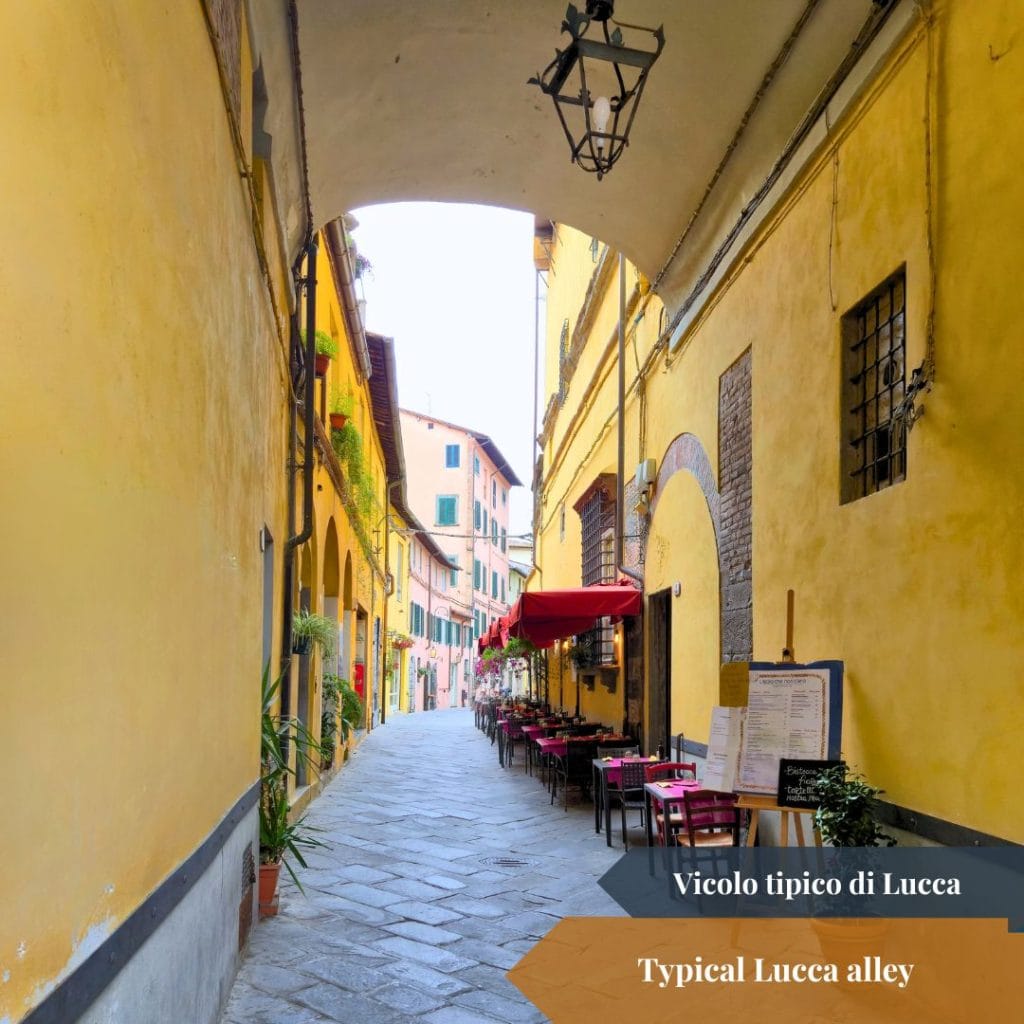
Beyond its walls, Lucca’s historic center is a delightful labyrinth of narrow cobblestone streets, charming piazzas, and impressive architectural wonders.
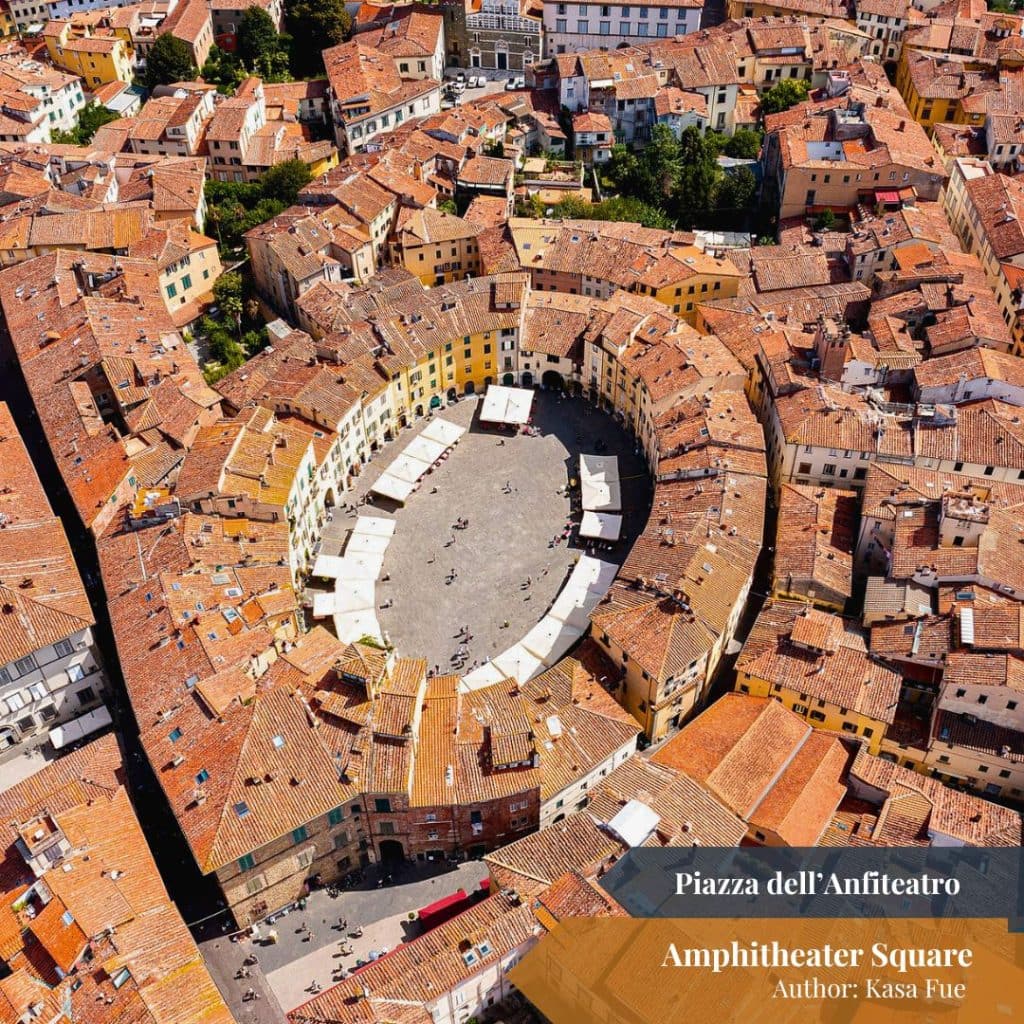
- Piazza dell’Anfiteatro: This oval-shaped piazza, built directly on the foundations of the Roman amphitheater, is a vibrant hub filled with cafes and shops. Its unique shape and lively atmosphere make it a perfect spot for a leisurely coffee or an evening aperitivo.
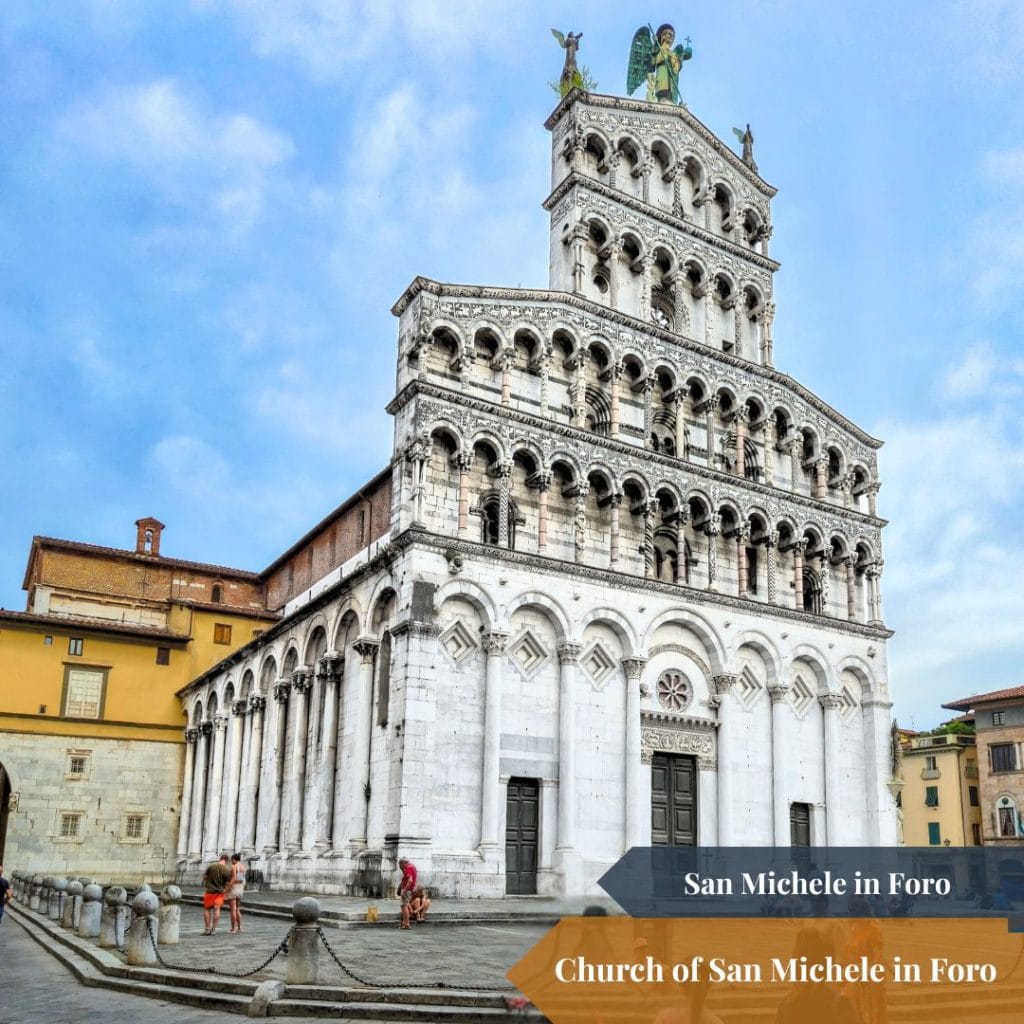
- Church of San Michele in Foro: is a stunning example of Pisan-Lucchese Romanesque architecture. Built on the site of the ancient Roman forum, its elaborate white marble facade is adorned with intricate sculptures, blind arches, and a series of loggias, culminating in a colossal statue of the Archangel Michael atop the highest point. The separate, imposing bell tower adds to its grandeur.
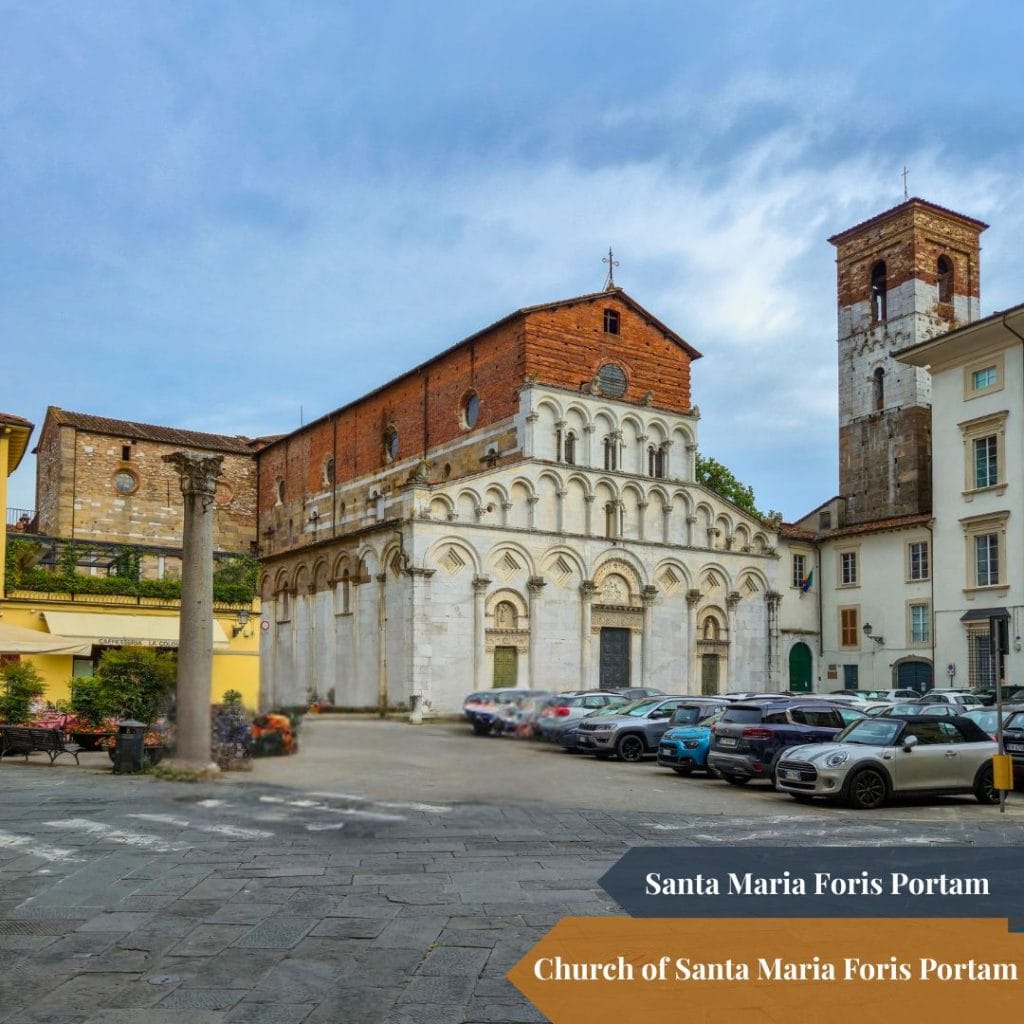
- Chiesa di Santa Maria Forisportam is also a remarkable example of Lucchese Romanesque architecture, so called because, at the time of its construction, it stood “outside the gate” of the city’s ancient Roman walls. Its facade, characterized by an elegant three-arched portico, shows a clear influence of the Pisan style.
- Duomo di San Martino: Lucca’s stunning cathedral is a masterpiece of Romanesque architecture, renowned for its intricate facade and the Volto Santo, a revered wooden crucifix believed to have been carved by Nicodemus. Don’t miss the tomb of Ilaria del Carretto by Jacopo della Quercia, a celebrated example of funerary sculpture.
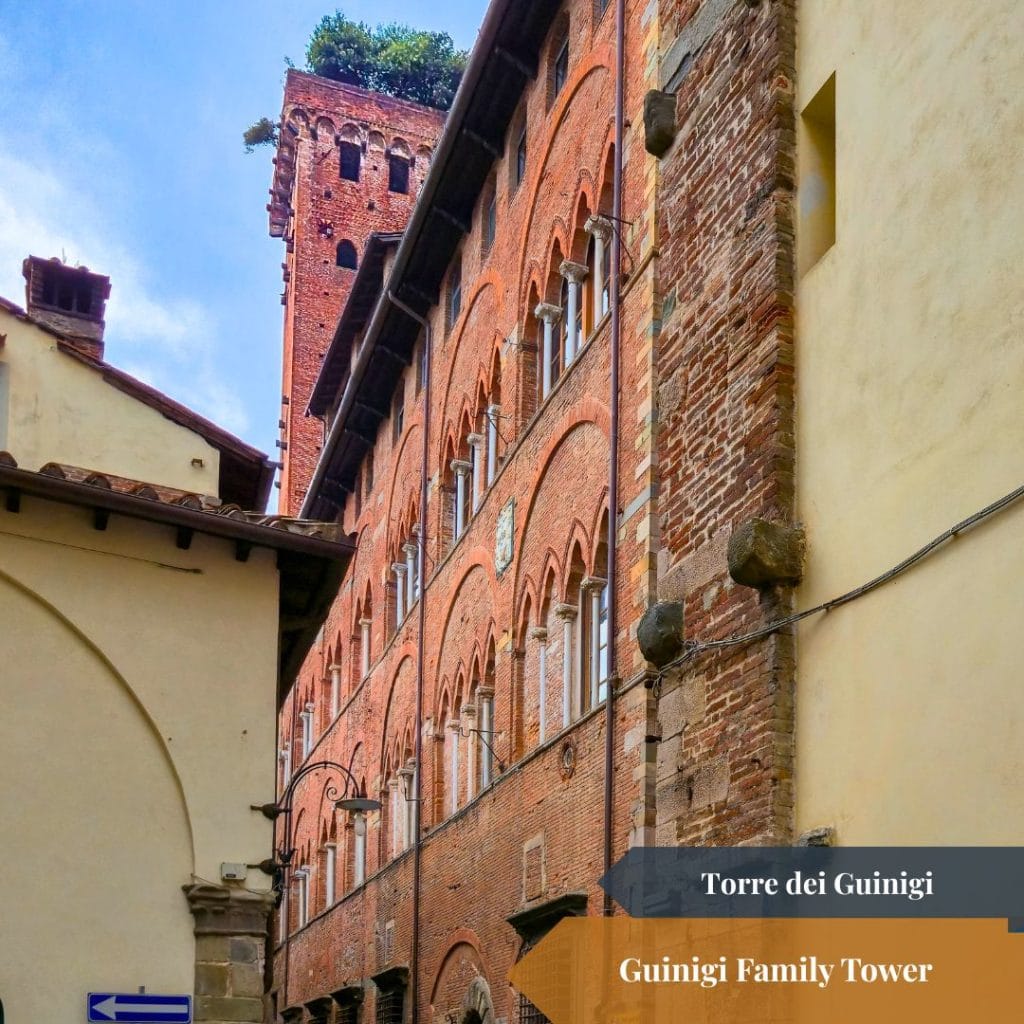
- Torre Guinigi: for a truly unique view, climb the Guinigi Tower. At the top are seven holm oaks, which form a hanging garden. These holm oaks, evergreen trees typical of the Mediterranean maquis, have become a symbol of the tower and the city of Lucca. The panoramic view of the city, with its red-tiled roofs and verdant walls, is simply breathtaking.
- Via Fillungo: The city’s main shopping street, Via Fillungo, winds its way through the historic center, lined with elegant boutiques, artisanal shops, and traditional eateries. It’s perfect for a leisurely stroll and some souvenir hunting.
What are you waiting for? Take a little tour to Lucca!